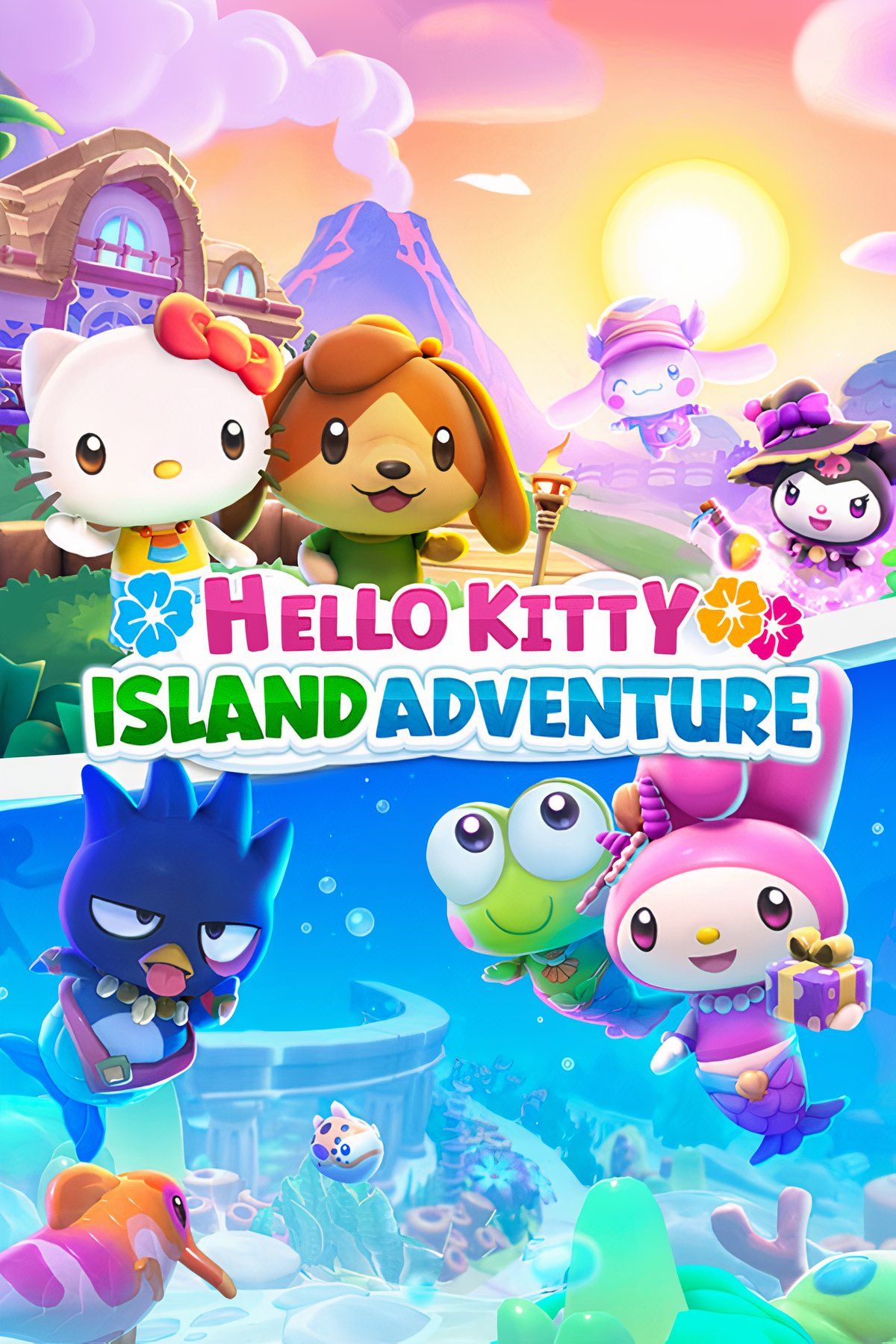
Sanrio didn't just stumble into the gaming world. Most people think of Hello Kitty as a sticker on a notebook or a cute plushie on a shelf, but the digital footprint of this ribbon-wearing icon is actually massive. It’s weird, honestly. We’ve seen her in everything from rhythm games on the DS to full-blown racing titles that felt a little too much like Mario Kart clones. But something changed recently. The Hello Kitty video game landscape shifted from "licensed shovelware" to something people actually want to play for hours on end.
If you grew up in the early 2000s, you might remember Hello Kitty: Roller Rescue on the GameCube. It was clunky. It was colorful. It was exactly what you’d expect from a brand trying to figure out how 3D space worked. Fast forward to now, and we’re looking at Hello Kitty Island Adventure, a game that won a literal Apple Design Award and forced people to take "cozy gaming" seriously. It’s not just for kids anymore. Adults are obsessively decorating cabins and gifting apple pies to My Melody just to unlock a specific crafting recipe.
Why Hello Kitty Island Adventure Redefined the Brand
When Sunblink released Hello Kitty Island Adventure on Apple Arcade, it felt like a direct challenge to Animal Crossing: New Horizons. People called it a clone. They weren't entirely wrong, but they weren't right either. While Animal Crossing is about the slow burn of daily life, this specific Hello Kitty video game is more of an open-world adventure RPG. You aren't just picking weeds; you’re platforming, solving ancient puzzles, and diving underwater to find lost luggage.
The depth is what catches you off guard. You start the game thinking it's a simple social sim, but then you realize there’s a complex friendship leveling system. You can’t just give Pompompurin any old snack. No, he wants specific, high-value items that require you to unlock the dessert machine first. It’s a loop. A very addictive loop. The map is surprisingly huge, too. You’ve got the Spooky Swamp, the Gemstone Mountain, and Mount Hothead, which is an actual volcano. It feels like a real world, not just a static menu.
The Nintendo Switch Port and the 2025 Buzz
For a long time, the biggest complaint was the Apple Arcade exclusivity. It felt gated. If you didn't have an iPhone or a Mac, you were out of luck. But the announcement of the game coming to Nintendo Switch and PC changed the conversation entirely. It’s the move everyone saw coming but everyone still cheered for. Why? Because the Switch is the spiritual home for Sanrio. The hardware just fits the vibe.
Sunblink has been incredibly transparent about their roadmap. They didn't just drop the game and leave it to rot. We’ve seen massive updates adding the "City Town" area and new characters like Wish me mell. It’s a live-service model that actually respects the player's time, which is rare these days.
The Weird History You Probably Forgot
Let’s go back. Way back. Before the high-definition visuals of the modern Hello Kitty video game, we had some truly bizarre entries. Hello Kitty World on the Famicom was basically just a re-skinned version of Balloon Fight. It worked, but it lacked soul. Then came the PlayStation era. Did you know there was a Hello Kitty "Cube Frenzy" game? It was a puzzle-platformer that was notoriously difficult for its target demographic.
- Hello Kitty: Roller Rescue (2005) - The cult classic.
- Hello Kitty Online (2008) - A legitimate MMORPG that had a surprisingly dedicated fanbase before it eventually shuttered. It even had an economy.
- Sanrio Cup: Pon Pon Volleyball (1992) - Exactly what it sounds like. Simple, fun, and very 16-bit.
- Hello Kitty Kruisers (2014) - This one became a meme because the physical Wii U copies became incredibly rare and expensive for a while.
It’s a hit-or-miss legacy. For every Island Adventure, there are five mobile games that are basically just "match-three" clones with a Sanrio skin slapped on top. That’s the struggle of being a global IP. You’re everywhere, but not everything is good.
The Secret Sauce: Why "Cozy" Works
There is a psychological comfort in these games. Life is stressful. The news is a mess. Stepping into a Hello Kitty video game offers a radical kind of kindness. There’s no "game over" screen where Kitty White dies. You don't lose your progress because you failed a combat encounter. The conflict is always low-stakes—like helping Cinnamoroll find his lost cafe supplies or figuring out why the espresso machine is broken.
Experts in game design often talk about "intrinsic versus extrinsic motivation." Most games give you a gun and tell you to shoot the bad guy (extrinsic). Sanrio games usually focus on "being a good friend" (intrinsic). It sounds cheesy, I know. But when you’re 30 hours into a save file and you finally get Tuxedosam to give you that rare clothing item, the hit of dopamine is real.
Addressing the Microtransaction Elephant
We have to talk about it. Most mobile-first games are riddled with predatory "gacha" mechanics. You want the cute outfit? Pay five dollars. You want to speed up the timer? Pay two dollars. This is where Hello Kitty Island Adventure set a new standard. Since it launched on Apple Arcade, it had zero microtransactions. None. You pay the subscription fee, and you get the whole game. This honesty is likely why it maintained such a high rating while other Sanrio mobile titles dipped into the 3-star range on the App Store.
Technical Performance and What to Expect
If you're looking to jump into a Hello Kitty video game in 2025 or 2026, you need to know about the hardware requirements. On older iPhones, Island Adventure can get a bit hot. The thermal throttling is real. If you’re playing on a MacBook or an iPad Pro, it’s buttery smooth.
The upcoming Switch version is the one everyone is watching. The Switch is aging hardware. People are worried about frame drops in the more particle-heavy areas like the volcano. However, considering Sunblink’s optimization history, it’s likely they’ll find a way to make it look decent, even if they have to pull back on some of the lighting effects.
Character Deep Dives: Not Just Kitty
A common misconception is that these games only feature Hello Kitty. Wrong. The roster is usually massive.
- Kuromi: The "goth" favorite. She usually handles the spooky or edgy quests.
- Gudetama: The lazy egg. In Island Adventure, he’s basically a collectible hidden throughout the map.
- Keroppi: Usually the guy in charge of nature or pond-related activities.
- Badtz-Maru: The resident prankster who usually provides the more sarcastic dialogue.
Having these different personalities makes the world feel inhabited. It’s not just a monolith of "cute." There’s a bit of sass, a bit of laziness, and a lot of variety.
How to Get the Most Out of Your Playthrough
Don't rush. That’s the biggest mistake people make. They try to "win" the game in a weekend. These games are designed to be played in 20-minute bursts over several months. If you try to grind out every friendship level in three days, you’re going to burn out.
Focus on the daily tasks. Most Hello Kitty video game titles use a real-time clock or a daily reset mechanic. Log in, check the shops for new furniture, talk to your favorite characters, and then put it down. The joy is in the routine.
Also, pay attention to the "Gifts" guides online. Each character has a "three-heart" gift. For example, in the current meta, things like "Ultimate Joke Pizza" or specific rare bugs are the only way to level up certain characters quickly. If you waste your resources on one-heart gifts, you’ll be stuck in the mid-game loop forever.
The Cultural Impact of the Digital Sanrio Universe
It’s bigger than gaming. It’s "lifestyle gaming." We’re seeing a massive crossover between the games and physical merchandise. You unlock a shirt in the game, and three months later, Sanrio is selling that exact shirt at a pop-up cafe in Tokyo. It’s a closed loop of branding that actually works because the fans are so invested in the aesthetic.
There's also a legitimate community aspect. The Discord servers for these games are surprisingly wholesome. You’ll see 40-year-old dads helping 10-year-olds find hidden chests. It’s one of the few corners of the internet that isn't a toxic wasteland. Maybe it’s hard to be mean when you’re playing as a cartoon cat with no mouth.
Actionable Steps for New Players
If you're ready to dive in, here is how you should actually approach it to avoid the common frustrations:
- Check your platform first. If you have an iPhone, start with the Apple Arcade trial for Island Adventure. If you're a PC or Switch gamer, wait for the dedicated ports to get the best controller support.
- Prioritize the "Flippers" quest. In almost every modern Sanrio adventure game, movement is key. Getting the ability to swim or fly early on will save you hours of backtracking.
- Don't ignore the crafting stations. It's tempting to just buy things from the shop, but the best items—the ones that unlock secret areas—are almost always crafted using materials you find in the world.
- Join a community group. Whether it’s Reddit or a dedicated Discord, having a place to trade items is essential for finishing your collections, especially for "region-locked" items that only appear in certain parts of the map.
- Watch the seasonal events. Sanrio games are big on holidays. Halloween and Christmas events usually offer limited-time furniture that never comes back. If you miss them, you'll have to wait a full year.
The world of Sanrio gaming has finally grown up. It’s no longer just a gimmick to sell lunchboxes; it’s a legitimate genre of its own. Whether you're in it for the nostalgia or you just need a break from the "stress" of more competitive games, there’s a seat at the table for you. Or a spot on the island. Just make sure you bring some Apple Pie for Hello Kitty—she’ll appreciate the gesture.