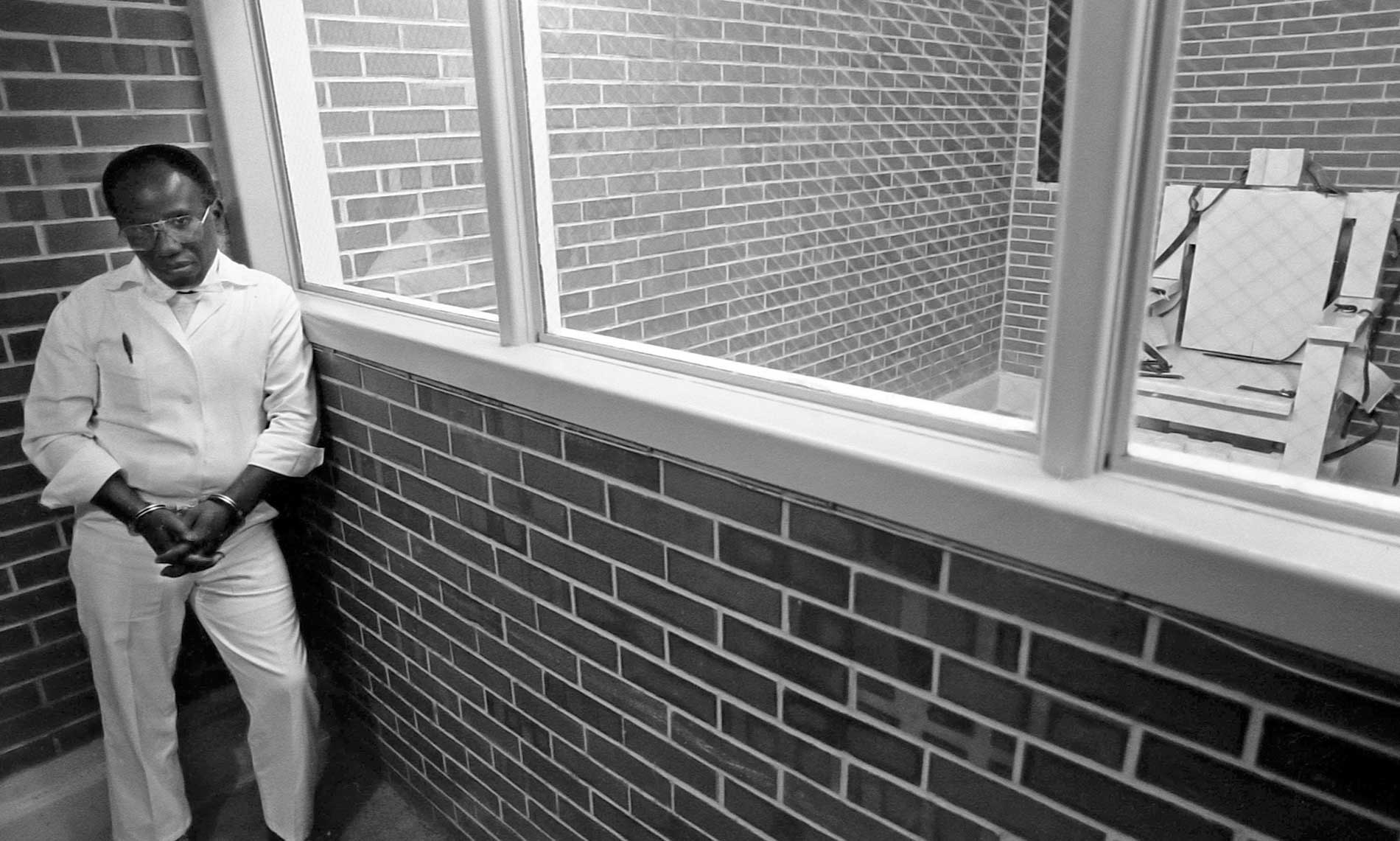
When you read Just Mercy by Bryan Stevenson, or watch the film, there’s one moment that usually leaves people staring at the wall in silence. It isn't the big, dramatic courtroom victory you see in most legal dramas. It’s the story of Herbert Richardson.
Honestly, it’s one of the most heartbreaking sequences in modern literature. You’ve got this man who survived the horrors of the Vietnam War only to be crushed by a legal system that didn't care about his trauma. It’s messy. It’s painful. And it’s a side of herbert richardson just mercy that often gets lost in the broader conversation about the death penalty.
Most people know he was executed. They know he was a veteran. But the nuances of his mental health, the specifics of that tragic day in Alabama, and why Bryan Stevenson couldn’t save him? That's where the real story lives.
The Man Behind the Crime
Herbert Richardson wasn’t a career criminal. He was a human being who was fundamentally "broken" by his service to his country. He was an honorably discharged Vietnam veteran. Think about that for a second. He fought on the front lines, saw his entire platoon killed in an ambush, and was the lone survivor.
He came home with what we now call severe PTSD. Back then, it was just seen as being "unstable."
He suffered from:
- Nightmares and vivid flashbacks.
- Chronic, debilitating headaches.
- Emotional outbursts he couldn't control.
Basically, he was a man living in a permanent state of war long after he left the jungle. When he moved to Alabama to follow a woman he was obsessed with, his mental state spiraled. He didn't know how to handle rejection. He didn't know how to process "no."
What Actually Happened with the Bomb?
This is where the herbert richardson just mercy narrative gets complicated. He built a pipe bomb. That is a fact. But his intent—which is everything in a capital murder case—wasn't to kill anyone.
In his warped, trauma-stricken mind, he thought he could set the bomb off on the woman's porch, then "rescue" her. He wanted to be the hero. He thought if he saved her from the danger he created, she would love him. It sounds insane because it is insane. It was the logic of a man who was profoundly mentally ill.
Tragedy struck when 10-year-old Rena Mae Collins and her friend found the package first. Rena Mae picked it up, it exploded, and she died instantly.
Herbert was horrified. He didn't run. He didn't hide his involvement initially in the way a cold-blooded killer would. He was devastated by what he had done, but the state of Alabama didn't care about his intentions or his service-connected disabilities. They saw a Black man from New York who killed a child.
The Failure of the Legal System
Bryan Stevenson didn't get involved in Herbert’s case until very late. By the time the Equal Justice Initiative (EJI) was on the scene, the "machinery of death" was already moving at full speed.
One of the most infuriating things about the herbert richardson just mercy account is how the trial went down. His original lawyer did almost nothing.
- No mention of Vietnam: The jury never heard that he was a war hero with severe PTSD.
- No mental health experts: Nobody explained how his brain was functioning at the time.
- Racial bias: The prosecution struck every single Black person from the jury pool. He was tried by an all-white jury in a state with a heavy history of racial tension.
When Stevenson took the case, he tried to argue that Herbert’s mental health and military service should have been "mitigating factors." In plain English, that means reasons not to kill him. But the courts are often more interested in finality than fairness. They denied every appeal.
The Last Day: A "Very Strange Day"
The chapter in Just Mercy covering Herbert’s execution is gut-wrenching. Richardson spent his final hours asking Stevenson if he had done a good job. He was worried about being a burden.
He told Stevenson, "It’s been a very strange day, Bryan. More people have asked me ‘What can I do to help you?’ today than they have in my whole life."
Think about the irony there. The state was willing to give him a nice meal, a clean suit, and polite conversation only when they were hours away from killing him. If someone had asked "How can I help you?" when he came home from Vietnam, Rena Mae Collins might still be alive.
He was executed by the electric chair on August 18, 1989.
Why This Case Still Matters in 2026
The story of herbert richardson just mercy isn't just a historical footnote. It’s a mirror. It shows us how we treat our veterans and how we define "justice."
Even today, we struggle with how to handle defendants with severe mental illness. We still have a system that prioritizes "getting a conviction" over understanding the "why" behind a crime.
What most people get wrong is thinking that being "pro-mercy" means you don't care about the victim. Stevenson makes it clear: the death of Rena Mae was a horrific tragedy. But killing a disabled veteran who was failed by the government long before he committed a crime doesn't bring her back. It just adds another layer of brokenness to the world.
Actionable Insights for Readers
If you’re moved by Herbert’s story, here are a few things you can actually do rather than just feeling bad about it:
- Support Veteran Mental Health: Organizations like the Equal Justice Initiative and local VA advocacy groups work to ensure veterans don't fall through the cracks of the legal system.
- Educate on Mitigation: Learn about "mitigating evidence" in capital cases. Understanding that a person is "more than the worst thing they've ever done" is the core message of Stevenson's work.
- Advocate for Legal Reform: Check your local and state policies regarding the death penalty for those with documented severe mental illness or PTSD. Many states still do not have "Serious Mental Illness" (SMI) exemptions for executions.
- Read the Full Account: If you’ve only seen the movie, go back and read Chapter 4 of the book. The prose captures the nuance of Herbert’s personality—his kindness and his fragility—in a way that film struggles to do.
Understanding the case of Herbert Richardson requires looking past the "killer" label and seeing the veteran, the survivor, and the man who was ultimately executed by a system that never tried to heal him.