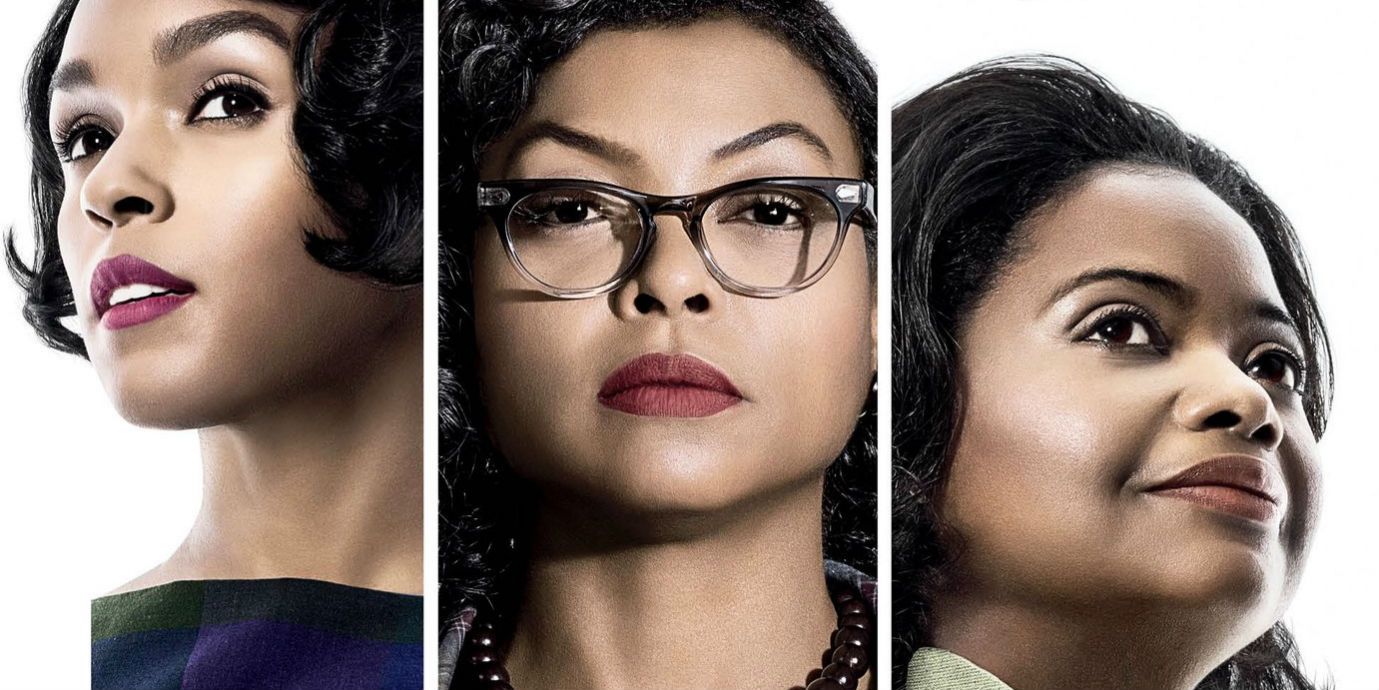
Honestly, most of us walked out of the theater in 2016 feeling like we finally knew the whole deal. We saw Katherine Johnson nailing those orbital mechanics, Dorothy Vaughan outsmarting an IBM giant, and Mary Jackson fighting the courts for her engineering degree. It was a triumph. But here’s the thing: Hollywood loves a compressed timeline and a clear villain. While the film captured the vibe of the era, hidden figures the true story is actually much longer, more bureaucratic, and—in many ways—even more impressive because of how quiet the struggle often was.
It wasn't just a few years in the 60s. This was a decades-long grind.
The West Area Computers weren't just a small group
The movie makes it feel like there were maybe twenty women working in that basement. In reality, the "Human Computers" at Langley Memorial Aeronautical Laboratory were a massive operation. Starting in 1935, NACA (which became NASA in 1958) began hiring white women to free up male engineers for more "important" work. By 1941, Executive Order 8802 opened those doors to Black women.
They weren't just at Langley. They were everywhere.
Katherine Johnson, Dorothy Vaughan, and Mary Jackson were part of a lineage of hundreds of women who processed the raw data from wind tunnel tests and flight experiments. They used slide rules. They used Friden calculators. They used their brains. If you think about the sheer volume of paper they moved through, it’s staggering. We’re talking about thousands of pages of manual calculations for a single flight profile. One mistake meant a pilot might not come home.
The bathroom scene never actually happened to Katherine Johnson
If you remember the most dramatic part of the film, it’s probably Kevin Costner smashing the "Colored Ladies Room" sign with a sledgehammer. It’s a great cinematic moment. It makes you want to cheer.
But it didn't happen. At least, not to Katherine.
Katherine Johnson was famously assertive in a very calm, matter-of-fact way. When she started at Langley, she simply used the "white" bathrooms because she refused to walk halfway across the campus to find a segregated one. She just... did it. And for a long time, nobody really challenged her on it. The "bathroom run" subplot was actually inspired by the experiences of Mary Jackson, who was much more vocal about her frustration with the Jim Crow laws governing the facility.
Margot Lee Shetterly, the author of the book Hidden Figures, has been very clear about this distinction. The film combined these individual struggles into one narrative arc to keep the pacing fast. While it works for a two-hour movie, it sorta misses the nuance of how these women navigated power. Katherine often succeeded by ignoring the barriers until they became invisible; Mary succeeded by confronting them head-on.
Dorothy Vaughan was way ahead of the IBM curve
The movie shows Dorothy stealing a Fortran book from a library and teaching her crew in secret. The reality is a bit more professional but no less badass. Dorothy Vaughan was the first Black supervisor at NACA, promoted in 1949. She saw the digital revolution coming years before the IBM 7090 was even unboxed.
She didn't just learn Fortran on a whim. She became a legitimate expert and one of the most reliable programmers in the building. When the machine age arrived, she didn't just save her own job; she ensured the entire West Computing pool transitioned into the Electronic Computing Division. She was a strategist. She knew that if her "girls" didn't evolve, they’d be obsolete.
John Glenn and the "Human Computer"
The famous "Get the girl to check the numbers" quote? That’s 100% real.
John Glenn was legitimately wary of the new IBM computers. They were prone to glitches and power surges. Before his Friendship 7 mission in 1962, he specifically asked for Katherine Johnson to run the numbers by hand. He trusted her more than the machine.
"If she says they're good, then I'm ready to go." — John Glenn
What the movie doesn't show is that this check took days. In the film, it looks like it happens in twenty minutes while the clock is ticking on the launchpad. In real life, Katherine spent a day and a half grinding through the equations for the orbital entry. It was tedious, exhausting, and precise.
The timeline was actually decades, not months
Hollywood loves to smash time together. In the film, Mary Jackson’s fight to attend engineering classes happens right alongside the Mercury launches. In hidden figures the true story, these events were spread out. Mary actually became NASA's first Black female engineer in 1958—years before John Glenn ever stepped into a capsule.
By the time the events of the movie "end," Mary was already deep into her career as an aeronautical engineer, eventually becoming an expert in the effects of supersonic flight.
Also, Katherine Johnson didn't just work on Mercury. She worked on:
- Apollo 11 (the moon landing)
- Apollo 13 (calculating the backup charts that saved the crew)
- The Space Shuttle program
- Plans for a mission to Mars
She stayed at NASA until 1986. Think about that. She went from hand-calculating wind resistance for propeller planes to helping design the early stages of Mars exploration. That’s the kind of longevity that a movie simply can’t capture in two hours.
Why the "True Story" matters more than the film
Some people get annoyed when they find out a "true story" movie took liberties. I get it. But with Hidden Figures, the reality is actually more "cinematic" in its complexity. These women weren't just fighting a single mean boss (who was usually a fictional composite character anyway). They were fighting a systemic, bureaucratic machine that was designed to keep them invisible.
They won because they were better at math than the people who wanted them to fail.
It wasn’t just about being "first." It was about being undeniable. When your math is the only thing keeping an astronaut alive, people stop caring what color your skin is pretty quickly. It’s a brutal, meritocratic form of progress.
Actionable steps for exploring the history
If you’re actually interested in the deep-dive version of this history, don't just stop at the movie.
- Read the book by Margot Lee Shetterly. Honestly, it’s a masterpiece. It goes into the technical details of the math and the specific social hierarchies of Hampton, Virginia, that the movie skips.
- Look into the "East Area Computers." The movie focuses on the Black women (West Area), but there was an entire parallel history of white women who also faced significant glass ceilings during the same era.
- Visit the Katherine Johnson Independent Verification and Validation Facility. If you’re ever in West Virginia, NASA renamed a major facility after her. It’s a testament to her actual impact on the agency’s safety protocols.
- Check the NASA Archives. NASA has a dedicated section for "Modern Figures" on their website. They’ve digitized many of the original technical reports written by Mary Jackson and Katherine Johnson. Seeing their names on the bylines of complex engineering papers from the 50s and 60s hits different than seeing it on a screen.
The true story is a reminder that history isn't usually made by one person breaking a wall with a hammer. It’s made by people showing up, doing the work, and being so incredibly good at it that the world has no choice but to change.