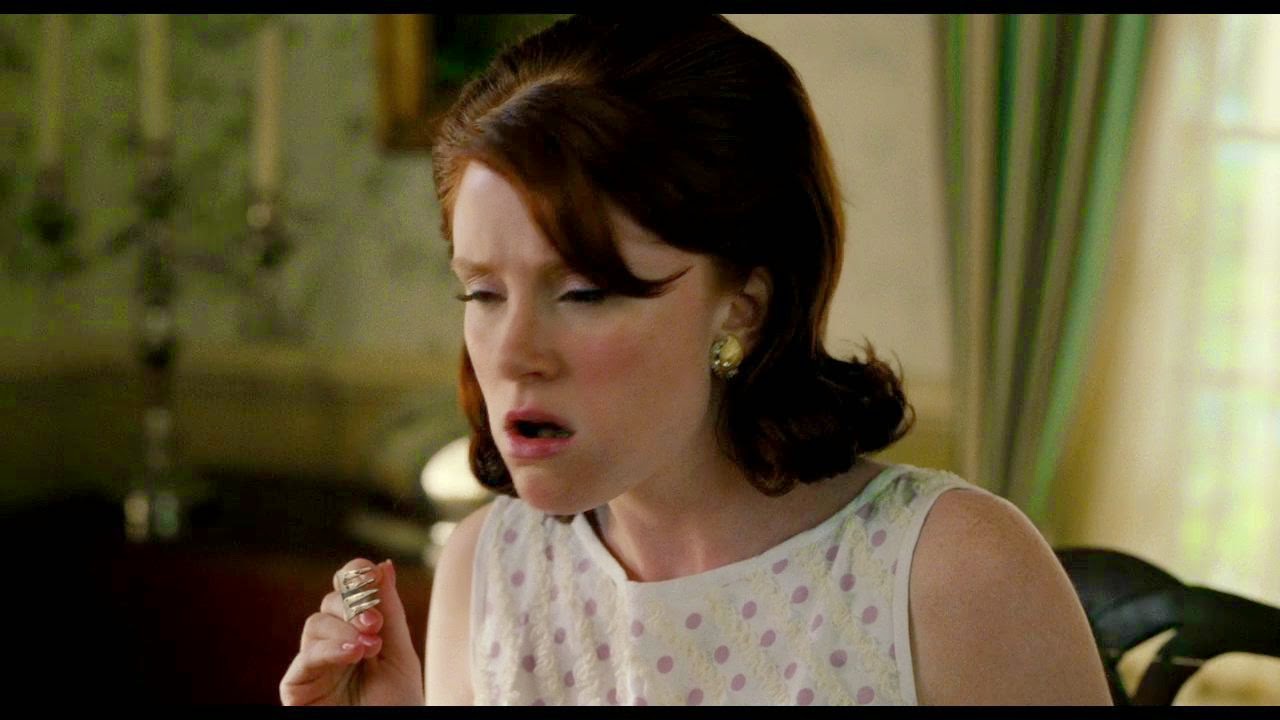
Hilly Holbrook is the kind of character you just love to hate. Honestly, she's probably one of the most effective cinematic and literary villains of the last twenty years. When we talk about Mrs Hilly The Help, we aren't just talking about a socialite in a floral dress; we’re talking about the personification of systemic cruelty wrapped in a polite, Southern smile.
She's terrifying.
Not because she wields a weapon, but because she wields a bridge club roster. Kathryn Stockett, the author of the 2009 novel, and Bryce Dallas Howard, who brought the character to life in the 2011 film, created a monster out of etiquette. It's the "polite" racism that makes Hilly so much more unsettling than a cartoonish villain. She genuinely believes she’s the hero of the story. She thinks she’s "protecting" her community. That delusion is what makes her stay with you long after the credits roll.
The Home Help Sanitation Initiative: Hilly’s Masterpiece of Malice
If you want to understand Mrs Hilly The Help, you have to look at her obsession with the bathroom. It sounds absurd, right? A grown woman campaigning for separate toilets. But for Hilly, the Home Help Sanitation Initiative was her way of codifying white supremacy into the very architecture of the home.
She used pseudo-science. She claimed that Black people carried different diseases than white people. This wasn't just Hilly being "mean." It was a reflection of the actual Jim Crow era mentalities that permeated Jackson, Mississippi, in the early 1960s. By making it a matter of "health" and "hygiene," she gave her friends a socially acceptable way to be monsters.
Think about the scene where she confronts Skeeter about the initiative. She’s so calm. She’s so certain. She’s sitting there with her perfectly coiffed hair, holding a cigarette, basically telling her friend that basic human dignity is a health hazard. It’s chilling because it feels so bureaucratic.
Why Bryce Dallas Howard Was the Perfect Choice
It’s hard to imagine anyone else playing the role now. Bryce Dallas Howard did something brilliant with Hilly. She didn't play her as a snarling witch. She played her as a woman who is deeply, desperately insecure.
You see it in her eyes. Every time someone challenges her, there’s a flicker of panic before the mask of "Southern Grace" slides back into place. Howard has mentioned in various interviews that she stayed away from the other actresses on set to maintain that sense of isolation. It worked. When she walks into a room, the energy shifts. You can feel the other characters—and the audience—holding their breath.
The Minny Jackson Rivalry and the Infamous Pie
You can't talk about Mrs Hilly The Help without talking about the pie. It is the ultimate "gotcha" moment in modern cinema.
Minny Jackson, played by the incomparable Octavia Spencer, takes the ultimate risk. After Hilly fires her and spreads lies that she’s a thief—effectively blacklisting her from ever finding work in Jackson again—Minny delivers the "Terrible Awful."
- It wasn't just about revenge.
- It was about leverage.
- The pie gave the maids a "life insurance policy" against Hilly’s litigious nature.
The genius of the pie isn't just the gross-out factor. It’s that it hits Hilly exactly where it hurts: her reputation. For a woman who lives and breathes social standing, the idea of being the laughingstock of the town is worse than death. The moment she realizes what she’s eaten, and the subsequent "Two-Slice Hilly" nickname that haunts her, is the only time we see her truly lose her cool. She screams. She breaks. The facade is gone.
The Psychology of a Bully
Hilly Holbrook isn't a loner. She’s the leader of the pack. She uses her mother, Mrs. Walters (played by Sissy Spacek), as a prop until she decides her mother is too "inconvenient" and ships her off to a nursing home. This tells you everything you need to know about Hilly’s capacity for love. It’s transactional.
She targets Celia Foote not just because Celia is "tacky" or "from the wrong side of the tracks," but because Celia represents a threat to the hierarchy. Celia is kind to the help. Celia doesn't understand the "rules" that Hilly has spent her whole life enforcing. To Hilly, kindness is a form of treason.
What "The Help" Gets Right (and Wrong) About Women Like Hilly
Critically speaking, there’s been a lot of discussion lately about how The Help frames the Civil Rights Movement. Some historians and critics argue that the film focuses too much on the "mean girl" aspect of racism rather than the systemic violence of the era.
While Hilly is a great villain, she represents a specific type of social gatekeeper. In real-life 1960s Jackson, the stakes were often much more violent than a pie or a fired maid. Organizations like the Citizens' Council were the real-life versions of Hilly’s bridge club, but they had the power to destroy lives, businesses, and families through economic pressure and state-sanctioned intimidation.
However, as a character study, Hilly is a masterpiece of showing how "polite society" maintains oppression. She’s the one who makes sure the status quo never changes. She’s the one who polices her own friends to make sure they aren't getting too "progressive."
The Legacy of the Character
Even years after the book and movie, Mrs Hilly The Help remains a cultural touchstone. Why? Because we still see "Hillys" today. We see people who use rules, "concerns for safety," and social norms to exclude and demean others.
The character serves as a warning. She shows us that you don't have to be a loud, shouting bigot to be a villain. You can be the person who organizes the bake sale. You can be the person who chairs the committee. If your goal is to keep others down so you can stay up, you’re a Hilly.
How to Analyze the Role of Hilly Holbrook in Your Own Writing
If you are a student or a writer looking at this character, there are a few key things to focus on to really "get" why she works.
- The Contrast: Look at the way she dresses versus the way she speaks. The hyper-feminine, pastel-colored wardrobe is a shield.
- The Motivation: Everything she does is rooted in fear of losing control. If the maids are treated as equals, Hilly’s own status evaporates.
- The Downfall: Notice that she isn't "defeated" by a hero in a traditional sense. She is defeated by her own vanity.
Actionable Insights for Fans and Students
To truly understand the impact of Hilly Holbrook, consider these specific steps for a deeper dive:
- Watch the "Tornado" Scene Again: Observe Hilly’s reaction when she thinks Skeeter has put the "sanitation initiative" in the newsletter. It’s a masterclass in performative victimhood.
- Compare the Book to the Film: In the book, Hilly’s physical decline (developing cold sores and gaining weight from stress) is much more pronounced. It’s a physical manifestation of her internal "rot."
- Research the Women’s Council of Jackson: Look into the real social organizations of the 1960s. You’ll find that Hilly’s fictional initiatives weren't as far-fetched as they seem.
- Analyze the Power Dynamics: Track how many times Hilly uses the phrase "for your own good" or "I’m just trying to help." It’s the classic language of the gaslighter.
Understanding Hilly Holbrook requires looking past the 1960s hair and the perfect makeup. She is a study in how power protects itself. By isolating the "others" and enforcing strict social boundaries, she creates a world where she is always at the top—at least until the truth, or a very specific chocolate pie, gets in the way.