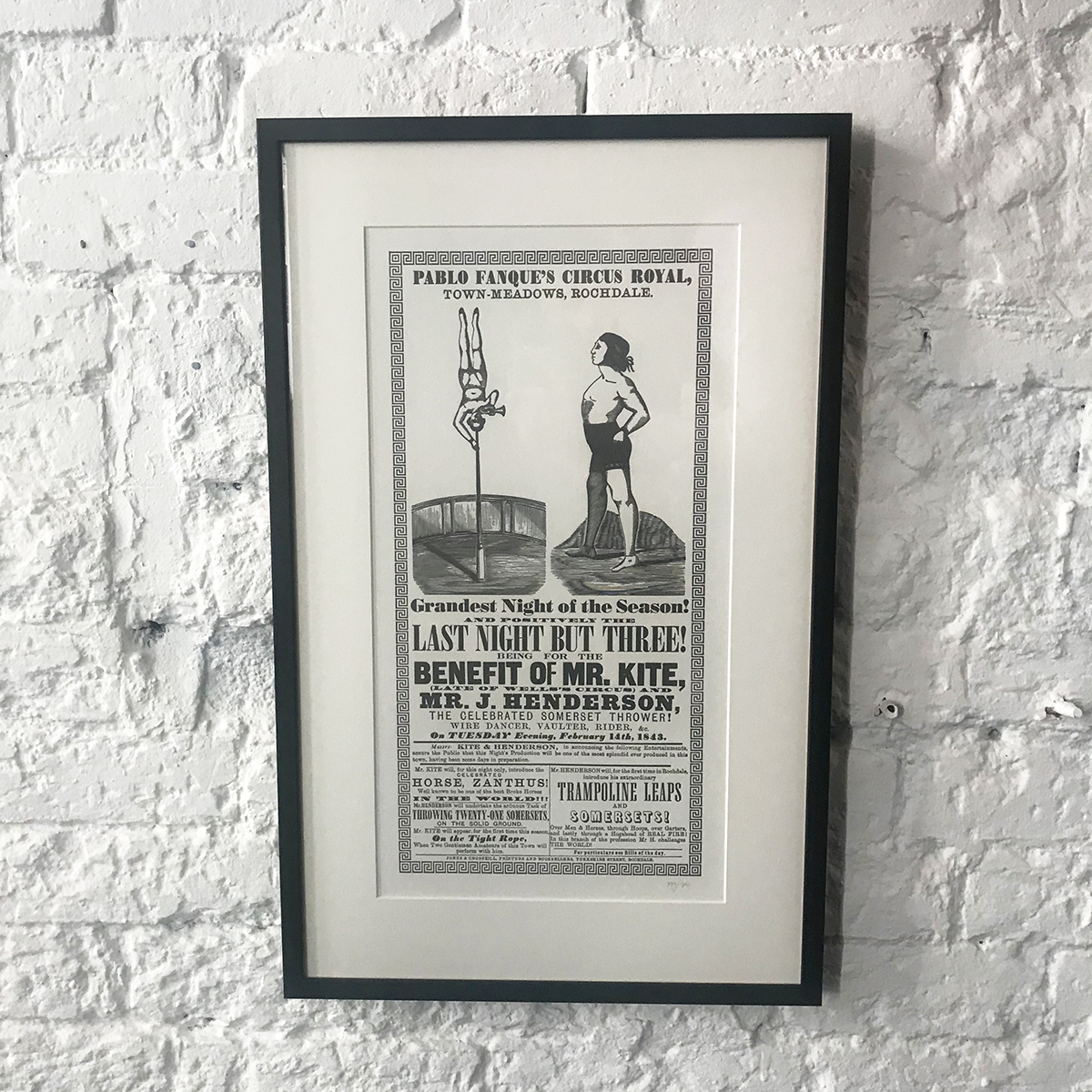
John Lennon walked into an antiques shop in Sevenoaks, Kent, and bought a piece of paper that changed everything. It was January 31, 1967. The Beatles were filming a promotional film for "Strawberry Fields Forever." During a break, Lennon spotted a Victorian-era circus advertisement from 1843. This wasn't just any paper; it was a Benefit of Mr. Kite poster. He didn't know it then, but the text on that yellowed scrap of history would practically write one of the most psychedelic tracks on Sgt. Pepper’s Lonely Hearts Club Band.
It’s wild how literal the song actually is.
If you look at the original Benefit of Mr. Kite poster, you’ll see the words "Being for the Benefit of Mr. Kite." It lists the performers: Mr. J. Henderson, the Hendersons themselves, and, of course, the celebrated Mr. Kite. Lennon basically took the prose from the poster and set it to a waltz beat. People often look for deep, drug-fueled metaphors in the lyrics of "Being for the Benefit of Mr. Kite!" but the reality is much more mundane—and somehow more magical because of it. It was a cut-and-paste job from the 19th century.
The Pablo Fanque Connection
Most people assume "Mr. Kite" was a figment of Lennon’s imagination. He wasn't. The poster advertised a performance for Pablo Fanque’s Circus Royal. Pablo Fanque is a fascinating figure in his own right, being the first Black circus proprietor in Victorian Britain. He was a powerhouse in the entertainment world of the 1840s.
The "Benefit" part of the Benefit of Mr. Kite poster refers to a common practice back then. Performers would get a "benefit night" where they kept a portion of the ticket sales. It was their version of a bonus. William Kite, the man himself, was a celebrated performer who had worked for Fanque for years. He was an all-rounder—balancing, riding, the whole bit.
When you read the poster, you see mentions of "the Hendersons" who were "propounded to dance and sing." They were another real act. Everything Lennon sang about—the hoops, the horses, the hogsheads of real fire—it was all right there on the wall of that shop in Kent.
Turning Ink Into Audio
George Martin, the legendary producer, had his work cut out for him with this one. Lennon told him he wanted to "smell the sawdust" of the circus. That’s a tall order for a recording engineer in 1967. They didn't have digital plugins or easy ways to warp sound.
To capture the vibe of the Benefit of Mr. Kite poster, Martin and engineer Geoff Emerick got creative. They took recordings of Victorian steam organs (calliopes). They literally cut the magnetic tapes into one-foot sections, threw them in the air, and taped them back together at random. Some were upside down. Some were backwards.
This created that dizzying, swirling wall of sound.
It’s messy. It’s chaotic. It feels like a fever dream in a carnival. If they had just played a straight organ part, the song would have felt like a parody. Instead, by physically manipulating the media to match the aged, eccentric feel of the poster, they created something timeless.
Why Collectors Are Obsessed
You can’t easily buy the original poster Lennon owned. It’s a piece of music history. However, the fascination with the Benefit of Mr. Kite poster has led to some incredible recreations.
For years, fans had to settle for low-quality prints. But then, Peter Dean of Kite Prints came along. He went on a multi-year mission to recreate the poster using the exact same methods used in 1843. We're talking woodblock printing and letterpress. He tracked down the original woodcut illustrations of the horse and the performer.
It’s about the texture.
The original poster wasn't just a flat image. The ink sits on the paper. The woodblocks leave a physical impression. When you see a high-fidelity replica of the Benefit of Mr. Kite poster, you realize why it caught Lennon's eye. The typography is a chaotic mix of different fonts—bold, serif, condensed—all fighting for attention. It’s a visual representation of the noise and excitement of a Victorian fairground.
Beyond the Lyrics: The Poster's Legacy
The song isn't just a track on an album; it’s a bridge between two centuries. It’s the Victorian era colliding with the Summer of Love.
The Benefit of Mr. Kite poster represents a specific type of British folk history that the Beatles were starting to embrace. Moving away from the American R&B influences of their early years, they began looking inward at their own culture. Music halls, brass bands, and traveling circuses.
Sgt. Pepper as a whole is an album about performance and personas. The poster provided the perfect "script" for the fictional band they were pretending to be. It allowed Lennon to step outside himself. He wasn't John the Beatle; he was a ringmaster.
Spotting a Real Replica
If you're looking to grab one for your wall, be careful. Most of the stuff you find on big-box retail sites is just a digital scan printed on cheap glossy paper. It looks fake because it is.
A "human-quality" replica (like the one Peter Dean produced) uses:
- Letterpress printing: You should be able to feel the indentations.
- Period-accurate paper: It shouldn't be bright white. It needs that slightly muted, off-yellow Victorian tone.
- Woodcut art: The illustrations of the "Zebre" and the tightrope walker should have the slightly irregular lines characteristic of hand-carved wood.
Actionable Steps for Fans and Collectors
If you’re inspired by the story of the Benefit of Mr. Kite poster, there are a few ways to engage with this history beyond just listening to the track for the thousandth time.
First, look into the history of Pablo Fanque. His grave is in St George's Field, Leeds, and it’s a pilgrimage site for those who know the history. Understanding his success as a Black circus owner in the 1800s adds a massive layer of depth to the song.
Second, if you’re a designer or artist, study the typography of the poster. It breaks every modern rule of "clean" design. It’s cluttered, loud, and uses too many typefaces. Yet, it works perfectly. It’s a masterclass in Victorian advertising.
Finally, check out the "making of" videos for the song. Seeing how they spliced the tapes helps you appreciate the physical labor that went into making a poster "audible."
The next time you hear that swirling organ and Lennon’s nasal invitation to the show, remember that it started with a 124-year-old piece of paper in a dusty shop. Art doesn't come from a vacuum; sometimes it’s just waiting on a wall for the right person to walk by.
How to start your Kite collection:
- Research the Printer: Look for letterpress specialists who use traditional woodblock techniques rather than ink-jets.
- Verify the Dimensions: The original poster was roughly 7.5 inches by 19 inches. Many modern reprints distort this to fit standard frame sizes like 18x24.
- Check the Text: Ensure it includes the "Tuesday, February 14th" date and the mentions of Mr. J. Henderson. Some "inspired-by" versions change these details, which ruins the historical accuracy.