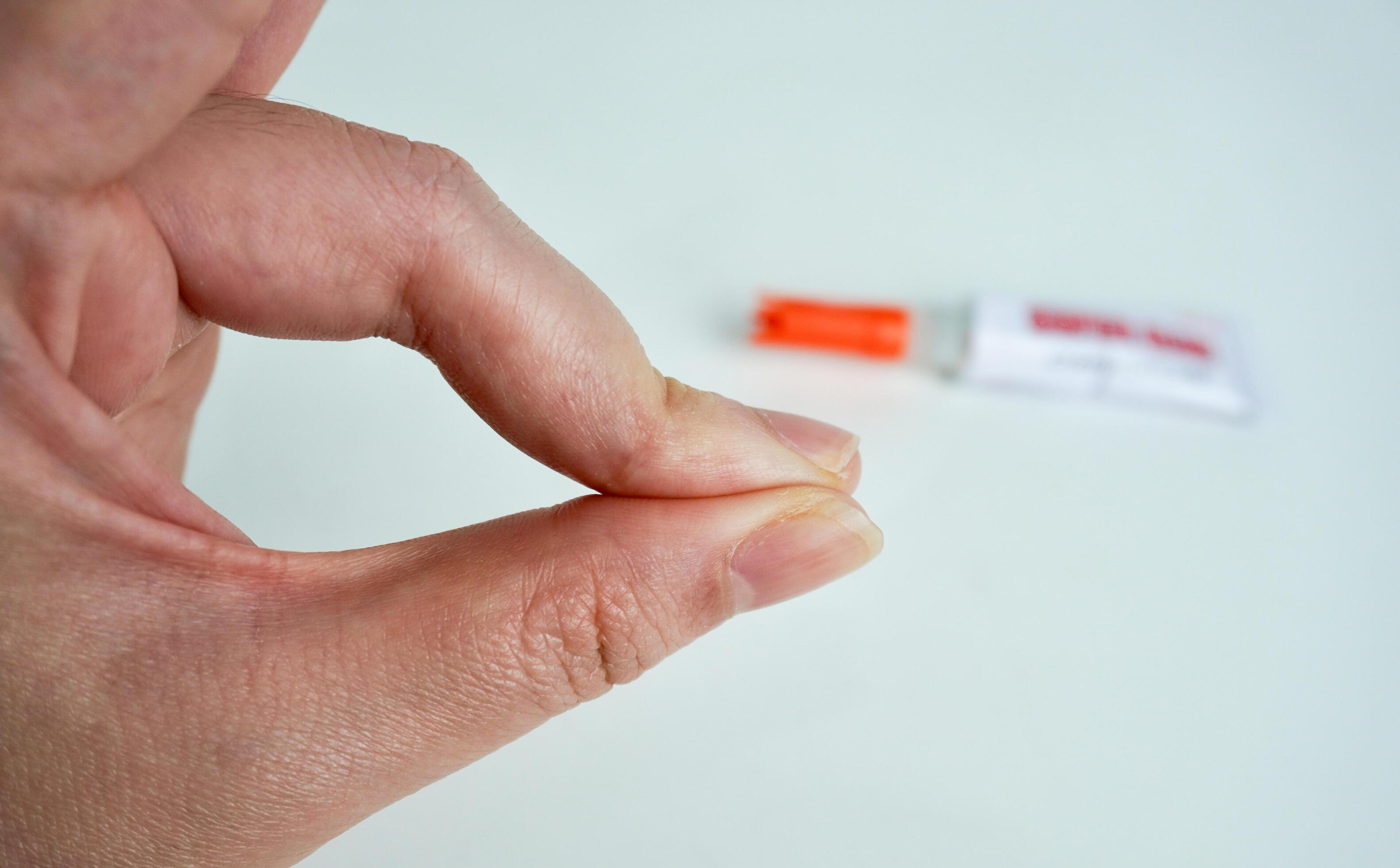
It happens in a flash. You’re fixing a broken ceramic mug or a loose piece of trim, and suddenly, your thumb and index finger are fused together. It’s that familiar, frantic tug—the realization that cyanoacrylate, the technical name for super glue, has done exactly what it was engineered to do. It bonds almost instantly to the moisture in your skin.
Don't rip it. Seriously.
If you pull your fingers apart with brute force, you’re likely to take the top layer of your dermis with it. That leads to bleeding, possible infection, and a week of annoying bandages. You need to chemistry your way out of this, not muscle your way out. People always ask me how can i get super glue off of my fingers when they’re already halfway to a panic attack, but the solution is usually sitting in your kitchen cabinet or bathroom vanity.
The Acetone Solution (And Why It’s Tricky)
Most people reach for nail polish remover. That’s smart, but it comes with a massive caveat. It has to be pure acetone. A lot of modern "strengthening" or "moisturizing" polish removers are acetone-free or heavily diluted with oils. Those won't do much more than make your glued fingers smell like lavender.
Acetone works because it’s a powerful solvent that breaks the polymer chains of the glue. You want to soak the affected area in a small bowl of the stuff. Just be ready—acetone is incredibly dehydrating. It’s going to suck every bit of oil out of your skin, leaving it looking white and chalky.
If you have an open cut or the glue is near a sensitive area, skip the acetone. It stings like crazy. But for a standard "finger stuck to a finger" situation, a three-minute soak usually does the trick. Once the edges start to lift, you can use a blunt object like a guitar pick or a spatula to gently—keyword: gently—nudge the bond apart.
What if I don't have acetone?
Honestly, you're not out of luck. Warm, soapy water is the underdog here. It sounds too simple to work, but if the glue hasn't fully cured into a rock-hard mass, soaking your hand in a sink full of sudsy, hot (but not scalding) water can soften the bond.
Add some salt.
Salt acts as a mild abrasive. You can make a paste with a little bit of water and salt, then rub it over the glue. It’s a physical way to break down the adhesive without the chemical harshness of solvents. This is usually my go-to for kids or anyone with eczema who can't handle the "chemical burn" feeling of industrial cleaners.
The Oil Method: The Kitchen Cabinet Secret
If you're worried about how can i get super glue off of my fingers without using harsh chemicals, look for fats. Olive oil, coconut oil, or even butter can work wonders. Cyanoacrylate is tough, but it hates oils.
The oil seeps into the microscopic gaps between the glue and your skin. Once the oil gets under the edge, the bond starts to slide. It’s a slower process than acetone, but your skin will actually feel better afterward instead of like a piece of parched parchment.
- Slather the area in vegetable oil or margarine.
- Massage it constantly.
- Wait about ten minutes.
- Use a fingernail to slowly peel the edges.
I’ve seen people use WD-40 for this too. While it works because it’s a penetrating oil, I wouldn't exactly recommend it as "skin-safe" if you have other options. Stick to the stuff you can eat unless you’re in a garage and it’s all you’ve got.
Dealing with the Leftover Crusty Residue
Even after you get your fingers apart, you’re usually left with that annoying, scratchy white patch of dried glue. It feels weird. You’ll spend the next three hours trying to pick it off with your teeth. Don't do that.
That residue is basically plastic. You can use a pumice stone or an emery board (a nail file) to lightly sand it down. Don’t go overboard; you aren't trying to sand your actual skin. Just take the "peaks" off the glue. Over the next 24 to 48 hours, your skin’s natural oils and the shedding of dead skin cells will push the rest of the glue off naturally.
When Should You Actually See a Doctor?
Usually, super glue on the skin is a "home remedy" situation. But there are two times you should stop what you're doing and head to an urgent care.
First: Your eyes or lips. If you've somehow managed to glue your eyelid shut or your lips together, do not try to use acetone or oil. The mucous membranes in those areas are far too delicate. A doctor will typically use a specific medical-grade solvent or simply apply a heavy antibiotic ointment that safely breaks down the bond over a few hours.
Second: If the skin is actually torn. If you ignored my first piece of advice and ripped your fingers apart, and now you have a deep gash with glue stuck inside it, get it cleaned professionally. You don't want to trap bacteria under a layer of waterproof glue. That’s a recipe for a nasty infection.
Prevention is Better Than a Panic Attack
I know, I know—you're reading this because the glue is already there. But for next time, keep a pair of nitrile gloves in your junk drawer. Super glue doesn't bond well to them, and it keeps your skin safe.
Also, check the tip of the glue bottle before you squeeze. Most accidents happen because the nozzle is clogged, so you squeeze harder, the clog clears, and a massive blob of glue shoots out onto your hand. Poke the tip with a needle first to ensure a smooth flow.
Moving Forward with Clean Hands
Once the glue is gone, wash your hands thoroughly to remove any remaining solvent or oil. Apply a thick, fragrance-free moisturizer or petroleum jelly. This helps the skin barrier recover from the trauma of being glued and then chemically stripped.
If you still have a bit of a "rough" patch, just wait it out. Your body is incredibly good at replacing its outer layer. Within two days, you won't even be able to tell where the glue was. Just keep the area clean and avoid the temptation to chew on the remaining bits of dried adhesive.
Actionable Steps:
- Check your nail polish remover label for "100% Acetone."
- If you have sensitive skin, start with a 15-minute warm salt-water soak.
- Use a nail file to gently buff away the white residue once your fingers are separated.
- Apply a heavy-duty moisturizer like Eucerin or Vaseline to repair the skin barrier.