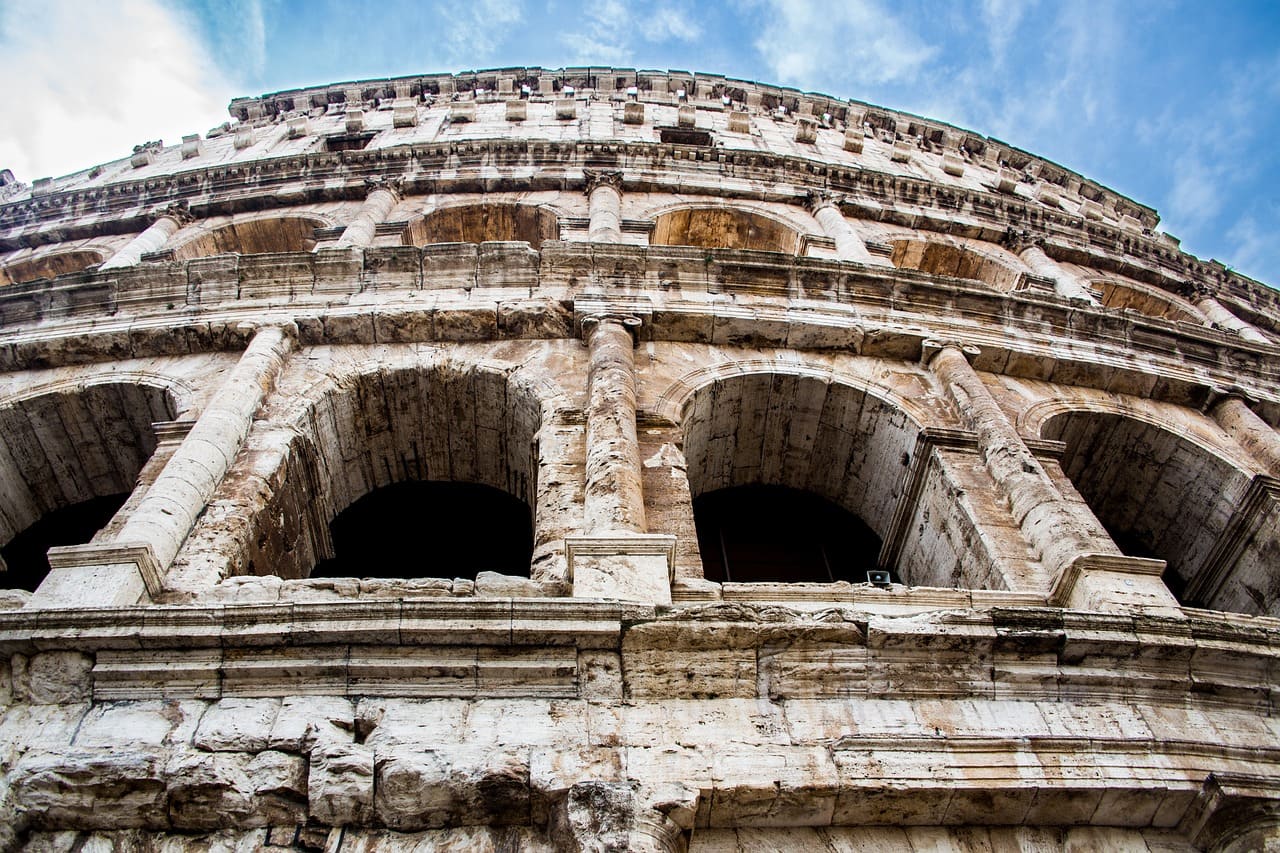
Imagine the roar. 50,000 Romans screaming as the midday sun beats down on the travertine stone of the Flavian Amphitheatre. But instead of the usual dust and blood of the gladiatorial sand, the arena floor is a shimmering, deep pool of water. Full-sized warships are bobbing. Men are actually drowning. It sounds like a Hollywood fever dream, but historical records from guys like Cassius Dio and Suetonius swear it happened. The big question—the one that keeps archeologists up at night—is exactly how did the Romans fill the Colosseum with water without turning the entire structural foundation into a pile of mud?
It’s a logistical nightmare. Honestly, even with modern plumbing, flooding a massive stadium and then draining it fast enough to hold a lion hunt the next morning would be a headache. But the Romans were different. They didn't just build; they conquered the elements.
The Mystery of the First Naval Battles
The inaugural games in 80 AD were legendary. Emperor Titus wanted to outdo his father, Vespasian. According to the histories, he staged a naumachia—a sea battle—right inside the Colosseum. Most people assume this was just a shallow splash pool. It wasn't. They were reportedly using flat-bottomed ships specifically designed for this, but they still needed enough depth to float them.
This wasn't some localized puddle. We’re talking about millions of gallons.
There’s a catch, though. If you go to Rome today and look down into the center of the Colosseum, you see the Hypogeum. It’s that complex maze of brick walls and tunnels where they kept the animals and the scenery. You can't flood that. If you tried, the water would just soak into the masonry and ruin the wooden elevators. So, for a long time, historians thought the naval battles were a total myth. They figured the writers of the time were just exaggerating to make the Emperor look good.
But then the plumbing was found.
The Plumbing Under the Floor
The secret to how did the Romans fill the Colosseum with water lies in the timeline. The Hypogeum—that basement maze—wasn't actually there when the building opened. It was added later by Emperor Domitian. Before those walls were built, the arena floor was likely a massive, open space supported by removable wooden beams.
To flood it, they tapped into the Great Aqueduct. Specifically, the Aqua Claudia.
Rome was the city of water. They had a surplus of it flowing in from the hills. They diverted water from the main lines into a series of massive lead pipes and stone channels that ran directly toward the Colosseum. Engineers have identified at least 40 different shafts that could have functioned as water inlets.
The process was basically a giant bathtub.
- They’d remove the wooden floorboards that usually held the sand (the harena).
- They’d seal the drainage valves.
- They’d open the sluice gates from the aqueduct.
- Gravity did the rest.
Because the Colosseum sits in a natural valley—it was actually built on the site of Nero’s former private lake—the water naturally wanted to go there anyway. They just had to guide it. It probably took about two to three hours to reach a depth of five feet. That’s enough to float a galley, but not enough to compromise the stone seating.
The Problem of Pressure
You can't just dump water into a building and hope for the best. The pressure of several million gallons of water pushing outward is immense. Roman concrete (opus caementicium) was waterproof, especially when they used pozzolana—a volcanic ash that actually gets stronger under water. They lined the inner basin with this waterproof mortar.
Think about the precision. They had to ensure the water level stayed exactly at the point where it wouldn't overflow into the expensive seats (where the Senators sat), but deep enough that a ship’s hull wouldn't scrape the bottom.
Draining the Beast
Filling it is one thing. Emptying it is the real flex. If the water sat there for days, it would seep into the foundations and rot the timber supports. They needed it gone, and they needed it gone fast.
The Romans built four massive drains that connected to the Cloaca Maxima, Rome’s main sewer system. These weren't little pipes. These were huge tunnels. By opening the internal plugs, the water would rush out under the force of gravity, flowing down toward the Tiber River. Archeological digs have found these drain outlets, and they are surprisingly sophisticated. They even had grates to catch debris—or bodies—before they entered the city's main sewer lines.
It’s estimated they could drain the entire arena in under two hours. That’s faster than some modern swimming pools.
Why Did They Stop?
If naval battles were so cool, why don't we see them throughout the Colosseum's 400-year history?
Basically, it was too much work. When Domitian built the Hypogeum, he effectively ended the "sea battle" era of the Colosseum. Once you have a permanent basement full of cages and trapdoors, you can't fill the room with water anymore. It would drown the tigers and the slaves.
After that, sea battles moved to purpose-built basins outside the city. The most famous one was the Naumachia Augusti, which was a massive artificial lake near the Tiber. The Colosseum became a "dry" stadium, focused on the gladiatorial combat we see in movies today.
What the Archeology Tells Us Today
In the 1990s and early 2000s, researchers like Heinz-Jürgen Beste spent years crawling through the tunnels of the Hypogeum. They found something fascinating: evidence of vertical shafts that didn't seem to have anything to do with elevators.
These were the old water conduits.
They also found traces of hydraulic plaster. This is a specific type of lining that you only find in Roman baths or aqueducts. Finding it in the Colosseum was the "smoking gun." It proved that, at least for a few decades, the arena really did hold water.
Logistics of the Naumachia
The scale of these events is hard to wrap your head around.
- The Ships: These weren't toys. They were 1:1 scale replicas of biremes and triremes.
- The "Actors": These weren't actors. They were prisoners of war or criminals sentenced to death (damnati ad mortem).
- The Chaos: Imagine the smell. Saltwater wasn't used; this was fresh water mixed with blood, sweat, and wood smoke.
It was a sensory overload that served one purpose: to show that the Emperor had power over nature itself. If he could turn the land into the sea and back again by dinner time, he could do anything.
What Most People Get Wrong
A common misconception is that the Romans used pumps. While they had basic mechanical pumps (like the Ctesibius pump), they didn't use them to flood the Colosseum. It would have been wildly inefficient. Instead, they relied almost entirely on the height of the aqueducts.
The water source (the mountains) was much higher than the Colosseum floor. This created "head pressure." By the time the water reached the city, it had enough force to spray up into fountains or, in this case, flood an arena floor with zero manual labor.
Also, they didn't use "sea water." I've seen some tour guides say they piped in water from the Mediterranean. That’s physically impossible. The coast is 20 miles away. It was always fresh water from the aqueducts.
Actionable Steps for Your Next Trip to Rome
If you’re planning to visit the Colosseum and want to see this engineering for yourself, here is how to actually find the evidence:
- Book the Underground Tour: You cannot see the plumbing from the standard spectator levels. You need to get down into the Hypogeum.
- Look for the "Grooves": Ask your guide to point out the vertical channels in the stone walls of the outer corridors. These are the remnants of the water pipes.
- Visit the San Clemente Basilica: It’s a 5-minute walk from the Colosseum. Go to the lowest level. You can actually hear an underground Roman stream still rushing through the ancient pipes. This is the same water system that would have been diverted to flood the arena.
- Check the Floor Level: Notice how the modern wooden platform only covers part of the arena. Look at the retaining wall. You can still see the discoloration where the water line once sat.
- Study the Cloaca Maxima: If you walk over to the Roman Forum, you can see the areas where the massive drains eventually emptied. It puts the scale of the plumbing into perspective.
Seeing the Colosseum as a giant tank makes you realize that the Romans weren't just great builders; they were the world's first true "systems engineers." They didn't just see a building; they saw a machine. And for a few days every year, that machine was a lake.