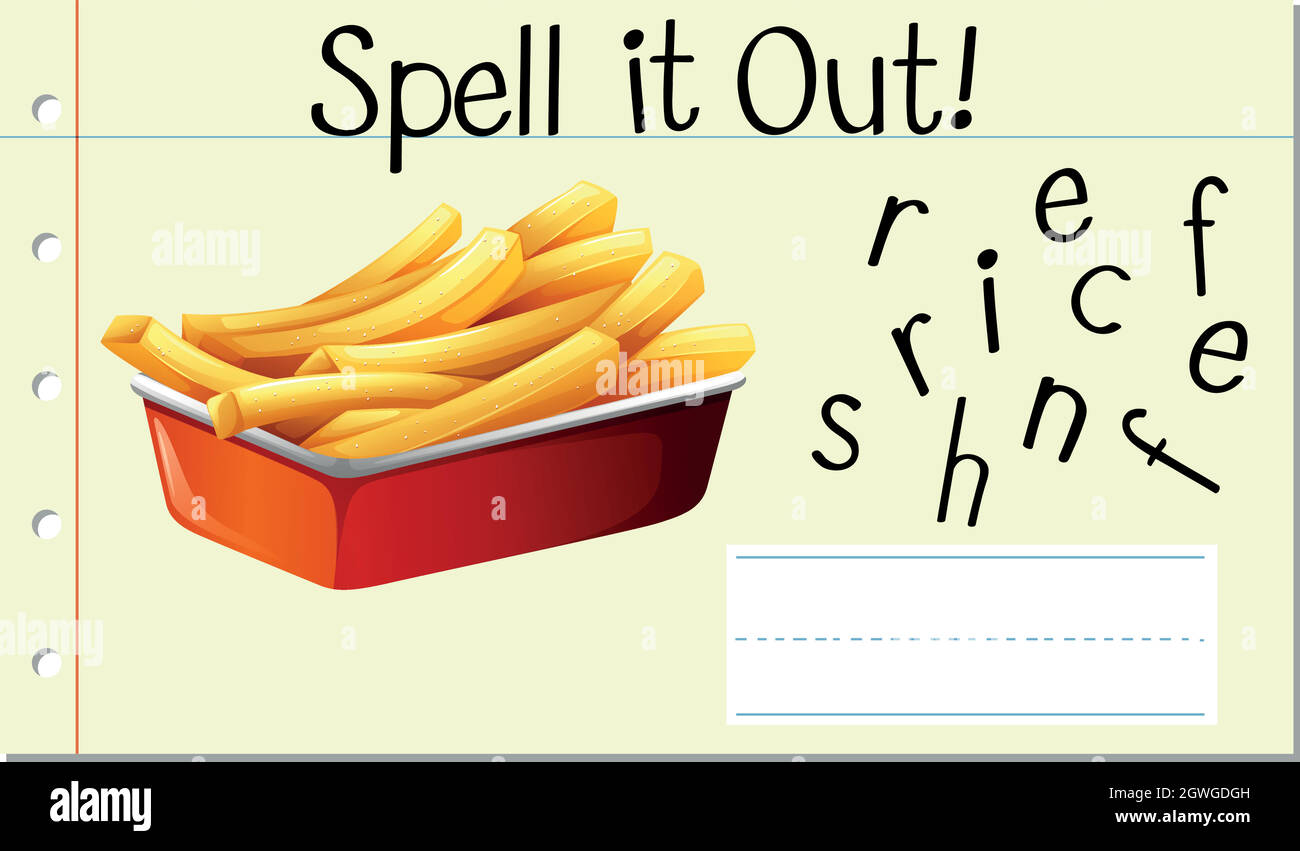
You're at a drive-thru, staring at a digital menu, and suddenly you start overthinking it. It happens to the best of us. Is it capitalized? Does it have a hyphen? How do you spell french fries when you're writing a formal menu or a casual text?
It seems basic. It's just potatoes, oil, and salt. But the English language loves to make things difficult, especially when a proper noun—France—gets dragged into the deep fryer. Honestly, most people just type it out and let autocorrect handle the heavy lifting. But if you're a writer, a chef, or just someone who hates typos, the nuances of these two little words are actually kind of fascinating.
The Short Answer for the Hungry
Let’s get the big question out of the way immediately. In almost every modern context, you spell it french fries. Two words. No hyphen.
Wait. Should that "F" be capitalized?
Generally, no. While "French" refers to a country, the term "frenching" is actually a culinary technique. It refers to cutting vegetables into long, thin strips. Because the term has become so common, most style guides—like the Associated Press (AP) or Chicago Manual of Style—suggest keeping it lowercase unless you’re starting a sentence. You aren't saying the fries are literally from Paris; you're describing the cut.
Why We Get It Wrong So Often
English is a mess. We have "Belgian waffles" (usually capitalized) and "brussels sprouts" (which people argue about constantly). French fries fall into this weird linguistic gray area.
Think about the way we talk. We say "fries" 90% of the time anyway. Adding the "French" part feels formal, which is why your brain starts looking for rules that might not exist. If you look at older cookbooks from the early 20th century, you’ll see "French Fried Potatoes." Over time, we got lazy. We chopped off the "d" in "fried" and eventually dropped the "potatoes" entirely.
It's a linguistic evolution of convenience.
The Hyphen Horror
Some people try to be fancy and write "french-fries." Stop. Just don't. You only use a hyphen if you are using the phrase as a compound adjective to modify another noun, like a "french-fry thief." But as a standalone noun? It stays separate.
The Great Culinary Lie: Are They Even French?
If you want to be pedantic at a dinner party, you can tell everyone that "French" fries are actually Belgian.
According to Belgian lore, villagers in the Meuse Valley used to fry small fish. When the rivers froze in the winter of 1680, they cut potatoes into fish shapes and fried those instead. American soldiers stationed in Belgium during World War I allegedly "discovered" the snack. Since the official language of the Belgian army was French, the soldiers dubbed them "French fries."
Is it true? Historians like Pierre Leclercq have poked holes in this, suggesting the 1680 date is a bit of a myth, but the Belgian connection remains strong. If you go to Bruges today, there is literally a museum called the Frietmuseum dedicated to this. They take it very seriously.
So, when you ask how do you spell french fries, you’re actually using a name born from a geographical misunderstanding.
Capitalization: The Battle of the Style Guides
If you're writing a paper for school or a professional report for a food conglomerate, you need to know which "religion" of grammar you're following.
- AP Style: They say "french fries." Lowercase "f." They treat it like "denim" or "manila folders." The origin is so far removed that the proper noun status has evaporated.
- Merriam-Webster: They acknowledge both, but usually lead with lowercase.
- Oxford English Dictionary: They tend to be a bit more traditional and might lean toward "French fries," but even they recognize the lowercase version is winning the war of common usage.
Context matters. If you’re writing a menu for a high-end bistro called Le Petit Paris, you’ll probably want to use a capital "F" to maintain that sense of European elegance. If you’re writing a blog post about the best fast food in Ohio? Stick to lowercase. It feels less stuffy.
Variations Around the Globe
One reason people struggle with the spelling is that the word itself changes depending on where you land.
In the UK, they are chips. But don't get that confused with American chips, which they call crisps.
In France, they are pommes frites, or just frites.
If you are writing for a global audience, you have to be careful. A "french fry" in London is a very specific, thin thing (like McDonald's), whereas a "chip" is thick, soft, and soaked in malt vinegar.
Does the "D" Matter?
You might see "French fried potatoes" on a vintage-style menu. This is technically the most "correct" historical spelling. The potatoes are fried in the French style. But unless you are trying to evoke a 1950s diner vibe, keep the "d" off. It sounds clunky to modern ears.
Common Typos and How to Avoid Them
We’ve all seen "french frys" on a chalkboard menu at a local fair. It hurts to look at.
The plural of "fry" follows the standard "y to ies" rule.
- Singular: Fry
- Plural: Fries
Don't use an apostrophe. "French fry's" implies the fry owns something. What would a fry own? A tiny hat? Some salt? Unless the fry is a character in a movie, keep the apostrophe out of it.
The "Freedom Fries" Blip
We can't talk about the spelling of this food without mentioning the 2003 rebranding effort in the U.S. House of Representatives. Because of political tensions regarding the war in Iraq, some politicians tried to rename them "Freedom Fries."
It didn't stick.
By 2006, the menus in the House cafeterias quietly changed back. It serves as a great example of how language is driven by the people, not by decree. We like the word "French." it sounds culinary. It sounds established. "Freedom fries" sounded like a side dish served with a side of irony.
Final Verdict on the Spelling
The most "human" way to write it is french fries.
Don't overthink the capitalization. Don't add a hyphen unless you're describing something else (like a "french-fry cutter"). And for the love of all things crispy, do not spell it with a "z" or a "y-s."
How to Get It Right Every Time
If you’re still worried about your spelling or how it looks on the page, follow these simple checks:
- Check your audience: Use "French fries" (capital F) if you want to look formal or traditional. Use "french fries" (lowercase f) for everything else.
- Pluralization check: It is always fries, never frys or fry's.
- Think of the cut: Remind yourself that "french" is a verb (to cut into strips). This makes it easier to remember why the lowercase "f" is usually the way to go.
- Reference a menu: If you're really stuck, look at the website of a major global chain like McDonald's or Burger King. They spend millions on branding and linguistics; they use "Fries" or "french fries."
The next time you’re typing out a grocery list or writing a food review, just remember that the language is as flexible as a soggy fry—but the standards favor the simple, two-word, lowercase approach. Stick to that, and you’ll never look like you’ve spent too much time in the grease trap.
Next Steps for Better Writing
- Audit your current content: Search your website or documents for "french frys" or "french-fries" and batch-correct them to "french fries" to maintain professional consistency.
- Update your brand style guide: If you manage a brand, explicitly state whether you prefer the "French" or "french" capitalization to ensure all your marketing materials look uniform across different platforms.
- Consult the AP Stylebook: For any other food-related proper nouns (like "Swiss cheese" vs. "cheddar"), keep a digital copy of a style guide handy to settle debates quickly without guesswork.