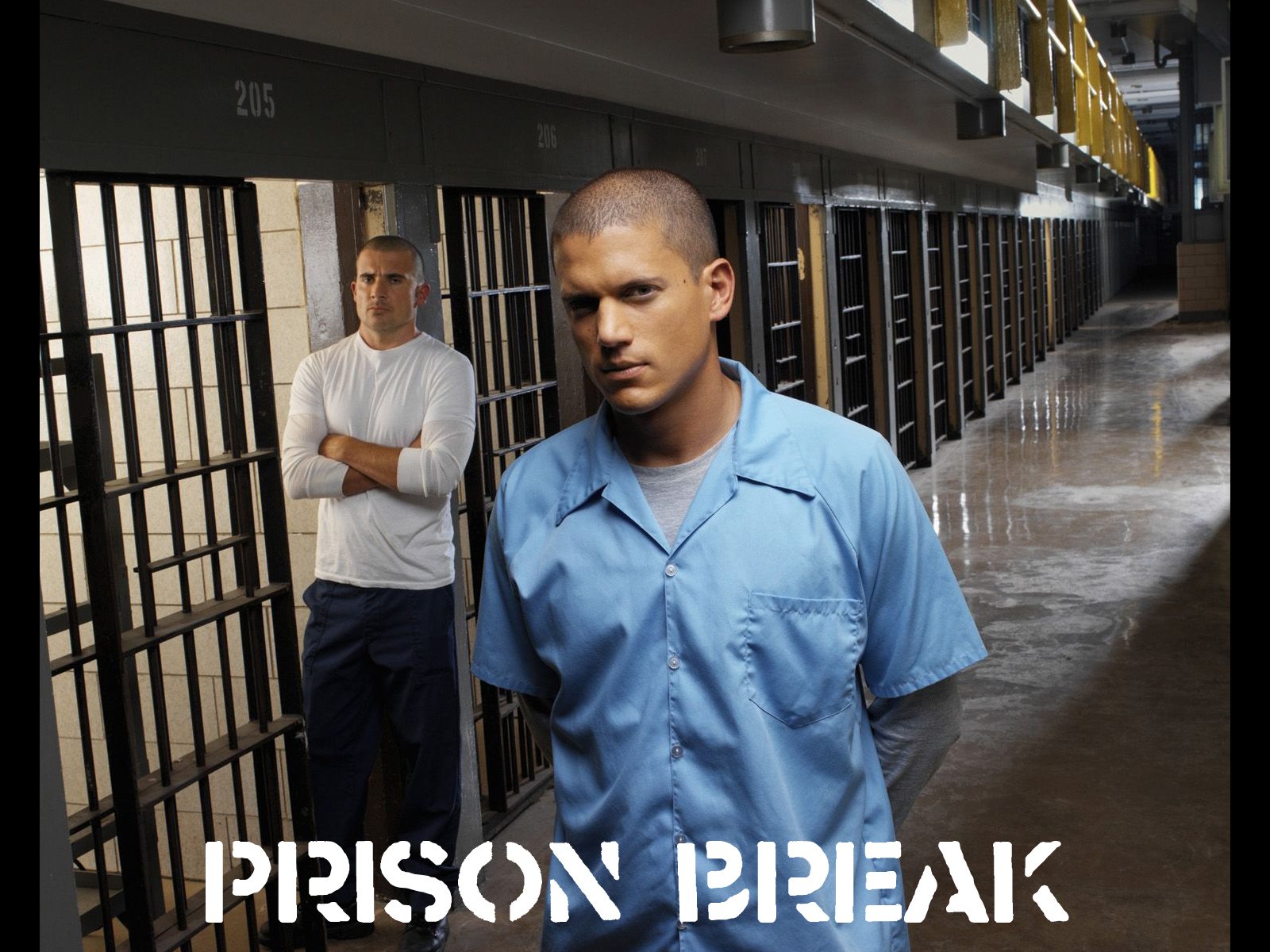
If you’re still confused about how Prison Break actually wrapped up, honestly, nobody blames you. The show didn’t just end once. It ended, then it had a movie, then it came back from the dead eight years later for a revival that felt like a fever dream. Keeping track of Michael Scofield’s "deaths" is basically a full-time job at this point.
Most people remember the tragic beach scene. Michael and Sara walking along the shore, him with a nosebleed, the ultimate sign that the brain tumor was back. It felt final. It was heartbreaking. But that wasn't the actual end. To understand how does Prison Break end, you have to navigate through the 2009 finale, the Final Break standalone special, and the 2017 Season 5 resurrection. It's a lot.
The First Ending: Sacrifice and a DVD Movie
Back in 2009, Season 4 ended with a time jump. We saw Sara Tancredi and a young boy named Mike visiting a grave. Michael Scofield was dead. Or so we thought. The show aired a two-part special called The Final Break to explain what actually happened in that gap.
Sara was in prison (again). Michael had to get her out (again). But there was a catch—a literal door that wouldn't open unless someone stayed behind to manually trigger a power surge. Michael, knowing his brain tumor was a ticking time bomb anyway, chose to sacrifice himself. He grabbed the cables, there was a massive spark, and he essentially fried himself to let Sara escape.
It was a gritty, definitive conclusion. Fans cried. We all moved on. For nearly a decade, that was the canon. Michael was a hero who died for his family.
Why the 2009 Ending Felt Right
The thematic loop was closed. Michael started the show by breaking into prison to save his brother; he ended the show by breaking his wife out of prison. It was symmetrical. Plus, Wentworth Miller played the weary, dying genius with such heavy-eyed exhaustion that it felt like Michael finally earned his rest.
But then 2017 happened.
The Resurrection: Season 5 and Ogygia
When Fox announced a revival, everyone asked the same thing: "Wait, isn't he a charcoal briquette?"
Season 5 explains that Michael didn't die in that electrical blast. Instead, he was recruited—well, coerced—by a rogue CIA operative known as Poseidon (Jacob Ness). Poseidon faked Michael's death, scrubbed his identity, and forced him to break high-level terrorists out of various international prisons. If Michael refused, Sara and Lincoln would go to prison for life.
So, Michael becomes "Kaniel Outis." He’s stuck in Ogygia Prison in Yemen.
The revival is short—only nine episodes. It’s fast-paced. It’s chaotic. It involves ISIL, Yemeni civil wars, and a lot of tattoos that aren't maps this time, but rather encoded images of Poseidon’s own face to bypass facial recognition software. It's wild. It's totally Prison Break.
How Does Prison Break End for Real?
The actual, final-final ending (for now) happens in the Season 5 finale, "Behind the Eyes." This is where Michael Scofield finally stops running.
The climax isn't just a physical fight; it's a battle of geniuses. Michael lures Jacob (Poseidon) into a recreatd version of the crime scene Jacob used to frame Michael years prior. It’s a literal movie set inside a warehouse. By recreating the scene and filming Jacob "killing" him with blanks, Michael proves Jacob’s guilt and clears his own name.
Here is the breakdown of where everyone landed:
- Michael Scofield: He is fully exonerated. The CIA offers him a job, which he turns down because he just wants to be a dad. The last shot of Michael is him sitting on a park bench, watching Sara and his son, Mike. He looks at peace, though he's clearly a changed man.
- Lincoln Burrows: He survives (as always) and ends up with Sheba, the fierce resistance fighter from Yemen. He’s finally out of the shadow of his crimes.
- T-Bag (Theodore Bagwell): This is perhaps the most poetic part of the ending. T-Bag discovers he has a son, Whip, who unfortunately dies during the final confrontation. T-Bag ends up back in Fox River—the prison where the show started. But the kicker? His cellmate is Jacob Ness. The CIA made sure the man who stole Michael's life ended up in a cell with the most dangerous man Michael ever knew.
- Fernando Sucre and C-Note: They both get their "happily ever afters." C-Note found religion and peace, while Sucre remains the most loyal friend in TV history, helping Michael one last time on a cargo ship before heading home.
The "Brain Tumor" Plot Hole
One thing that still bugs fans is the brain tumor. Remember the nosebleeds? The surgery? The fact that he was supposed to die regardless of the electrical surge?
Season 5 basically hand-waves this away. It’s implied that the high-level medical care provided by the CIA (Poseidon) fixed his brain. It’s a bit of a "don't think too hard about it" moment. If you can accept that a man can tattoo an entire blueprint on his torso in a week, you can accept that the CIA has really good neurosurgeons.
Why There Isn't a Season 6
For a long time, there were rumors. Dominic Purcell (Lincoln) was vocal on Instagram about a sixth season. But Wentworth Miller eventually made a firm statement: he is done playing Michael Scofield.
Miller, who came out as gay in 2013, stated he no longer wants to play straight characters because their stories have been told over and over. Without Michael, there is no Prison Break. While there have been talks of a reboot or a spin-off in the same universe with new characters, the story of the Burrows-Scofield brothers is officially over.
Actionable Takeaways for Your Rewatch
If you're planning on revisiting the series or finishing it for the first time, keep these points in mind to make sense of the chaos:
- Watch in Order: Don't skip The Final Break movie between Season 4 and Season 5. If you do, Michael being alive in the revival will make zero sense.
- Focus on the Subtext: The ending of Season 5 is less about the escape and more about Michael reclaiming his identity. Pay attention to the tattoos on his palms; they are the key to the final "break."
- Accept the Camp: Prison Break started as a gritty thriller, but it ended as a superhero show. Enjoy the absurdity of the "Poseidon" plot for what it is.
- Check Out the Soundtrack: Ramin Djawadi (who later did Game of Thrones) composed the music. The motifs in the final episodes are brilliant callbacks to the pilot.
The saga of Michael Scofield is a long, winding road of literal and metaphorical walls. It ends not with a bang, but with a quiet afternoon in a park—a simple life that the man with the tattooed skin spent fifteen years fighting to earn.