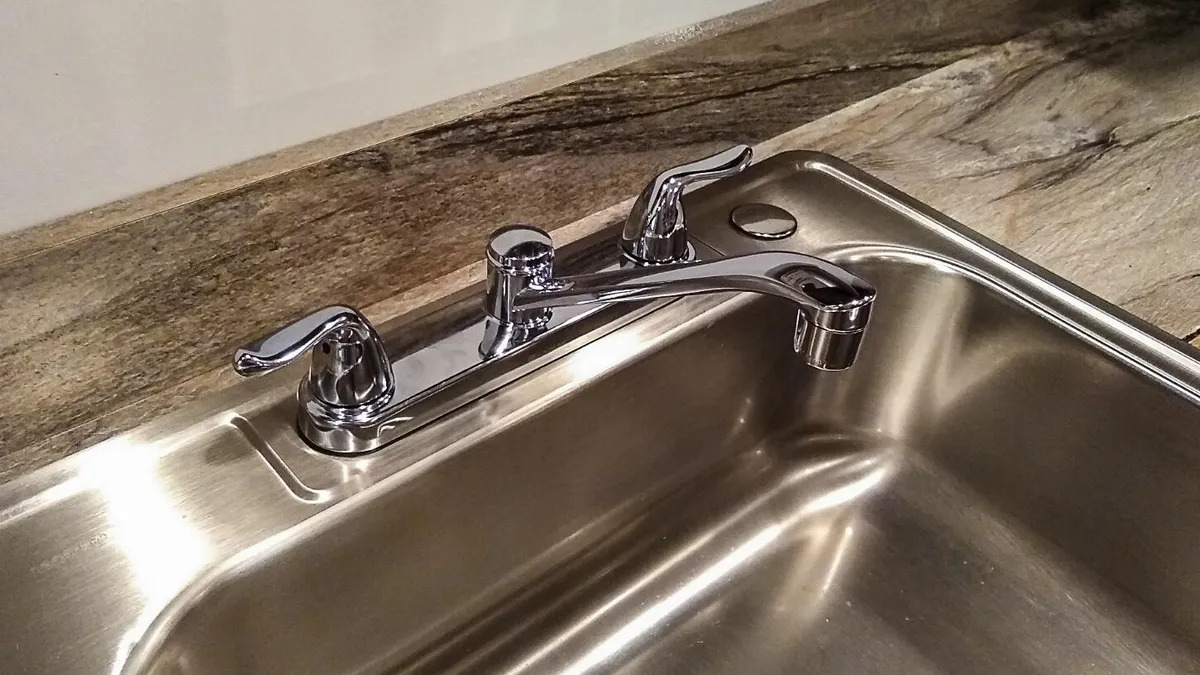
You’re staring at that crusty, lime-scaled metal thing in your kitchen or bathroom and realizing it’s finally time. Maybe the drip-drip-drip is driving you insane at 3 AM. Or perhaps you just want a matte black finish because you saw it on Instagram and now your chrome looks dated. Honestly, learning how to install sink faucet fixtures is one of those home repairs that sounds terrifying until you actually get your head inside the cabinet. It's cramped. It’s dark. You will probably drop a nut into a bucket of gray water. But it’s also a job that can save you a $300 service call fee from a local pro like those at Roto-Rooter or Benjamin Franklin Plumbing.
Most people think plumbing is about complex physics. It's not. It's mostly just making sure things are tight enough to stay dry but not so tight that you crack the porcelain or snap a plastic nut.
The stuff you actually need (and what you don't)
Before you even touch the wrench, you need to know what you're working with. Look under your sink. Is it a single-hole setup? Or do you see three holes spaced out? This matters because if you buy a single-handle faucet for a three-hole sink, you’re going to need a deck plate—that wide metal base—to hide the extra holes. Don't be the person who gets halfway through the install only to realize they have giant gaps in their countertop.
Tools that make life less miserable
You don't need a massive rolling toolbox. You basically need a basin wrench. Seriously, buy one. It’s a weird, long-handled tool with a swiveling claw on the end. Since you can't fit a standard wrench behind the deep basin of a kitchen sink, this tool is the only thing that will reach the mounting nuts without you losing your mind. You’ll also want some adjustable wrenches (Crescent is the classic brand), some plumber's tape (that white Teflon stuff), and a bucket. Always have a bucket.
You’ve probably heard people talk about plumber’s putty. Here’s the thing: many modern faucets, especially from brands like Moen or Delta, come with rubber gaskets that do the job better. If the instructions say use the gasket, use the gasket. Putting putty on a high-end stone countertop can actually stain the porous material if you aren't careful. Stick to the manufacturer’s specs.
Tearing out the old junk
First step. Shut off the water. If you skip this, you’re going to have a bad time. Find the shut-off valves under the sink. Turn them clockwise. If they’re old and crusty and won’t budge, don't force them too hard or you might snap the stem. If they’re stuck, you might have to shut off the main water line to the whole house.
Once the water is off, open the faucet handles to bleed out any remaining pressure.
Now comes the "fun" part. Use your wrenches to disconnect the supply lines from the valves. Have your bucket ready because there is always water left in the lines. It’s going to spill. It’s going to be cold. Just catch it and move on. After the lines are disconnected, use that basin wrench I mentioned to unscrew the mounting nuts holding the old faucet to the sink.
Dealing with "The Corrosion Factor"
Sometimes, the old metal nuts are rusted solid. It’s a nightmare. If they won't move, hit them with some WD-40 Specialist Penetrant or PB B'laster. Let it sit for fifteen minutes. If that doesn't work, you might have to carefully use a hacksaw blade or a multi-tool to cut the nut off. Just don’t nick the sink itself.
Once the nuts are off, pull the old faucet up through the top. It’ll probably be gross. There will be a ring of gunk where the faucet sat for ten years. Clean it. Use a plastic putty knife and some vinegar. You want a perfectly smooth, clean surface before you try to how to install sink faucet replacements.
Putting the new one in
This is where the magic happens. Take your new faucet and thread the supply lines down through the center hole. If you’re using a deck plate, make sure it’s seated correctly with its gasket.
Get back under the sink. This is the part where your neck starts to hurt. You’ll need to slide the washer and the mounting nut up the lines and onto the threaded shank of the faucet. Hand-tighten them first. Make sure someone is standing above the sink to hold the faucet straight. There is nothing more annoying than finishing a job only to realize the faucet is crooked by five degrees.
Connecting the lines
Most new faucets come with integrated PEX supply lines. They’re basically flexible plastic hoses. If yours has these, you just loop them (don't kink them!) and connect them to the shut-off valves. If your faucet didn't come with lines, you'll need to buy braided stainless steel ones.
Apply a little bit of plumber's tape to the threads of the shut-off valves. Wrap it clockwise so that when you screw the nut on, it doesn't unwrap the tape. Tighten it down with a wrench, but don't go "Hulk" on it. Snug is good. Crushed is bad.
The secret step: Flushing the system
People always forget this. If you turn the water on right away, any sediment or "construction gunk" that was knocked loose will flow straight into your brand-new aerator. It’ll clog instantly.
- Unscrew the aerator (the little mesh screen at the tip of the spout).
- Turn the water valves back on slowly.
- Check for leaks at the valves.
- Run the faucet for about a minute.
- Watch the water flow. It might look brown or gray for a second. That's normal.
- Once it's clear, turn the faucet off and put the aerator back on.
Why things still leak
If you see a puddle, don't panic. It’s usually one of two things. Either the supply line connection isn't tight enough, or you cross-threaded the nut. Cross-threading is when the threads don't align and you force it, stripping the metal. If it felt really hard to turn from the start, you probably cross-threaded it. Back it off and try again.
Another common fail point is the pop-up drain assembly. If you bought a kit that included a new drain, that’s a whole different animal involving more plumber's putty and a large slip-joint nut. Make sure the large rubber gasket (the "macked" washer) is facing the right way—usually with the tapered side up toward the sink hole.
A note on high-end materials
If you're working with a pedestal sink or a vessel sink, the physics are the same, but the space is even tighter. For vessel sinks, you’re usually installing a "tall" faucet that mounts directly to the countertop. These are actually easier because you aren't fighting the sink basin for space. However, make sure your measurements are perfect. If the spout doesn't reach far enough into the bowl, you'll have water splashing all over your vanity every time you wash your hands.
Professional insights you won't find in the manual
According to many professional contractors, the biggest mistake DIYers make is over-tightening. Modern plumbing uses a lot of O-rings. These O-rings are designed to seal with moderate pressure. When you crank down on them with a 12-inch wrench, you actually deform the rubber, which creates a gap for water to escape.
Also, keep an eye on your "P-trap"—that U-shaped pipe under the sink. While you’re bumping around down there, it’s easy to loosen the slip nuts on the drain pipe. Before you close the cabinet doors, run a dry paper towel over every single joint. If the towel stays dry, you’re golden. If there’s even a damp spot, give that nut a quarter-turn.
Actionable Next Steps
- Measure your holes: Count if you have 1, 2, 3, or 4 holes in your sink before going to the store.
- Buy a basin wrench: It costs $15 and will save you three hours of swearing.
- Take a "Before" photo: Take a picture of the underside of your sink before you take it apart so you remember how the pipes were configured.
- Clear the deck: Take everything out from under the sink. You need the room to move.
- Check the valves first: Turn your shut-off valves today. If they don't turn, you need to buy replacement valves before you start the faucet project.
Installing a sink faucet is a rite of passage. It’s the "Level 1" boss of home maintenance. Once you realize that most of it is just screwing and unscrewing parts, the mystery vanishes. You’ll have a better-looking kitchen and a little more confidence for the next time something in the house decides to break.