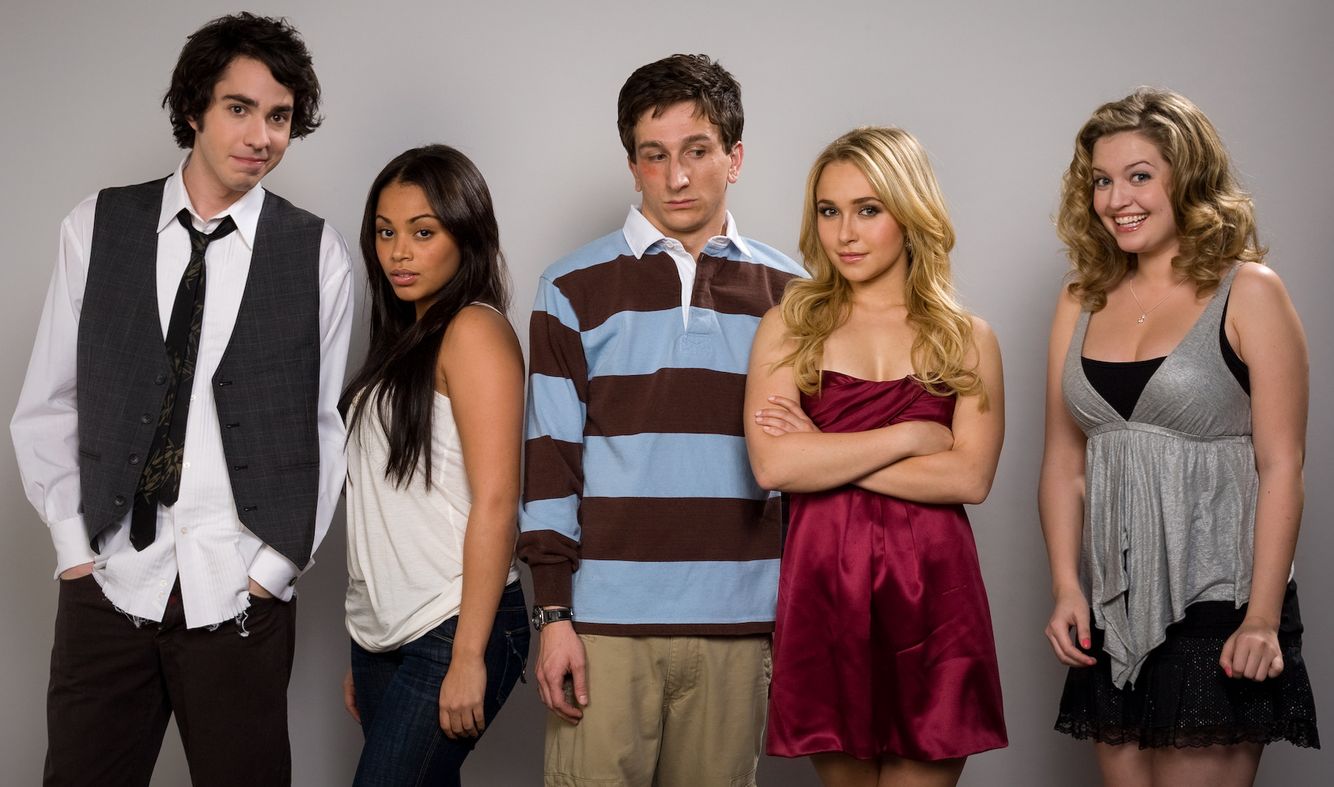
If you were breathing in 2009, you probably remember the neon-pink poster for I Love You, Beth Cooper. It featured Hayden Panettiere, fresh off her Heroes fame, looking like the quintessential dream girl. But here’s the thing: people usually remember the hype or the lukewarm reviews more than the actual movie. Honestly, looking back at it now through a 2026 lens, the film is a fascinating time capsule of an era where teen comedies were trying—and often failing—to find their soul after the Superbad explosion.
The premise is basically the ultimate nerd-fever dream. Denis Cooverman, played by Paul Rust, is the valedictorian who decides his graduation speech is the perfect time to confess his undying love for the head cheerleader, Beth Cooper. It's bold. It's awkward. It's the kind of thing that makes your skin crawl with secondhand embarrassment.
The Larry Doyle Factor: From Page to Screen
What most folks forget is that this wasn't just some random script cooked up in a boardroom. It was based on the novel by Larry Doyle. Doyle wasn't some newcomer; he was a writer for The Simpsons during its absolute peak. You can feel that DNA in the dialogue. It's snappier than your average teen movie, even if the transition to the big screen, directed by Chris Columbus, felt a little bumpy.
Columbus is the guy who gave us Home Alone and the first two Harry Potter movies. He knows how to handle "youthful wonder," but I Love You, Beth Cooper required a grittier, more chaotic energy. The book is actually quite cynical. It deconstructs the "Manic Pixie Dream Girl" trope before that term was even widely used. In the movie, that cynicism gets smoothed over by Hollywood gloss, which is why critics at the time, like Roger Ebert, felt it didn't quite land the plane. Ebert actually gave it two stars, noting that the movie seemed stuck between a raunchy comedy and a sweet romance.
Denis Cooverman vs. The World
Paul Rust is an interesting lead. He doesn't look like the typical Hollywood "nerd" who is just a pair of glasses away from being a model. He’s genuinely quirky. When he delivers that speech, you feel his desperation.
The movie tracks one single, insane night. It’s the "one-night odyssey" trope we’ve seen in Can't Hardly Wait or After Hours. Denis, his best friend Rich (who is obsessed with movie quotes), Beth, and her two friends spend the night running from Beth's psychotic military boyfriend, Kevin.
Why the Critics Were (Mostly) Wrong
The Rotten Tomatoes score for I Love You, Beth Cooper is pretty dismal, sitting in the low teens. But if you watch it today, there’s a weird charm to it. It’s not a masterpiece, but it’s honest about how terrifyingly high the stakes feel when you’re eighteen.
One thing the movie gets right is the realization that your idols are human. Denis spent four years worshiping a version of Beth Cooper that didn't exist. Over the course of their night in a beat-up Hummer, he realizes she’s kind of a mess. She’s failing. She’s scared of the future. She’s not just a poster on a wall.
That’s the nuance people missed.
- The "Rich" character (Jack Carpenter) provides a meta-commentary on movies themselves.
- The violence is surprisingly slapstick—think Home Alone but with more blood.
- The soundtrack is a 2009 indie-pop goldmine.
A Legacy of "Almost"
Why didn't it become a cult classic like Mean Girls?
Part of it was timing. 2009 was the year of The Hangover. Audiences wanted massive, R-rated set pieces. I Love You, Beth Cooper was rated PG-13, which neutered some of the edge from Doyle’s book. It felt too safe for the "edgy" crowd and too weird for the mainstream.
Also, Hayden Panettiere was at the height of "Save the cheerleader, save the world" mania. People struggled to see her as anything else. But watch her performance again. She plays Beth with a flickering sadness behind the eyes. She knows high school is the peak of her life, and she’s terrified of the "downhill" that starts Monday morning.
The Real High School Experience
Let’s be real. Most high school movies are fantasies.
This one is, too, but it captures the specific brand of suburban boredom that leads to bad decisions. The scene where they break into the school or the weird party at the cabin—those feel authentic to anyone who grew up in a town where the most exciting thing to do was drive around until someone ran out of gas.
Revisiting the Movie in 2026
If you’re going to revisit I Love You, Beth Cooper, you have to look past the dated tech. The flip phones and the mentions of MySpace-era social dynamics are relics now. But the core theme—the transition from being a "character" in high school to being a person in the real world—still works.
The film serves as a bridge between the John Hughes era and the modern A24-style coming-of-age stories. It has the heart of the 80s but the cynicism of the 2000s.
It’s also a lesson in expectations. If you go in expecting a high-brow satire, you'll be disappointed. If you go in expecting a goofy, slightly melancholy road trip movie about a nerd who finally stops living in his head, it’s actually a great Saturday night watch.
Essential Trivia You Probably Missed
- The movie was filmed largely in Vancouver, standing in for Buffalo, New York.
- Larry Doyle wrote the screenplay himself, which is why so much of the book’s specific dialogue remains.
- The "towel scene" became a massive marketing point but is actually one of the more grounded moments of character vulnerability in the film.
Actionable Takeaways for Movie Buffs
If you want to truly appreciate what I Love You, Beth Cooper was trying to do, don't just stream the movie.
- Read the book first. Larry Doyle’s prose is biting and much darker than the film. It gives you the context for why Denis is so socially stunted.
- Watch for the cameos. There are small roles and background bits that scream late-2000s comedy culture.
- Compare it to "Booksmart." If you want to see how the "one night to change your life" genre evolved, watch these two back-to-back. You'll see exactly how the tropes were refined over a decade.
- Check the soundtrack. Honestly, the tracklist—featuring artists like OK Go and The Weepies—is a perfect snapshot of the "indie-sleaze" transition period.
The film might not be the "best" teen movie ever made, but it is one of the most earnest. It’s a messy, loud, occasionally embarrassing tribute to the moment you realize your life is finally starting. Stop looking at the Rotten Tomatoes score and just watch it for what it is: a chaotic goodbye to childhood.