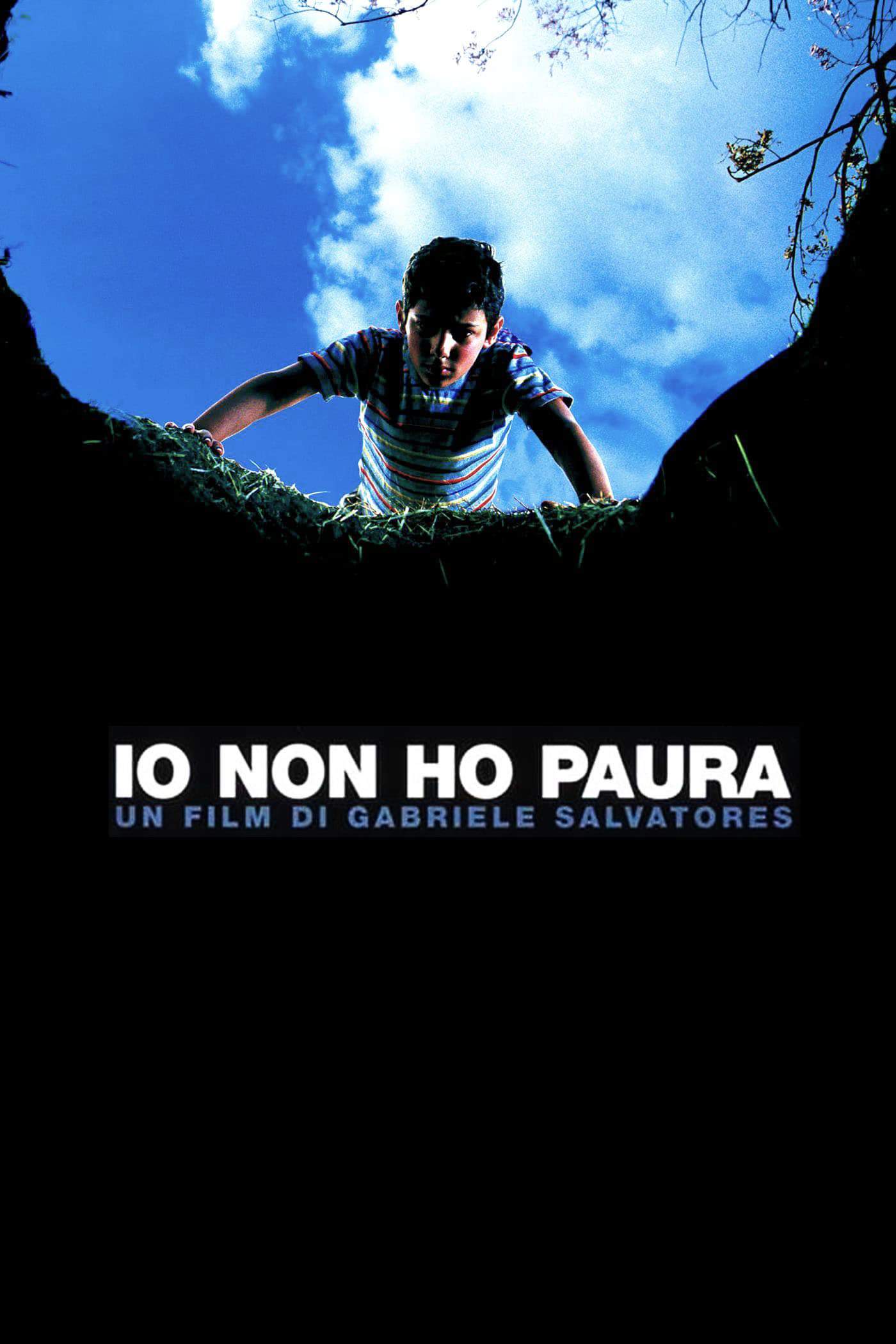
Summer in Southern Italy is oppressive. It is a blinding, golden heat that turns wheat fields into a sea of fire and makes the air thick enough to swallow. This is the setting of the I'm Not Scared film, or Io non ho paura in its original Italian, a 2003 masterpiece directed by Gabriele Salvatores.
It's 1978. While the rest of Italy is gripped by the political "Years of Lead" and the kidnapping of Aldo Moro, ten-year-old Michele Amitrano is just trying to survive the boredom of the countryside. He spends his days racing bikes through the hills of Basilicata. Then, he finds the hole.
Michele discovers a boy named Filippo chained at the bottom of a pit near a derelict farmhouse. This isn't just a movie about a kid finding a secret; it’s a brutal dissection of how adult greed destroys childhood innocence. Honestly, it’s one of the few films that captures exactly how a child perceives horror—not through jump scares, but through the realization that your parents aren't the heroes you thought they were.
The Brutal Reality Behind the I'm Not Scared Film
The film is based on the novel by Niccolò Ammaniti. He also co-wrote the screenplay. This is important because the movie retains that gut-wrenching, lyrical quality of the book.
People often forget that Italy in the 70s was plagued by the "kidnapping industry." Between 1969 and 1998, over 600 people were kidnapped for ransom in Italy, many by the 'Ndrangheta or local criminal bands in the south. This isn't a fantasy. It’s a grounded piece of historical fiction. Filippo, the boy in the hole, is the son of a wealthy family from the North. Michele’s family, struggling with poverty in the "Deep South," is involved in the crime.
The contrast is sickening.
You see the beautiful cinematography by Italo Petriccione—wide shots of the Acqua Traverse landscape—and then you’re plunged into the dark, filthy hole where Filippo is losing his mind. The I'm Not Scared film uses this visual dichotomy to show the gap between the world Michele thought he lived in and the one he actually inhabits.
Why the Casting of Giuseppe Cristiano Matters
Salvatores took a massive risk with the casting. Most of the kids were non-professional actors from the region. Giuseppe Cristiano, who plays Michele, has these enormous, expressive eyes that carry the entire emotional weight of the story.
When Michele first finds Filippo, he doesn't call the police. He’s a kid. He thinks Filippo is a ghost or a twin. He brings him water. He brings him bread. The relationship that develops is fragile. It’s built on a shared childhood that one is still living and the other has had stolen away.
Mattia Di Pierro, who played the kidnapped Filippo, had to spend hours in a literal hole. The dirt under his fingernails and the matted hair weren't just makeup; the production leaned into the physical discomfort to get that raw, terrified performance. It worked.
The Sound of Fear
Let's talk about the music. Ezio Bosso and Pepo Scherman created a score that is almost entirely strings. It doesn't sound like a typical thriller soundtrack. There are no low, booming synths. Instead, you get these frantic, high-pitched violins that mimic the sound of a child’s heartbeat or the buzzing of cicadas in the heat.
It’s anxious.
The music underscores the moment Michele realizes his father, Pino (played by the incredible Diego Abatantuono), is the one holding the keys to Filippo’s chains. That’s the true "horror" of the I'm Not Scared film. It’s the death of the father-figure.
Breaking Down the Visual Language
Salvatores uses a lot of low-angle shots. The camera sits at Michele's eye level. When the adults talk, they look like giants—sometimes looming and protective, other times grotesque and terrifying.
- The Wheat Fields: They represent freedom but also a maze.
- The Hole: A literal and metaphorical descent into the "underworld" of adult morality.
- The Blue Bike: Michele’s only possession of value, which he eventually bets and loses, symbolizing his loss of agency.
The film moves fast. It’s only 101 minutes. But it feels like a lifetime because of how it stretches those tense, quiet moments in the sun.
What Most People Miss About the Ending
Without giving away every single beat, the ending of the I'm Not Scared film is a tragedy of errors. It is a "fable gone wrong."
Many viewers focus on whether the boys survive. But the real takeaway is the permanent fracturing of the community. The village of Acqua Traverse is tiny. Everyone knows. Everyone is complicit in some way, whether through action or silence.
The final shot—Michele and Filippo reaching for each other while helicopters hover above—is one of the most iconic images in Italian cinema. It’s a moment of connection in a world that has completely fallen apart.
Critics at the time, like Roger Ebert, pointed out that the film succeeds because it doesn't try to be a political lecture. It stays in Michele’s head. It stays with his monsters. He imagines giants and witches, but the real monsters are the men sitting in his kitchen drinking wine and planning a ransom.
A Legacy of "Southern Noir"
This movie basically kickstarted a renewed interest in "Southern Noir." It proved that you could make a beautiful, "prestige" film that was also a gripping thriller.
The I'm Not Scared film won two David di Donatello awards (Italy's Oscars) and was Italy's submission for the Best Foreign Language Film at the 76th Academy Awards. Even though it didn't win the Oscar, its influence is still felt in shows like My Brilliant Friend, which uses that same blend of harsh reality and childhood perspective.
It’s a hard watch. It’s supposed to be.
If you're watching it for the first time, look for the way the color palette shifts. The beginning is hyper-saturated—yellows, blues, greens. As Michele learns the truth, the colors drain. The nights get darker. The shadows get longer.
How to Watch and What to Look For
If you are diving into this film today, try to find the remastered version. The 35mm film grain is essential to the experience.
Key Elements to Watch For:
- The interaction between Michele and his sister: It’s the most "real" part of the movie. No sentimental BS, just kids being kids.
- Sergio, the outsider: The character from the North who comes to manage the kidnapping. He represents a different kind of evil—cold, calculated, and totally detached from the land.
- The ending sequence: Pay attention to the lighting. It’s shot during the "blue hour," giving it a surreal, dreamlike quality that contrasts with the violence.
The I'm Not Scared film isn't just a "foreign movie" you watch to feel cultured. It’s a gut-punch. It’s a reminder that the world is a scary place, and sometimes, the only thing you have is your own sense of right and wrong.
Next Steps for the Ultimate Experience
To truly appreciate the depth of this story, start by watching the film in its original Italian with subtitles; the regional accents of the South provide a layer of authenticity that dubbing completely destroys. After viewing, seek out Niccolò Ammaniti's original novel. The book offers a deeper look into Michele’s internal monologues and his imaginative "monsters," which helps explain his logic during the film's most intense scenes. Finally, compare this work to Salvatores' other films, like Mediterraneo, to see how he transitioned from lighthearted comedy-drama to this gritty, high-stakes storytelling. Following this path will give you a complete understanding of why this specific film remains a cornerstone of modern European cinema.