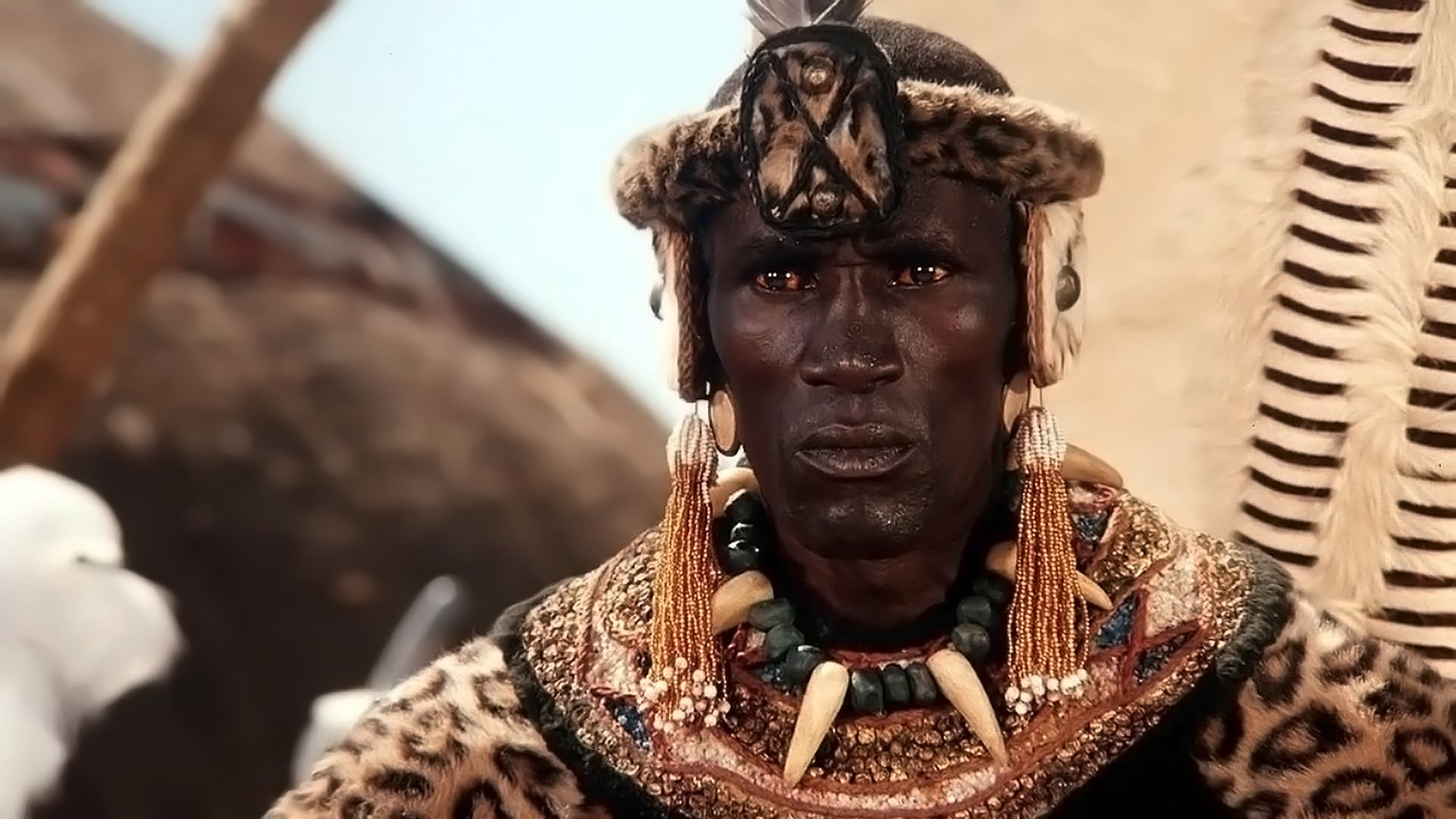
You’ve seen the posters. Maybe you’ve seen the 1980s miniseries where Henry Cele towers over everyone with a gleaming spear and a look that could melt stone. When people search for images of the real Shaka Zulu, that’s the face they expect to find. A muscular, terrifyingly symmetrical warrior-king.
But here’s the thing. We don’t actually have a single photograph of him. Not one.
Shaka kaSenzangakhona died in 1828. The first commercial cameras—the daguerreotypes—didn't really hit the scene until 1839. That’s an eleven-year gap that changed everything for his visual legacy. Because there are no photos, we are left with a handful of sketches, colonial-era diaries, and a massive pile of modern "reconstructions" that might be more fiction than fact.
The Only "Real" Sketch from His Lifetime?
If you go looking for the most authentic images of the real Shaka Zulu, you’ll eventually stumble upon a specific drawing. It’s a sketch attributed to a man named James Saunders King, dating back to 1824.
King was a trader and sailor who actually spent time at Shaka’s royal kraal, KwaBulawayo. This sketch appeared in Nathaniel Isaacs’ 1836 book, Travels and Adventures in Eastern Africa.
In this image, Shaka doesn't look like a bodybuilder. He’s draped in heavy leopard skins and carries a massive, man-sized shield. He’s wearing a long, singular crane feather that curves high over his head.
But can we trust it?
Honestly, historians are split. Some say James King drew it from memory years later. Others think Nathaniel Isaacs, who was a bit of a sensationalist, had the artist "tweak" Shaka’s look to make him seem more exotic or "savage" to sell more books in London.
Why the 1824 Sketch Matters
- It shows the iklwa, the short stabbing spear Shaka is famous for inventing.
- The shield is huge, reaching from his chin to his ankles, which aligns with historical military tactics.
- His proportions are more "normal human" than the statues we see today.
The problem is that the facial features in this sketch are… well, they’re a bit generic. It looks like a European’s idea of an African king rather than a precise portrait.
What the Eye-Witnesses Actually Said
Since we can't rely on a camera lens, we have to rely on the words of the men who stood in front of him. Henry Francis Fynn and Nathaniel Isaacs are the two big ones.
Fynn described Shaka as being around 6 feet tall. For the early 1800s, that was huge. He was lean, but powerfully built. He wasn't just a king who sat on a throne; he was a marathon runner who could outpace his own soldiers.
Interestingly, Isaacs once mentioned in a letter that Shaka had "a Hebrew expression" in his facial features. That’s likely just Isaacs projecting his own background onto the King, but it suggests Shaka’s face was striking and perhaps not "typical" of what the British expected to see.
"He was a figure of magnificent proportions... with a tall, commanding presence." — Summary of notes from Henry Francis Fynn's Diary.
The Henry Cele Effect
We have to talk about the 1986 TV show Shaka Zulu. For millions of people, Henry Cele is the real Shaka Zulu.
Cele was a professional soccer goalkeeper before he was an actor, and his physical presence was undeniable. The show used incredible costume design, but it also leaned into the "warrior-god" aesthetic. This version of Shaka is usually what pops up when you search for images.
It’s a great look. But it’s a 20th-century interpretation.
Modern statues, like the ones that used to be in London’s Camden Market or the controversial one at King Shaka International Airport in Durban, usually follow this "Cele-esque" model. They focus on the muscles and the ferocity.
The real Shaka probably looked a lot more like a seasoned athlete than a modern gym-goer. Think wiry strength. Think skin toughened by the sun and scarred from actual combat.
Why "Real" Images Are So Hard to Find
History is often written—and drawn—by the winners or the outsiders. The Zulu people had a rich oral tradition, but they didn't do 2D portraiture.
When you see a "portrait" of Shaka today, you’re usually seeing one of three things:
- The James King Sketch (1824): The closest thing to a primary source.
- The George French Angas Paintings: These are beautiful, but they were painted in the 1840s, long after Shaka was gone. They show his successors, like Mpande, and people often mislabel them as Shaka.
- Modern AI or Digital Art: This is the Wild West. You'll see "photorealistic" images of Shaka on Instagram or Pinterest. They look cool, but they are 100% generated based on modern beauty standards.
How to Spot a Fake "Real" Image
If you're doing research and want to stay factually accurate, look for the details.
If the person in the image looks like they’ve been lifting weights at a Gold’s Gym, it’s modern. If they are carrying a small, round shield (like the ones used in later movies), it’s inaccurate. The real Shaka used the isihlangu—the large, oval cowhide shield that could cover the entire body.
Also, check the spear. If it’s a long throwing javelin, it’s definitely not Shaka. He famously hated throwing spears, calling them "cowardly." He wanted his men to get close. His image should reflect that "up close and personal" violence.
Actionable Takeaways for Your Research
- Stick to the James King sketch if you need the most "contemporary" visual, but acknowledge its colonial bias.
- Reference the isihlangu shield size to verify if an artist actually knew Zulu history or was just guessing.
- Differentiate between Shaka and his successors. Many "Zulu King" images are actually of Cetshwayo, who was photographed extensively in the late 1800s.
- Use oral descriptions from the James Stuart Archive to fill in the blanks that drawings leave behind.
Basically, the "real" image of Shaka Zulu exists in the space between a 200-year-old sketch and the stories passed down through generations. He wasn't a movie star. He was a revolutionary, a strategist, and a man who built an empire from a small clan. That kind of presence is hard to capture in a simple drawing.
To get a true sense of him, you have to look past the muscles of the TV versions and look at the functional, lethal simplicity of the 1820s Zulu military gear. That's where the real man lives.