Honestly, walking into the theater for Inside Out 2, most of us expected a cute retread of the first movie. We figured we’d see Joy being a bit too controlling and Sadness saving the day again. But then the "Puberty Alarm" went off, the construction crew demolished Headquarters, and we met the new crew. While everyone is talking about the orange whirlwind that is Maya Hawke's Anxiety, the dynamic with the original Inside Out 2 characters Fear and his new counterparts actually tells a much deeper story about how our brains try (and often fail) to protect us.
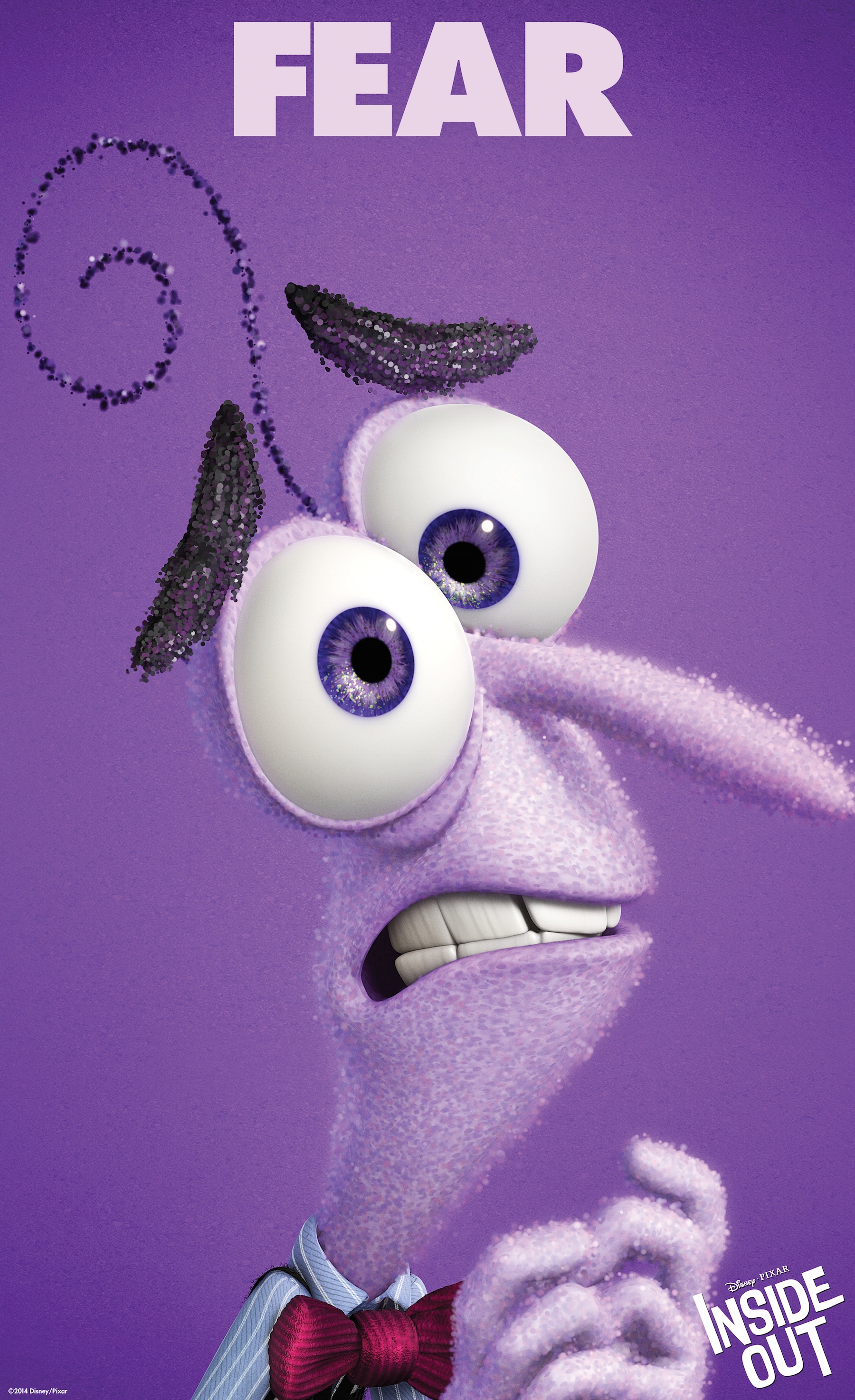
Bill Hader didn't return for the sequel, which was a bummer for some, but Tony Hale stepped into the purple sweater vest of Fear and nailed that frantic, high-strung energy. Fear's job has always been simple: keep Riley alive. He’s the guy who sees a power cord and thinks "electrocution" or looks at a sidewalk crack and imagines a broken neck. He’s survival. But in the sequel, he gets shoved aside by Anxiety, and that’s where the movie gets surprisingly clinical and incredibly accurate about adolescent mental health.
The Messy Relationship Between Fear and Anxiety
People use these terms interchangeably in real life, but the movie makes a brilliant distinction. Fear is about the present. It’s the immediate "don't touch the stove" reaction. Anxiety, on the other hand, is about the "what if." She’s the one drawing up elaborate plans for social disaster ten years down the line.
Early on, we see the Inside Out 2 characters Fear and Anxiety trying to coexist. It’s awkward. Fear is a reactionary emotion, while Anxiety is a planner. When Riley enters high school hockey camp, Fear is worried about getting hit by a puck. Anxiety is worried about Riley not having friends for the next four years if she doesn't make the team. It’s a subtle shift from physical safety to social survival.
The movie handles this transition by literally "bottling up" the old emotions. When Anxiety takes over and flings Joy, Sadness, Anger, Disgust, and Fear into a literal glass jar, it’s a perfect metaphor for what happens during a teenage identity crisis. You suppress the core parts of who you are because you're too busy trying to engineer a version of yourself that won't get rejected.
Why Tony Hale’s Fear Matters Now
Replacing a voice actor is always a gamble. Fans grew up with Hader's specific brand of neuroticism. However, Tony Hale brings a "nervous dad" energy that fits the sequel's older Riley. He feels less like a cartoon character and more like a frantic internal guardian.
Fear’s role in this movie is actually quite tragic if you look closely. He’s the one who recognizes that Anxiety is taking things too far. He’s a professional at being scared, yet even he is terrified of what Anxiety is doing to Riley’s Sense of Self. There’s a specific nuance here: Fear understands limits. Anxiety doesn't have any.
That Panic Attack Scene: A Factual Breakdown
If you've been on social media lately, you've seen the clips. Riley is in the penalty box. The screen starts to blur. The sound design gets muffled and high-pitched. This is easily the most talked-about moment involving the Inside Out 2 characters Fear and his interaction with the new emotions.
Clinical psychologists have actually praised Pixar for this. Anxiety becomes a literal blur of motion at the console, moving so fast she can't even be seen. She’s paralyzed by her own need to control the future. This isn't just movie magic; it’s a representation of the "limbic hijack."
- The Heart Rate: Riley’s breathing becomes shallow and rapid.
- The Mental Loop: The "I'm not good enough" belief system takes over.
- The Resolution: It isn't Joy who stops it. It’s a collective realization that Riley needs to be "all" of herself, not just the "good" parts.
Fear stands by during this, relegated to the sidelines. It’s a stark reminder that when chronic anxiety takes over, our basic survival instincts—the ones that tell us to rest, eat, or just breathe—get totally drowned out.
The "Protection" Paradox
We often think of Fear as a "bad" emotion. Who wants to be afraid? But the film argues that Fear is actually one of Riley's greatest protectors. Without him, she’d have no boundaries. The conflict between the Inside Out 2 characters Fear and Anxiety highlights a 2024 study by the Journal of Child Psychology and Psychiatry which notes that healthy fear is developmental, while projected anxiety can be debilitating.
Think back to the "Vault" scene. Fear is the one who is most concerned about the "Deep Dark Secret." He knows that some things are meant to stay hidden to protect the ego. Anxiety, conversely, wants to dig everything up and use it as fuel for "preparatory planning." It’s a mess. A relatable, middle-school-style mess.
The animation team did something clever with the character designs. Fear is purple, long, and spindly—like a literal nerve. Anxiety is orange and frayed, like a wire that’s about to snap. When they occupy the same space, the color palette of the movie becomes jarring. It’s supposed to feel uncomfortable.
Changing the Internal Narrative
By the end of the film, the Inside Out 2 characters Fear and the rest of the original crew find a new balance. They realize they can't kick Anxiety out. She lives there now. That’s just being an adult.
The real breakthrough is when they allow Riley's "Sense of Self" to be complex. Instead of just "I am a good person," it becomes "I am a good person, but I'm also selfish, and I'm scared, and I'm brave." Fear plays a huge part in this by accepting that he can't prevent every disaster. Sometimes, Riley is going to trip. Sometimes, she’s going to fail. And that’s okay.
Practical Takeaways from Riley’s Journey
If you're watching this and seeing your own internal "Fear" or "Anxiety" at the console, there are a few things Pixar got right that you can actually use.
- Label the Emotion. In the movie, Joy literally calls out what’s happening. In real-world CBT (Cognitive Behavioral Therapy), this is called "labeling." Saying "I am feeling Anxiety" instead of "I am dying" changes how the brain processes the stimulus.
- Grounding Matters. During the panic attack, Riley has to touch the wood of the penalty box. She has to feel the physical world. This is the 5-4-3-2-1 technique in action.
- Fear is a Friend. Stop trying to kill off your fear. He’s just a skinny guy in a sweater vest trying to make sure you don't get hurt. Listen to him, thank him for the warning, but don't let him drive the bus 24/7.
- Vary the Input. Riley’s mistake was letting one emotion (Anxiety) dictate her entire identity. A healthy mind needs the "Original Five" and the "New Four" to all have a seat at the table.
The way Inside Out 2 handled its characters, specifically the hand-off between Fear and Anxiety, is probably the most honest depiction of growing up we’ve seen in animation since... well, the first movie. It’s not about being happy all the time. It’s about making sure Fear doesn't turn into a permanent state of panic.
To better manage your own internal "Headquarters," start by identifying which emotion is currently at the console. If you find yourself spiraling into "what if" scenarios like Anxiety, try to bring Fear back to the present moment. Ask yourself: "Is there an immediate danger right now?" Usually, the answer is no. This simple check helps re-center your focus and allows your "Joy" to find its way back to the center. For those dealing with persistent intrusive thoughts, looking into "Cognitive Reframing" or speaking with a professional can help balance the voices in your head, much like Riley learned to do at the end of her summer camp.