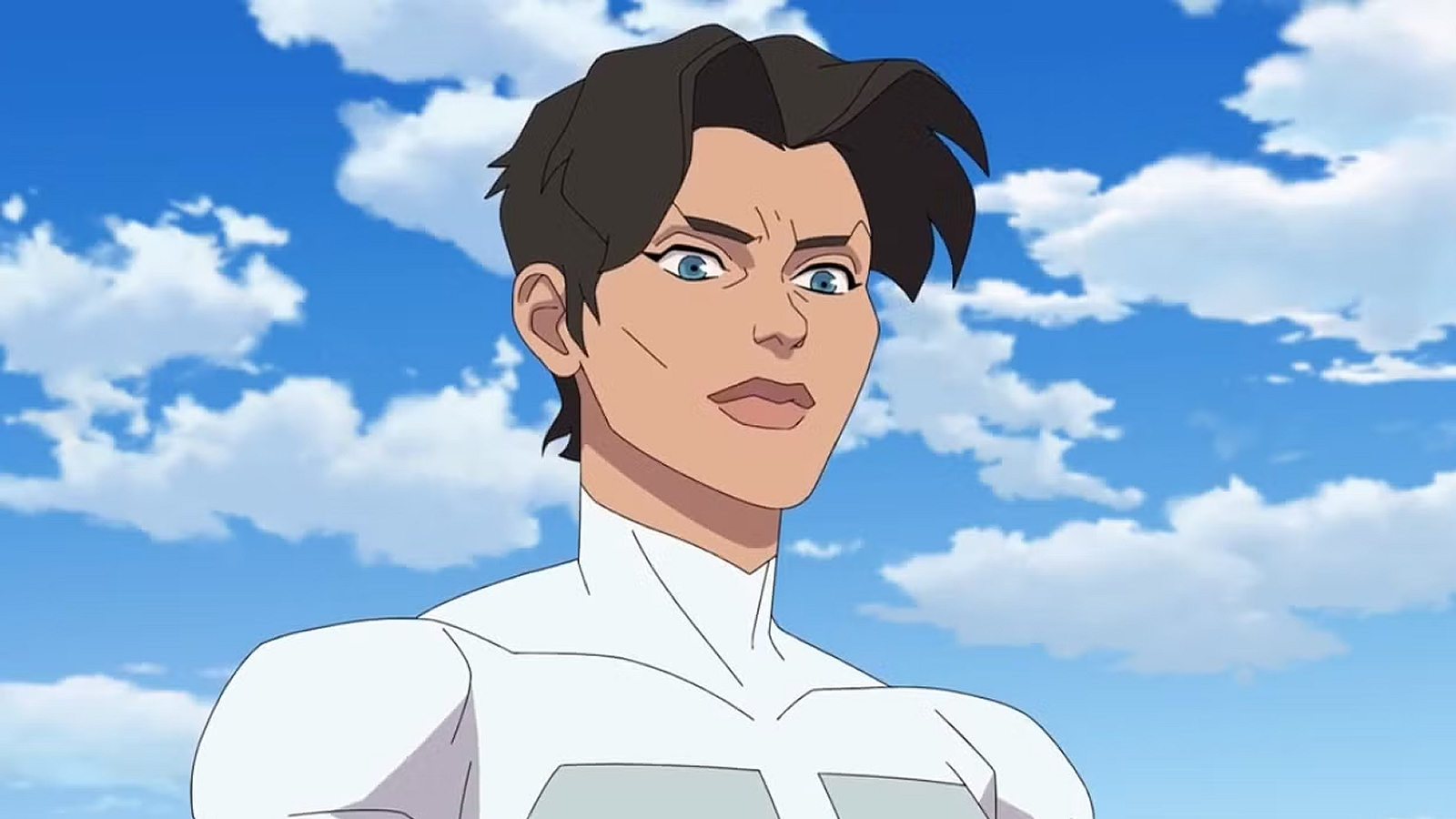
If you’ve spent any time in the Invincible fandom lately, you know the name Anissa carries a heavy weight. She isn't just another Viltrumite heavy-hitter like Conquest or Thragg. She represents one of the most polarizing and genuinely upsetting moments in modern comic book history. We're talking about Issue #110, an installment that changed the trajectory of Mark Grayson’s life forever.
Honestly, it’s a tough read. While the Amazon Prime show has introduced Anissa as a terrifying, stoic threat, comic readers have known for years that her story takes a turn that goes way beyond standard superhero brawls.
The Brutal Reality of Issue 110
The setup is miserable for Mark. He’s just returned from being trapped in another dimension for six months. He finds out his girlfriend, Eve, is pregnant and has basically moved on because she thought he was dead. They have a massive, heart-wrenching fight. Mark is at his absolute emotional lowest point. He’s crying. He’s vulnerable.
Then Anissa shows up.
She doesn't want to fight him for the sake of the Empire, at least not in the way Omni-Man did. She’s there for a "procreation mission." See, Viltrumites are obsessed with rebuilding their nearly extinct race. Anissa views humans as nothing more than animals—"creatures" is the word she uses—and she refuses to mate with them. But Mark? Mark is half-Viltrumite. To her, he’s the only acceptable option on the planet.
Mark says no. Repeatedly. He tells her he’s had a bad day. He tells her to leave. He tries to fly away.
But Anissa doesn't take no for an answer. She views her desires and the mission of the Empire as the only things that matter. She overpowers him, pins him to the ground in a remote field, and rapes him.
Why This Scene Still Sparks Debate
It’s been over a decade since Robert Kirkman wrote this, and the discourse hasn't slowed down. One of the reasons it hits so hard is how Kirkman and artist Ryan Ottley chose to depict it. This wasn't some "implied" off-screen event. It was graphic, focused on Mark’s helplessness, and deeply uncomfortable.
Critics and fans often point to a few specific, haunting details from the pages:
- The Power Imbalance: Mark, who has killed gods and survived planetary explosions, is rendered completely powerless by someone stronger and more ruthless.
- Biological Betrayal: Anissa mocks Mark during the assault, pointing out his body's involuntary physical response as "proof" that he wants it. This is a common, real-world myth used to silence male survivors of sexual violence.
- The Aftermath: After she’s done, she tells him to "man up" and leaves him sobbing in the dirt.
Kirkman has gone on record saying the goal of Invincible was to explore superhero tropes in a "better" or more realistic way. In his view, if these characters are as violent and aggressive as they’re portrayed, that aggression wouldn't just stop at physical combat. It would bleed into their sexuality.
But was it necessary? That's where the community splits. Some see it as a vital exploration of a rarely discussed topic—male sexual assault—while others feel it was used for shock value in a series already famous for its "gore-nography."
The Long-Term Consequences
This wasn't a "one-and-done" plot point. The incident with Anissa has massive ripples throughout the rest of the 144-issue run.
Mark struggles with intense trauma. He feels a deep sense of shame, partly because he’s a "superhero" who couldn't protect himself. It strains his relationship with Eve even further when he eventually tells her.
But the biggest twist? Anissa gets pregnant. Years later, a boy named Marky is born. This forced Mark into a horrifying position: how do you father a child that resulted from your own violation? The story eventually tries to give Anissa a "redemption arc" of sorts, where she shows genuine remorse before her death in the final issues. However, many fans find this redemption unearned. How do you forgive a character who committed such a fundamental violation of the protagonist's autonomy?
What Most People Get Wrong
There’s a common misconception that Mark "let it happen" or that he wasn't strong enough to stop her because he was "holding back."
That's not really the case. At that point in the timeline, Anissa was simply an elite Viltrumite warrior with hundreds of years of experience. Mark was still relatively young and emotionally compromised. Beyond the physical strength, the psychological shock of the encounter played a huge role. He wasn't in a "fight" mindset; he was in a "trauma" mindset.
Navigating the Show's Future
With the Invincible animated series being a massive hit on Prime Video, the big question is: Will they animate this?
The show has already proven it isn't afraid of the comics' darkest corners. It has also shown a willingness to update and refine certain storylines to be more sensitive or impactful for a modern audience. Showrunner Simon Racioppa and Robert Kirkman will have to decide how to handle Issue 110 when the time comes—likely around Season 4 or 5.
If they do it, they have to be careful. In 2026, the cultural conversation around consent and sexual violence is much more nuanced than it was in 2014.
Actionable Insights for Readers and Fans
If you are following the Invincible story and want to understand the deeper context of the Anissa/Mark dynamic, keep these points in mind:
- Read Issue 110 with Caution: If you’re a survivor or sensitive to depictions of sexual violence, this is a "trigger warning" issue. It is intentionally designed to be upsetting.
- Contextualize the Viltrumites: Remember that Viltrumite culture is built on "might makes right." To them, consent is a human weakness they don't recognize. This doesn't excuse Anissa, but it explains her lack of empathy.
- Watch the Character Arcs: Pay attention to how the show handles Anissa’s "threat level" in earlier seasons. It sets the stage for the power dynamic that leads to the comics' most controversial scene.
- Seek Support: If the themes discussed in the comic are distressing, resources like RAINN (1-800-656-HOPE) provide support for those dealing with the reality of sexual assault.
The story of Mark and Anissa is a reminder that being "invincible" doesn't mean you're immune to trauma. It’s a dark, messy part of a dark, messy universe.