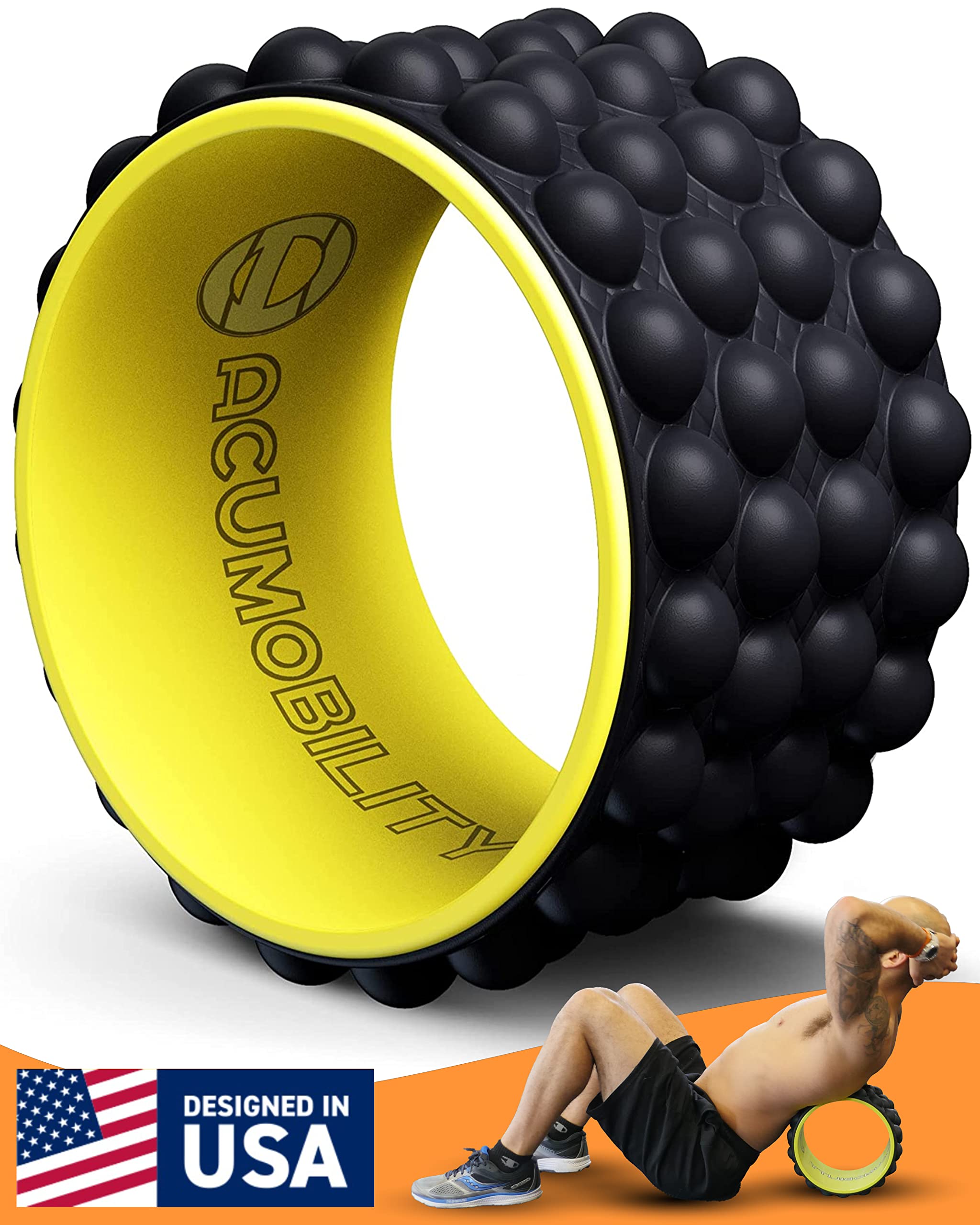
That satisfying, deep pop. You know the one. You’ve been sitting at your desk for six hours, your mid-back feels like a rusted car hinge, and you finally drop onto the floor. You lean back over that firm cylinder of high-density polyethylene, and—crack-crack-pop—instant relief. Or is it?
Using a foam roller for back cracking has become the unofficial national pastime for anyone with a spine and a sedentary job. It feels amazing. It’s addictive. But honestly, most people are doing it for the wrong reasons, and a good chunk of you are doing it in a way that’s eventually going to land you in a specialist's office.
Let’s get one thing straight: that sound isn't your bones rubbing together. It isn't even your spine "realigning" itself like a Rubik's cube. When you use a foam roller to "crack" your back, you're usually performing what clinicians call a high-velocity, low-amplitude (HVLA) thrust, or at least a DIY version of it. That sound is cavitation—gas bubbles (oxygen, nitrogen, and CO2) popping within the synovial fluid of your facet joints.
It feels like magic because of a temporary neurophysiological effect. Your brain releases a tiny hit of endorphins and relaxes the surrounding muscles for a few minutes. But the relief is often a lie.
The anatomy of the pop and why it feels so good
Your spine is a complex stack of 33 vertebrae, but when we talk about foam rolling, we’re mostly focusing on the thoracic spine (the middle) and the lumbar spine (the lower). The thoracic spine is built for rotation and extension. It's attached to your rib cage, making it naturally more stable—and often, unfortunately, more stiff.
When you lay across a roller, you’re creating an extension force. If a joint is stuck, the pressure builds up until the pressure in the joint capsule drops rapidly, the gas bubbles form and collapse, and you get that sweet, audible release. Dr. Greg Lehman, a well-known physiotherapist and chiropractor, often notes that while these sounds are satisfying, they don't actually correlate to long-term "alignment" changes.
The problem is the "hinge" effect.
If you have one segment of your back that is genuinely stiff, and the segments above and below it are moving fine, the foam roller will almost always "crack" the segments that are already mobile. You’re stretching the stuff that’s already stretchy. Meanwhile, that one stubborn, stiff vertebra stays exactly where it is.
Why you should probably stop rolling your lower back
This is the big one. Stop. Just stop.
Using a foam roller for back cracking in the lumbar region is a recipe for a bad time. Unlike your thoracic spine, which has the support of the ribs, your lumbar spine is relatively unprotected. It’s designed for stability, not massive amounts of extension. When you put a hard roller under your lower back and let your body weight sag over it, you’re putting an immense amount of "shear" force on the vertebrae.
If you have an underlying issue you don't know about—like spondylolisthesis (where one vertebra slips forward) or a thinning disc—this DIY cracking can aggravate the nerves.
Have you ever felt a sharp, radiating pain down your leg after rolling? That’s your body telling you to quit it. The lower back needs stability and core support, not a hard plastic tube trying to force it into a localized crunch. Instead of rolling the lower back, focus on the hips and the glutes. Usually, "tight" lower backs are just victims of tight hip flexors pulling the pelvis out of whack.
The right way to use a foam roller for back cracking (Thoracic Edition)
If you’re going to do it, do it with some actual intent. Don't just roll back and forth like a piece of dough. That’s useless.
First, get the roller positioned under your shoulder blades. Support your head with your hands—don’t let your neck hang back like a broken doll. Keep your butt on the floor. This is the part everyone messes up. By keeping your hips down, you isolate the movement to your upper back.
Gently lean back over the roller. Exhale. You might get a small click. That’s fine. Move the roller up an inch and repeat.
Don't ignore the "Shoulder Blade Pin"
Sometimes the "stuck" feeling isn't even your spine. It's your scapula (shoulder blade) being glued to your rib cage by tight serratus anterior and rhomboid muscles.
- Lay on your side with the roller under your armpit.
- Lean back slightly so the roller hits the "meaty" part of the lateral edge of your shoulder blade.
- It's going to hurt. It's going to feel like a deep, bruised pressure.
- Breathe through it.
When you release these muscles, your thoracic spine can move more freely, often reducing the need to crack your back in the first place.
Misconceptions about "Realignment"
There’s this persistent myth that your back is like a shelf from IKEA and a foam roller is the hex key that tightens the bolts.
"My back is out."
Honestly, your back is rarely "out." If a vertebra were actually dislocated, you wouldn't be looking for a foam roller; you'd be in the back of an ambulance. Usually, what people feel as "out" is muscle guarding. Your brain thinks a joint is in a vulnerable position, so it clamps the muscles down around it to prevent movement.
When you use a foam roller for back cracking, you’re temporarily tricking the nervous system into letting go of that guard. It feels like a "realignment" because the muscle tension drops. But because you haven't addressed why the muscle was guarding in the first place—likely poor posture, weak deep-neck flexors, or a lack of core endurance—the tension will return in about twenty minutes.
It's a cycle. Crack, relief, tension, crack, relief, tension.
The Hypermobility Trap
There is a segment of the population that should stay far away from the "pop." If you’re someone who is naturally very flexible—maybe you can touch your thumbs to your forearms or you were a gymnast—you might have hypermobility.
For you, that cracking sound isn't a release of tension. It's often the sound of your ligaments being stretched further than they should go. Hypermobile people crave the feeling of cracking because their muscles are constantly working overtime to stabilize joints that the ligaments aren't holding tightly.
Cracking a hypermobile spine is like stretching an old rubber band. Eventually, it loses its snap. You end up with "micro-instability," which leads to chronic, nagging aches that no amount of rolling can fix.
When to see a pro instead of the roller
I get it. A foam roller costs twenty bucks and a physical therapist costs a co-pay. But there are red flags you can't ignore.
- Numbness or tingling: If rolling sends "electricity" down your arms or legs.
- Bone-on-bone sensation: A sharp, stabbing pain rather than a dull ache.
- Night pain: If your back hurts worse when you're lying still at night.
- The "Need": If you feel like you have to crack your back every hour just to function.
A study published in the Journal of Bodywork and Movement Therapies suggests that while foam rolling increases range of motion, it doesn't necessarily improve muscle performance. It's a prep tool, not a cure. If you're using it as a daily crutch, you're masking a symptom.
Better alternatives to the "Crack"
If your goal is to feel less stiff, try things that don't involve high-pressure cavitation.
Cat-Cow Stretch: It’s boring, but it works. It moves the spine through its full range without the aggressive localized pressure of a roller.
Thoracic Rotations: Sit on your heels, put one hand behind your head, and try to point your elbow at the ceiling. This addresses rotation, which is usually where the stiffness actually lives.
The Peanut: If a standard roller is too blunt, tape two tennis balls together. This is called a "peanut." It allows the spinous processes (the bony bits of your spine) to sit in the gap between the balls, so you’re applying pressure to the muscles and the transverse processes instead of smashing your bone directly. It’s much more precise for the thoracic spine.
Actionable Steps for a Healthier Spine
Stop chasing the sound. The "pop" is a side effect, not the goal. If you want to use a foam roller for back cracking safely and effectively, change your approach today.
- Limit the session: Spend no more than 2 minutes on your back. Anything more can actually cause bruising of the intercostal muscles or irritate the periosteum (the outer layer) of your ribs.
- Focus on the "T-Spine": Only roll from the base of your neck to the bottom of your rib cage. Stay off the lower back and the neck entirely.
- Use a "Soft" Roller first: If you're new to this, don't buy the one with the hard plastic spikes. Your nervous system will perceive that as a threat and tighten your muscles even more. Start with a softer, smooth foam.
- Follow up with movement: Once you get that "release," immediately do some active stretching or light movement. You’ve opened a window of improved mobility; use it to teach your brain how to move in that new range.
- Strengthen the Front: Often, back stiffness is caused by weakness in the anterior core. If your abs aren't holding you up, your back muscles have to. Planks and Dead Bugs will do more for your back than a foam roller ever will.
The reality is that a foam roller is a tool, not a chiropractor. Use it to supplement your movement, not as a shortcut to bypass the hard work of strengthening your body. If you treat your spine like a glow-stick that needs to be snapped to work, eventually, it’s going to stop glowing.