You’re standing in the aisle at Sam’s Club, staring at a shrink-wrapped stack of Member’s Mark tuna cans. It’s huge. It's heavy. And it’s cheap—or at least it feels cheap when you look at the unit price compared to the single cans at the local grocery store. But then you start wondering. Is this actually "the good stuff," or is it that mushy, watery filler that ruins a perfectly good tuna melt?
Buying Sam’s Club tuna fish in bulk is a commitment. You aren't just buying lunch; you're buying lunch for the next three weeks.
Most people just look at the price tag and the protein count, but there’s a lot more going on behind that blue and white Member’s Mark label. From sourcing ethics to the actual "drain weight" of the fish, let’s get into what’s actually inside those cans.
The Reality of Member’s Mark Sourcing
When you buy Sam’s Club tuna fish, you’re usually looking at two main options: the standard Chunk Light and the Solid White Albacore. They aren't the same thing. Not even close. Chunk light is basically a mix of smaller tuna species, mostly Skipjack. It’s darker, stronger in flavor, and honestly, a bit softer. Albacore is the "chicken of the sea" style—firm, white, and mild.
Sam’s Club sources their tuna through various global suppliers, but they’ve made some noise lately about sustainability. They work with the Marine Stewardship Council (MSC) for many of their seafood products. This matters. If you see that little blue fish logo on the packaging, it means the tuna was caught in a way that doesn't wipe out the entire population or kill a thousand dolphins in the process.
However, "sustainable" is a tricky word.
Some critics of large-scale retail tuna sourcing point out that even "Dolphin Safe" labels have loopholes. According to Greenpeace, the industry has historically struggled with "FADs" (Fish Aggregating Devices) which attract all sorts of marine life that shouldn't be in a tuna net. Sam’s has improved here, moving toward "pole and line" caught options for some of their premium lines, which is basically the gold standard for sustainability. It’s exactly what it sounds like: people with poles catching fish one by one. It's slower, but it’s better for the ocean.
Why the Texture Varies (The Drain Weight Factor)
Ever opened a can of tuna and realized half the volume is just... salty water?
That’s the "drain weight" issue. Federal regulations require a certain amount of fish to be in the can, but how that fish is processed changes the texture. Cheap tuna is often "double cooked." They cook it once to get the skin off, then they put it in the can with water or oil and cook it again. By the time you open it, the protein fibers have basically given up.
The Member’s Mark Solid White Albacore usually holds up better than the name brands you find at smaller stores. Why? Because Sam’s Club uses their scale to demand specific packing standards. When you’re buying Sam’s Club tuna fish in those 8-count or 12-count packs, you’re often getting a higher "pressed weight" of fish.
- Chunk Light: Best for tuna salad where you're mashing it with mayo anyway.
- Solid White Albacore: Use this for salads where you want actual chunks of fish, like a Niçoise.
- StarKist Pouches: Sam’s also sells these in bulk. They’re "no-drain," which is convenient, but you pay a premium for that lack of liquid.
Let's Talk About the Mercury Elephant in the Room
We have to talk about mercury. It’s the thing everyone worries about but nobody wants to research while they’re standing in the pantry.
Tuna are predators. They eat smaller fish. Because of this, they accumulate methylmercury over time. The rule of thumb is simple: the bigger the fish, the more mercury it has.
Because Albacore tuna are larger than Skipjack (the stuff in Chunk Light), they generally have higher mercury levels. The FDA and EPA suggest that pregnant women and young children limit Albacore intake to about 4 ounces a week. If you’re a gym rat eating Sam’s Club tuna fish every single day for the "easy protein," you might actually be overdoing it.
Switching to the Chunk Light (Skipjack) can lower your exposure. It's not as "fancy," but it’s safer for high-frequency consumption. Some specialty brands like SafeCatch (which Sam’s occasionally stocks in certain regions) actually test every single fish for mercury, but the standard Member’s Mark cans do not. They follow the standard FDA sampling protocols.
The Canned vs. Pouch Debate
Sam’s Club is one of the biggest movers of tuna pouches in the country. If you haven't switched, you're missing out on the texture, but your wallet might hurt.
Pouches don't have the "canned" taste. You know that metallic tang? That comes from the retort packaging process in tin. Pouches are processed faster, so the fish stays firmer. But if you look at the price per ounce, the cans win every single time.
If you're making a huge batch of tuna pasta for a potluck, buy the cans. If you're throwing a lunch in your gym bag, get the pouches.
Nutritional Profile: Is It Actually "Clean" Food?
People buy tuna because it’s a protein bomb. A standard serving of Member’s Mark Albacore has about 26 grams of protein and almost zero fat. It’s the ultimate cutting food.
But check the sodium.
Canned tuna is preserved in broth or brine. A single can can contain 15% to 20% of your daily recommended sodium intake. If you're eating two cans, you've hit nearly half your salt limit before you even added the mayo or the bread.
There is an "unsalted" version occasionally available at Sam’s, but it's hit or miss. If you're watching your blood pressure, rinse the tuna in a fine-mesh strainer under cold water for 30 seconds. Research from the Journal of Food Composition and Analysis shows this can strip away a significant chunk of the added sodium without losing much of the protein.
How to Maximize Your Bulk Purchase
The biggest mistake people make with Sam’s Club tuna fish is letting it sit in the pantry for three years. Yes, it’s shelf-stable. No, it doesn't last forever.
Over time, even in a sealed can, the texture of the fish begins to break down. The acid in the tuna (though slight) can eventually interact with the lining of the can. Most canned tuna has a "best by" date of 2-5 years. If you buy a 12-pack, use it.
Better Ways to Eat It (Beyond the Mayo Gloom)
Honestly, most people hate tuna because they've only had it drowned in cheap mayonnaise and relish. It’s a sad, soggy mess. If you’ve got a bulk supply from Sam’s, you need to diversify.
Try a Mediterranean style:
Mix your drained tuna with olive oil, lemon juice, capers, and red onion. No mayo. It’s bright, it’s fresh, and it actually tastes like food.
Or go the "Tuna Melt 2.0" route:
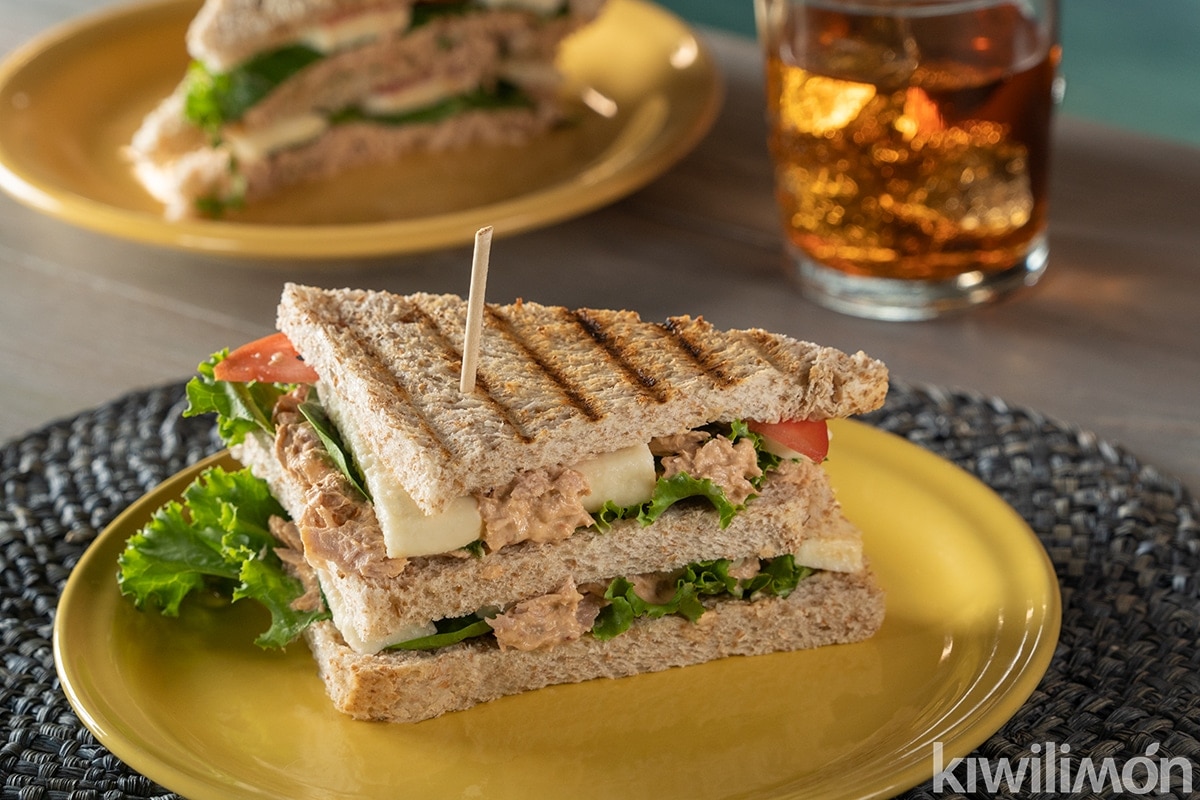
Use sourdough, sharp cheddar, and add a sliced tomato. The key is to sear the tuna in a pan with a little garlic before putting it on the bread. It changes the flavor profile entirely.
The Logistics: Shipping vs. In-Club
If you’re a Plus member at Sam’s Club, you get free shipping. This is a game-changer for heavy items like canned goods. Tuna cans are heavy. Carrying a 12-pack of Albacore plus a 40-pack of water to your car is a workout you didn't ask for.
Ordering it online usually results in the same price as in-club. However, be warned: shipping companies aren't gentle. It’s very common to receive a few dented cans.
Pro tip: Never eat tuna from a can that is deeply dented on the seam or has a bulge. That’s a one-way ticket to botulism. If the dent is just on the side and doesn't affect the seal, you're usually fine, but why risk it? If your Sam’s Club order arrives damaged, their customer service is generally pretty good about a partial refund.
Is It Worth the Membership?
If you only buy tuna, a Sam's Club membership doesn't make sense. But if you're a "tuna person"—someone who eats it 2-3 times a week for fitness or convenience—the savings add up.
A single can of name-brand Albacore at a standard grocery store can run you $2.50 to $3.50 these days. At Sam’s, you’re often getting that same quality for closer to $1.50 or $1.75 per can when you buy the multi-packs. Over a year, if you eat 100 cans (about two a week), you’ve saved over $100. That pays for the membership and a few of those $1.50 hot dog combos.
Final Verdict on Quality
Member’s Mark tuna isn't "boutique" fish. It isn't hand-cut ventresca tuna from Spain packed in glass jars with artisanal oil. It’s a utility protein.
But for a mass-market brand, it’s surprisingly consistent. The flakes are large, the water content isn't insulting, and the smell is "clean" (well, as clean as fish in a can can smell). It’s a reliable staple for anyone trying to hit high protein goals on a budget.
Actionable Next Steps
- Check the Label: Next time you’re at Sam’s, look for the MSC Blue Label on the Member’s Mark Albacore. It’s the easiest way to ensure you aren't supporting destructive fishing practices.
- Rotate Your Stock: Use the "First In, First Out" (FIFO) method. Put the new pack at the back of the pantry and move the old cans to the front.
- Optimize for Health: If you’re eating tuna more than twice a week, grab the Chunk Light instead of the Albacore to keep your mercury exposure within safe limits.
- Drain Properly: Don't just press the lid down. Use a strainer. Removing more of that packing liquid makes the tuna hold dressings better and prevents your sandwiches from getting soggy by lunchtime.