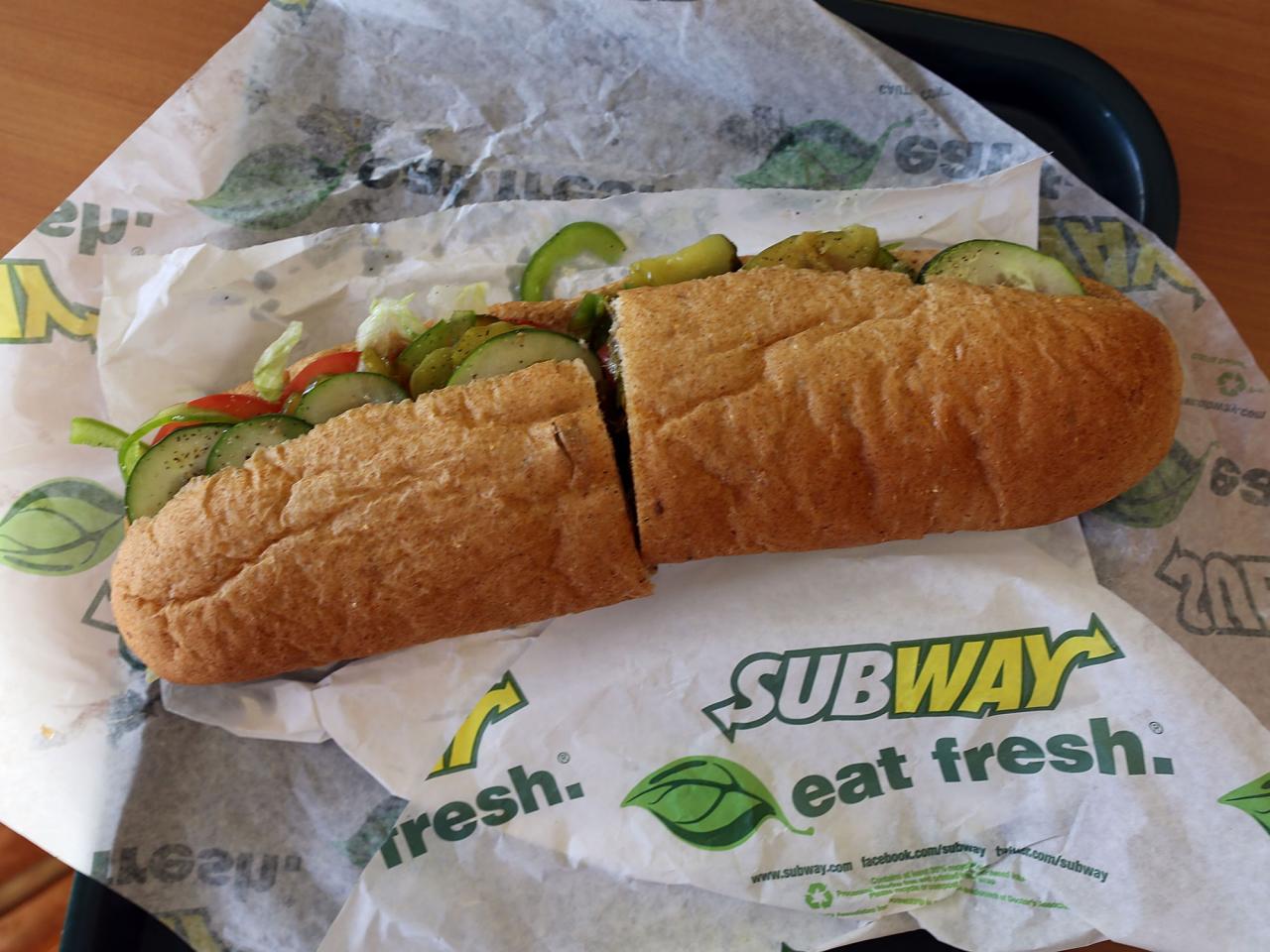
You’re standing in line. The smell of that specific, slightly sweet bread is everywhere. You see the bins of shredded lettuce, the sliced cucumbers, and the stacks of turkey. It feels virtuous. It feels like the "better" choice compared to the greasy burger joint next door. But then you start looking at the salt content and that weirdly soft texture of the chicken strips. It makes you wonder: is subway food healthy, or is it just clever marketing wrapped in a green logo?
Honestly, it depends on how much you like olives.
Subway has spent decades leaning into the "Eat Fresh" slogan. They basically pioneered the idea of fast-casual health. But the reality is a messy mix of high-quality vegetables and ultra-processed meats. If you walk in and order a Double Meat Meatball Marinara on Italian Herbs and Cheese, you aren't eating a health food. You’re eating a salt lick. On the other hand, if you stick to the rotisserie-style chicken and a mountain of spinach, you’re doing better than 90% of the people eating lunch on that block.
The Bread Dilemma and the Sugar Factor
Let’s talk about the bread. It’s the foundation of every sub, and it’s also where things get complicated. A few years ago, the Supreme Court of Ireland famously ruled that Subway's bread couldn't legally be called bread because the sugar content was too high. In Ireland, the tax code distinguishes bread from "confectionary" based on sugar. Subway's recipe exceeded the 2% limit of the weight of flour in the dough.
That’s a lot of sugar for a sandwich.
While they’ve made some tweaks to the recipe since that 2020 ruling, most of the bread options are still refined grains. They spike your blood sugar. You’ll feel full for twenty minutes and then crash hard. If you’re trying to be genuinely healthy, the 9-Grain Wheat is usually your best bet, but even then, it’s not exactly artisanal sourdough. It’s processed. It's soft. It's designed to be consistent in 37,000 locations.
If you’re watching your carbs or just trying to avoid the "bread coma," the protein bowls are the way to go. You get the same ingredients but without the six-inch or footlong sponge holding it together. It’s a simple swap that instantly changes the nutritional profile of your meal from a high-carb bomb to a fiber-forward salad.
Sodium: The Invisible Ingredient
The real monster under the bed at Subway isn't calories. It's sodium.
Take the Cold Cut Combo. It’s a fan favorite. It’s also a salt catastrophe. Between the ham, salami, and bologna (all turkey-based, surprisingly), you’re looking at over 1,000mg of sodium before you even add cheese or mustard. The American Heart Association recommends no more than 2,300mg a day for most adults. One sandwich can put you at half your daily limit.
Why so much salt? It’s a preservative. It keeps the meat "fresh" for longer. It also makes you crave a soda, which is where the profit margins really live.
The Meat Spectrum
Not all Subway proteins are created equal. You’ve got the good, the bad, and the "what is that?"
- The Best: Rotisserie-Style Chicken and Oven Roasted Turkey. These are generally the "cleanest" options. The rotisserie chicken actually looks and tastes like pulled chicken, and it isn't shaped into a perfect, rubbery rectangle.
- The Middle Ground: Roast Beef and Steak. They're okay, but often have higher sodium and more additives than you'd find in a home-cooked version.
- The "Avoid if You Value Your Heart": Pepperoni, Salami, Meatballs, and the Tuna (which is mostly mayo). The tuna sub is a stealth calorie bomb. A footlong tuna has about 900 calories and over 50 grams of fat. People order it thinking "fish is healthy," but it's basically a mayo delivery system.
The Vegetable Silver Lining
Here is where Subway actually wins.
You can put an absurd amount of vegetables on a sandwich. No other fast-food chain lets you demand three handfuls of spinach and extra green peppers without charging you a "premium topping" fee. This is the secret to making is subway food healthy a "yes" instead of a "no."
Fiber is the magic ingredient here. It slows down the absorption of the sugar from the bread. It fills you up. It provides actual micronutrients that you won't find in a chicken nugget. If you’re not asking the "Sandwich Artist" to bury your meat under a forest of veggies, you’re doing it wrong.
Tips for a Genuinely Healthy Order
If you’re heading to Subway and want to leave feeling good rather than bloated, there’s a strategy. It's not about restriction; it's about smart substitutions.
- Skip the "Subway Series" pre-sets. These are often loaded with extra cheese and heavy sauces like Peppercorn Ranch or Garlic Aioli. Build your own.
- Go heavy on vinegar and mustard. Most of the cream-based sauces are just soybean oil, sugar, and preservatives. Vinegar and yellow mustard give you flavor for basically zero calories and no sugar.
- The Cheese Trap. American cheese is barely cheese. Provolone or Swiss are slightly better choices, but honestly, you could skip the cheese entirely and not miss much if you have enough veggies and vinegar.
- Watch the "Healthy" Extras. Avocado is great for healthy fats, but it adds a lot of calories. Baked chips are better than regular chips, but they’re still processed potatoes. Water or unsweetened tea is the only way to go for a drink.
The Expert Verdict
So, is Subway food healthy? It's a tool. Like any tool, it depends on how you use it.
If you use Subway to get a lean protein and five servings of vegetables on whole-grain bread, it’s one of the healthiest fast-food options on the planet. If you use it to eat a footlong loaf of white bread filled with processed bologna and ranch dressing, it’s just a vertical burger.
The nuance matters. We tend to want a "yes" or "no" answer, but nutrition is a sliding scale. Compared to a double bacon cheeseburger, Subway is a win. Compared to a salad you prepped at home with wild-caught salmon and organic kale? Not so much. But we live in the real world. In the real world, sometimes you’re at a rest stop on I-95 at 2:00 PM and you need a meal that won't make you feel like garbage for the next four hours. In that specific scenario, Subway is your best friend—provided you choose wisely.
Actionable Next Steps
- Check the Nutrition Calculator: Before you go, use the Subway Nutrition Calculator online. It’s eye-opening to see how quickly a "Sweet Onion Chicken Teriyaki" jumps in sugar once you add the sauce.
- The "Rule of Three": Next time you order, pick three vegetables you usually skip—like banana peppers, olives, or cucumbers—to maximize the nutrient density of the meal.
- Swap the Bread: Try your favorite sandwich as a "No Bready Bowl" or a wrap next time. You might find the flavors are actually better when they aren't muffled by a giant piece of bread.
Ultimately, you are the one in control of the assembly line. Don't let the marketing decide what "healthy" looks like for you. Pick the spinach, skip the cookies, and keep the salt in check.