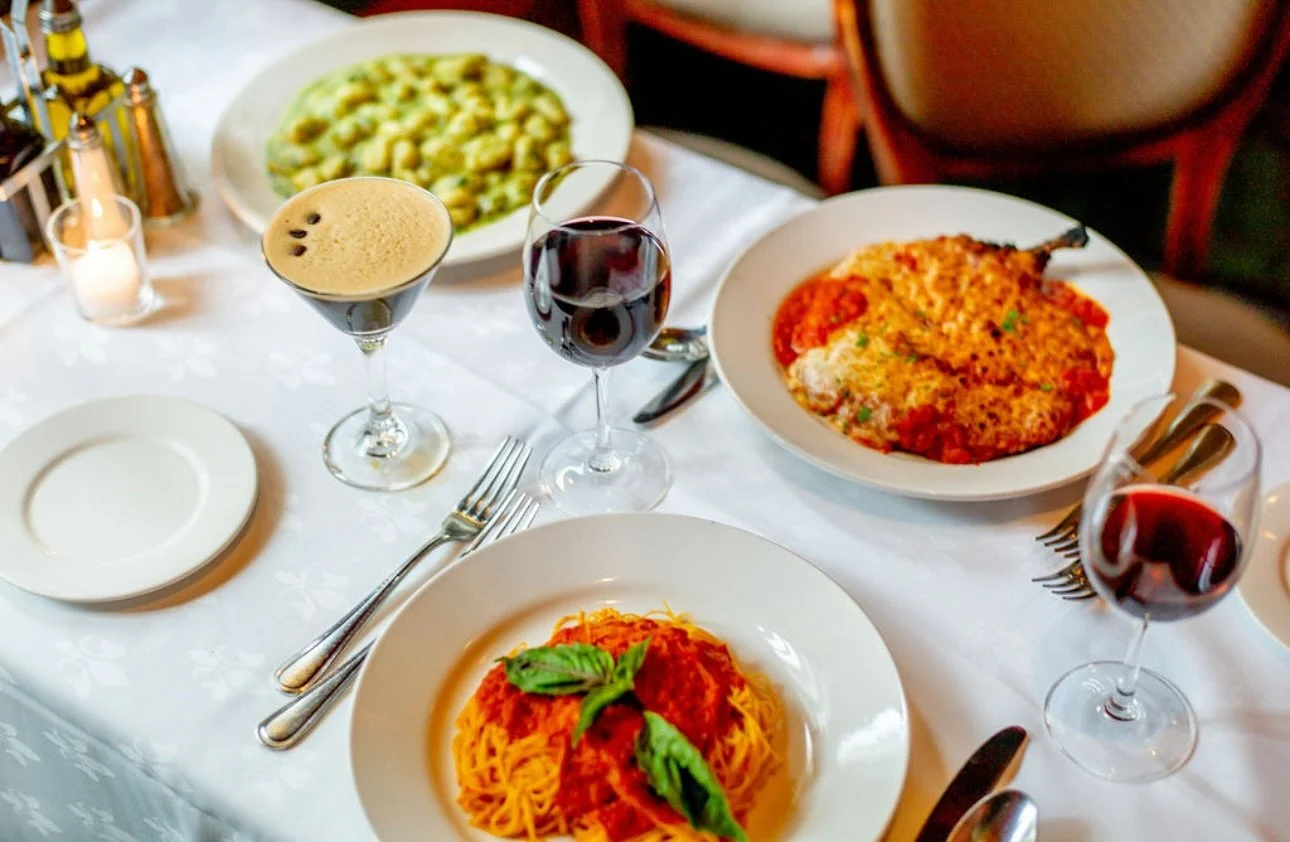
Walk into Isle of Capri at the corner of Third Avenue and 61st Street and you aren't just entering a restaurant. You’re stepping into a time machine. It’s 1955. Or maybe 1972. Honestly, it doesn't really matter which specific year because the vibe here has remained stubbornly, beautifully frozen. In a city where "new and shiny" usually wins, Isle of Capri Restaurant NYC has survived since 1955 by doing exactly the opposite of what a modern marketing consultant would tell them to do.
They haven't changed the decor much. The yellow awnings are iconic. The interior feels like a cozy, subterranean hideaway that has witnessed thousands of first dates, family reconciliations, and business deals brokered over heavy plates of veal parm. It's one of the few places left in Manhattan where the waiters might actually remember your name—not because a CRM system told them, but because they’ve been working there for decades.
The Lamari Family and the Persistence of Tradition
The story of Isle of Capri is fundamentally a family story. Founded by Pasquale Lamari, the restaurant has stayed in the family for generations. That’s rare. You see restaurants change hands every three years in this neighborhood. But here, the continuity is the point. When you eat at Isle of Capri Restaurant NYC, you're participating in a lineage of Italian-American hospitality that is rapidly evaporating from the Upper East Side.
Most people get this place wrong. They think it’s just another "red sauce joint." It isn't. While the menu hits those nostalgic notes, the execution leans into Northern and Southern Italian influences with a specific focus on the Isle of Capri itself. Think lemon, seafood, and bright flavors mixed with the heavy-hitting comfort of homemade pasta.
The dining room is split-level. It’s cramped. It’s loud in that specific, comforting way that only a New York bistro can be. If you’re looking for minimalist Scandinavian design or a quiet spot for a meditation session, this isn't it. But if you want a place that feels like a hug from an Italian grandmother who thinks you’re too thin, you’ve arrived.
What to Actually Order (and What to Skip)
Let's talk food. We've all been to those spots where the bread is stale and the marinara tastes like it came from a tin. This isn't that.
The Pasta.
They make a lot of it in-house. The Gnocchi alla Sorrentina is a standout. It’s pillowy. It’s covered in melted mozzarella and a tomato sauce that actually tastes like tomatoes, not sugar. Most regulars will tell you to go for the Spaghetti alla Chitarra. It has that specific "bite" that tells you it wasn't sitting in a boiling vat of water for twenty minutes before it hit your plate.
The Veal and Chicken.
The Veal Scaloppine is what the Isle of Capri is known for. You can get it Piccata, Marsala, or Francese. It's pounded thin. It’s tender. It’s exactly what you want when you’re craving a classic NYC Italian experience. Honestly, the Veal Chop Valdostana—stuffed with prosciutto and fontina—is a bit of a beast, but it’s the kind of decadence that justifies the Upper East Side price tag.
The Seafood.
Since it’s named after an island, the seafood matters. The Calamari Fritti is consistently light. Not rubbery. If they have the Branzino on special, get it. They treat fish with a surprisingly light touch given how heavy the rest of the menu can be.
A Note on the Wine List
It’s mostly Italian. It’s not pretentious. You aren't going to find a $5,000 bottle of rare vintage something-or-other, but you will find a solid Chianti or a crisp Pinot Grigio that pairs perfectly with the salt and fat on the table. The house wine is actually drinkable. That’s a high bar in this city.
Why "Old School" is a Competitive Advantage
We live in the era of the "Instagrammable" restaurant. Places are designed with neon signs and perfect lighting specifically for TikTok. Isle of Capri Restaurant NYC looks terrible on a low-quality smartphone camera because the lighting is dim and yellow. And that is exactly why it’s successful.
It offers authenticity.
When Jane and Joe New Yorker want to escape the digital noise, they go to 1028 Third Avenue. There’s something deeply grounding about a white tablecloth that has a few faint stains from sixty years of service. It suggests that the food matters more than the filter. The restaurant has outlasted dozens of trendy neighbors. It outlasted the 2008 crash. It outlasted the pandemic.
Why? Because they own the building? Partly. But mostly because they provide a "third place." In sociology, the third place is the social surroundings separate from the two usual social environments of home and the workplace. For a specific subset of Manhattanites, this is their living room.
The Reality of the Upper East Side Dining Scene
Let's be real for a second. The Upper East Side is changing. High-rises are replacing the low-slung buildings. The old German and Italian enclaves are being diluted by ultra-luxury condos. In this landscape, a place like Isle of Capri acts as an anchor.
- Consistency: You could go there today and then go back in 2030, and the meatballs will taste the same.
- The Service: It’s "career service." These aren't aspiring actors waiting for a big break; these are professional servers who understand the rhythm of a dinner service.
- The Price: It’s not cheap. It’s New York. But compared to the $400-a-head tasting menus popping up downtown, you actually get value here. You leave full.
Navigating the Experience: Tips for First-Timers
If you’ve never been, there are a few things you should know. It’s not a "cool" spot. If you show up in a tracksuit, you might feel a little out of place, though they won't kick you out. It’s a "sport coat and nice jeans" kind of place.
- Reservations are a good idea. Especially on Friday and Saturday nights. The place is small, and the regulars fill it up fast.
- Ask for the specials. The kitchen often has fresh seasonal pastas or fish that aren't on the printed menu. This is where the chef's real personality shines through.
- Don't rush. The staff won't hustle you out the door. It’s meant to be a slow, multi-course experience. Order the espresso. Get the tartufo.
- The Basement Factor. Some people find the downstairs area a bit claustrophobic. If you prefer more light, try to snag a table near the front windows on the upper level. But honestly, the "bunker" feel of the lower level is part of the charm.
Addressing the Critics: Is it "Too" Old?
Some critics argue that Isle of Capri Restaurant NYC is a relic that hasn't evolved. They say the menu is dated.
They aren't entirely wrong. You won't find foam, spherification, or fermented ramps here. But that’s like complaining that a jazz club plays too much jazz. The lack of evolution is a deliberate choice. It’s a preservation of a specific culinary era. In a world of "fusion" and "reimagined classics," there is a desperate need for the original, unimproved version of a dish.
The saltimbocca here is just saltimbocca. It doesn't need to be "deconstructed."
Actionable Takeaways for Your Visit
If you're planning a trip to the Upper East Side or looking for a reliable spot after a day at the nearby Bloomingdale’s, here is how to handle Isle of Capri like a pro:
Check the Hours. They typically close between lunch and dinner. Don't show up at 3:30 PM expecting a full meal. Check their current schedule before you trek over.
Bring a Group. Italian food is better shared. Ordering a few different pastas and a few different "secondi" (main courses) allows you to see the breadth of the kitchen's capability.
Embrace the Kitsch. The murals, the fake flowers, the old-school signage—it’s all part of the package. If you walk in with a cynical attitude, you'll miss the point. Go there to enjoy the theater of old-world New York.
The Location Advantage. It’s right near the 59th St-Lexington Ave subway hub. It’s incredibly accessible. If you’re heading to a show or just finished a walk in Central Park, it’s a 10-minute stroll.
Ultimately, the Isle of Capri Restaurant NYC persists because it fulfills a human need for familiarity. We want to know that some things stay the same. In a city that is constantly reinventing itself, the yellow awning on 61st Street remains a lighthouse of red sauce and reliable hospitality.
Go for the food, but stay for the feeling that you’ve found a loophole in the space-time continuum of Manhattan real estate.
Next Steps for Your Visit:
Scan the current menu online to see seasonal rotations, as they occasionally swap out heavier winter dishes for lighter, lemon-based Capri specialties in the summer. If you are planning a weekend visit, call at least 48 hours in advance for a prime-time reservation between 7:00 PM and 8:30 PM, as these slots are almost exclusively claimed by neighborhood regulars. Finally, keep an eye on the daily specials chalkboard near the entrance—that's usually where the freshest seafood of the day is listed.