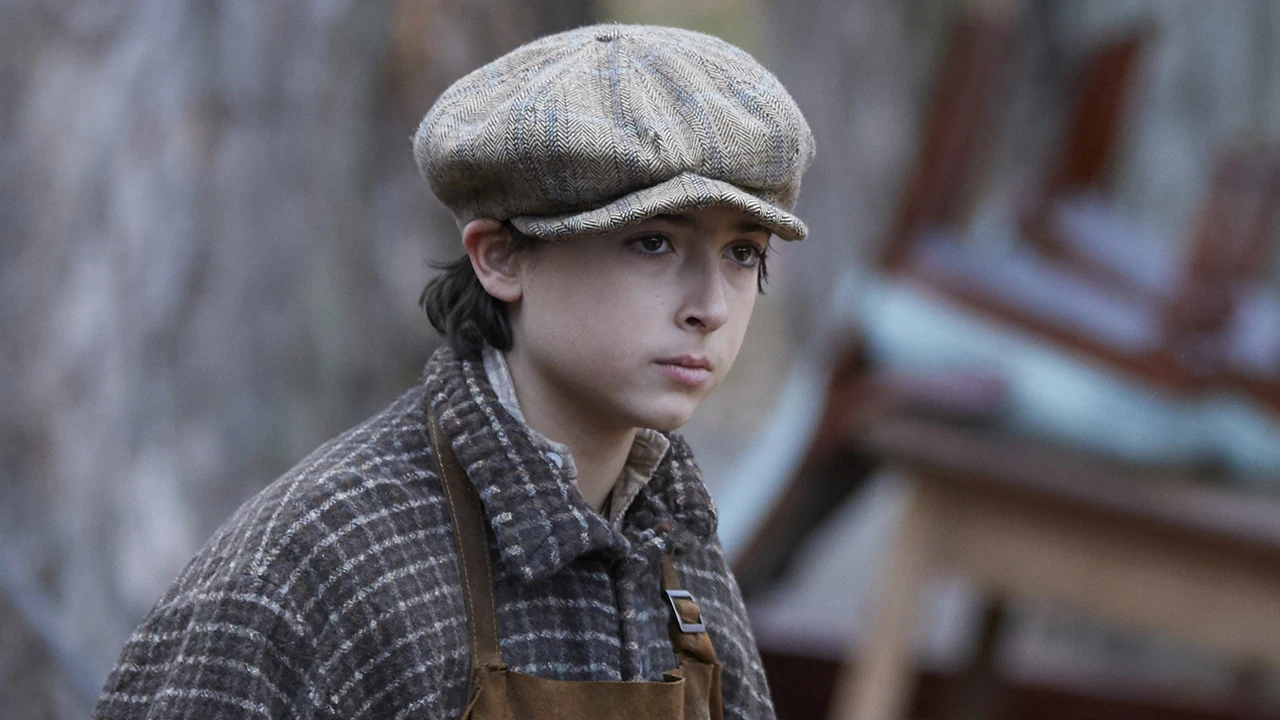
He wasn't in the books. Not really. If you go back and flip through Lucy Maud Montgomery’s original Anne of Green Gables text, you’ll find a mention of a "French boy" who helps out on the farm, but he's basically background noise. He doesn't have a soul, a backstory, or a blossoming romance with a fan-favorite character. Then Netflix and CBC's Anne with an E happened, and suddenly, Jerry Baynard became the heart of Green Gables.
Aymeric Jett Montaz took a tiny, nameless role and turned it into a pillar of the series. It's wild how that works. Fans went from wanting more Gilbert Blythe scenes to low-key rooting for the kid who lived in a cramped house with way too many siblings and just wanted to learn how to read. Jerry wasn’t just "the help." He was the bridge between the sheltered world of the Cuthberts and the harsh, grit-under-the-fingernails reality of the working class in 1890s Prince Edward Island.
People love him. Honestly, it’s because he’s the perfect foil for Anne. Where Anne Shirley-Cuthbert is all big words, flowery metaphors, and dramatic flair, Jerry is grounded. He’s practical. He’s a bit snarky when she gets too "extra." That dynamic is why Jerry Baynard in Anne with an E feels so essential to the show’s DNA.
Why Jerry Baynard Was the Show’s Best Creative Risk
The writers took a massive gamble by expanding Jerry’s role. Purists usually hate it when a TV adaptation deviates from the source material, but Jerry is the exception that proves the rule. By giving him a full narrative arc, the show explored themes that Montgomery’s books mostly glossed over—specifically, the struggles of the French-Canadian minority and the cycle of poverty.
Jerry's family lived in what can only be described as a shack. It was crowded. It was loud. It was a far cry from the cozy, aesthetic vibes of the Green Gables kitchen. His character allowed the show to tackle the concept of "educational privilege." Remember the scene where Anne realizes Jerry can't read? It’s a gut punch. It shifts her perspective—and ours. She stops seeing him as a rival for Marilla’s affection and starts seeing him as a human being with potential that’s being stifled by his circumstances.
His presence also humanized Matthew Cuthbert in a way we hadn't seen before. Matthew isn't a talker. We know this. But his quiet bond with Jerry, the way they worked the land together in comfortable silence, showed a fatherly side of Matthew that was different from his relationship with Anne. Jerry was the son Matthew never had, yet the show never felt the need to scream that at the audience. It was just... there. In the dirt and the chores.
The Complexity of the Jerry and Diana Romance
We have to talk about the "Jerryana" of it all. This was the subplot that divided the fandom into a million tiny pieces.
On one hand, you had the "they’re so cute" crowd. On the other, you had the people who saw the train wreck coming from a mile away. Jerry’s relationship with Diana Barry was never going to have a fairytale ending, and that’s what made it so compelling. It was a brutal lesson in classism.
Jerry genuinely liked Diana. He treated her with a kind of nervous, sweet respect that made your heart melt. But for Diana, Jerry was a rebellion. He was an adventure. He was a way to push back against her parents' rigid expectations of who a "lady" should associate with. When she eventually treated him coldly and basically acted like their relationship never happened, it was devastating.
It wasn't just a breakup. It was a reminder that in 1899, your heart didn't matter as much as your last name. Jerry’s heartbreak was a turning point for his character, moving him from a boyish farmhand to a young man who understood the cruel realities of the world. It’s some of the most honest writing in the entire three-season run.
Behind the Scenes: Aymeric Jett Montaz’s Performance
You can't talk about Jerry from Anne with an E without praising Aymeric Jett Montaz. The kid had a tough job. He had to deliver a performance that felt period-appropriate but also resonated with a modern Gen Z and Millennial audience.
- He nailed the accent—that specific Acadian/French-Canadian lilt.
- His physical acting during the labor scenes made the work look real, not staged.
- The chemistry he had with Dalila Bela (Diana) was palpable, which made the ending of their arc hurt even more.
Montaz has talked in interviews about how much he appreciated the writers giving Jerry a voice. He wasn't just a prop for Anne's growth; he had his own dreams. He wanted to be more than what his father was. That ambition, played with such sincerity, is why the #SaveAnneWithAnE movement still trends years later. Fans aren't just fighting for Anne; they're fighting for Jerry, too.
The Cultural Impact of a "New" Character
Adding Jerry wasn't just about filling screen time. It was a deliberate choice by showrunner Moira Walley-Beckett to make the world of Avonlea feel bigger and less "lily-white" and upper-middle-class.
The inclusion of the Baynard family highlighted the linguistic and religious tensions of the time. The French-English divide in Canada is a huge part of the country's history, and seeing it through the eyes of a child worker makes it accessible. Jerry represented the "others"—the people who built the towns but weren't allowed to sit at the fancy tables.
By the time Season 3 rolled around, Jerry felt like he had always been part of the lore. That’s the mark of a well-written character. If you try to imagine the show without him, it feels empty. You lose the perspective of the working class. You lose the groundedness that balanced out Anne’s flights of fancy.
What happened to Jerry after the finale?
Since the show was tragically canceled after Season 3, we never got a definitive answer. But based on his trajectory, it’s fun to speculate.
He was learning to read and write. He was becoming more confident. Many fans like to believe that Jerry eventually left the farm, perhaps finding a way to use his newfound literacy to advocate for his family or his community. Maybe he didn't end up with a "lady" like Diana, but he certainly deserved someone who didn't view him as a secret to be kept.
The beauty of Jerry's ending—even if it was unintentional—is that he was finally standing on his own two feet. He wasn't defined by his job or his girlfriend. He was Jerry Baynard, a guy with a future.
Final Thoughts on Jerry’s Legacy in the Anne Franchise
Jerry Baynard is a masterclass in how to update a classic story. He didn't break the world of Anne of Green Gables; he expanded it. He gave us a reason to look at the "background characters" in our own lives and wonder what their stories are.
If you’re revisiting the series on Netflix, pay attention to the small moments. Watch how he reacts to Anne’s stories. Look at the pride on his face when he gets a word right. Those are the details that make Jerry in Anne with an E one of the most beloved characters in modern period dramas.
Actionable Insights for Fans and Content Creators:
- Analyze the "New Character" Trope: If you're a writer, look at Jerry as a blueprint for adding original characters to established IPs. He serves a narrative purpose and challenges the protagonist.
- Support the Cast: Follow Aymeric Jett Montaz and the rest of the cast on their current projects. The "Anne" family is famously close and often shares behind-the-scenes memories.
- Explore the Real History: If Jerry’s story interested you, look into the history of French-Canadian laborers in the Maritimes during the late 19th century. The reality was often even tougher than what was shown on screen.
- Rewatch with a Focus on Class: Do a targeted rewatch of Season 2 and 3 specifically focusing on the interactions between the "hired help" and the "townspeople." It changes the whole vibe of the show.