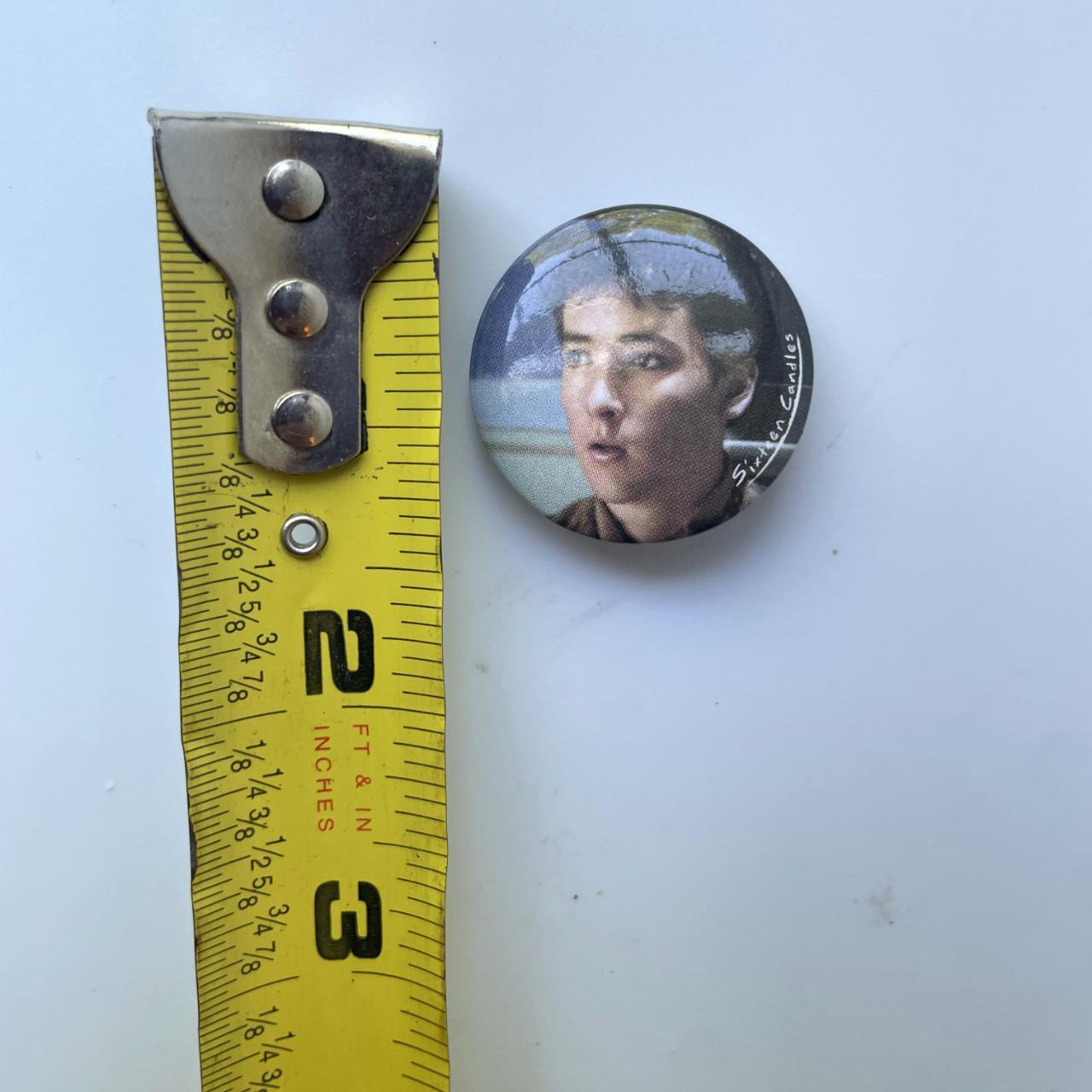
You probably remember the boombox. Or maybe the trench coat. But before John Cusack became the quintessential sensitive leading man of the eighties, he was just a kid from Chicago trying to look old enough to buy a beer on screen. Specifically, he was Bryce. If that name doesn't immediately ring a bell, don't worry. In the grand ecosystem of the 1984 classic Sixteen Candles, Bryce was one half of the "Geek" duo flanking Anthony Michael Hall.
It’s weird to see him there now.
Seeing John Cusack in Sixteen Candles is like looking at a high school yearbook photo of a guy who eventually became a Nobel laureate or a rock star. He's lanky. He's wearing oversized glasses that look like they belong to a retired librarian. He's playing second fiddle to a guy who was, at the time, the undisputed king of the nerds. Yet, this minor role served as the launchpad for one of the most enduring careers in Hollywood. Honestly, if John Hughes hadn't plucked him from the Piven Theatre Workshop in Evanston, the entire trajectory of "alternative" cinema in the 90s might have looked completely different.
Why John Cusack Sixteen Candles is More Important Than You Think
Most people dismiss Bryce as a throwaway character. He’s the "Geek #1" to Darren Harris’s "Geek #2." They spend most of the movie following Ted (Anthony Michael Hall) around like lost puppies, hoping to catch a glimpse of a legendary set of undergarments or just score an invite to a party where they aren't the punchline.
But look closer.
Cusack brings a weird, jittery energy to Bryce that feels different from the standard 80s caricature. While most teen movies back then treated nerds like aliens or slapstick props, Cusack played Bryce with a sort of frantic, desperate humanity. You can see the gears turning. He’s not just a nerd; he’s a guy performing what he thinks a cool nerd should be. It was his film debut. He was only 17 years old during filming. Think about that for a second. While most of us were struggling to pass Algebra II, he was navigating a John Hughes set and holding his own against the "Brat Pack" elite.
The chemistry between Cusack and the rest of the geek squad wasn't just luck. Hughes had a knack for finding kids who actually felt like kids. He didn't want 25-year-olds playing 15. He wanted the cracking voices. He wanted the awkward limbs. By casting the young Chicagoan, Hughes tapped into a specific Midwestern authenticity that defined the era.
The Piven Connection and the Chicago Pipeline
You can't talk about John Cusack in Sixteen Candles without mentioning where he came from. The Piven Theatre Workshop is basically a legendary factory for talent. Jeremy Piven (John’s childhood friend), Joan Cusack, and Aidan Quinn all cut their teeth there. John Hughes loved this. He loved the Chicago theater scene because those actors had a discipline that L.A. kids often lacked.
Cusack wasn't even supposed to be an actor in the "movie star" sense. He was a theater kid. When he showed up for the Sixteen Candles audition, he was just looking for a summer job. Instead, he found a mentor. Hughes saw something in Cusack—a dry wit and a skeptical eye—that he would later utilize to even greater effect. Interestingly, even though John played a geek, he was actually one of the cooler kids on set. He was the one introducing his castmates to underground music and local Chicago haunts.
The "Geek" Dynamics: Beyond the Stereotype
In the film, Bryce and his partner-in-crime are basically Ted’s entourage. They are the audience's window into the hierarchy of Shermer High School. One of the most famous scenes involves the geeks in the garage, discussing the "valuation" of Molly Ringwald’s character, Samantha Baker.
It’s a scene that hasn't necessarily aged like fine wine.
The casual objectification is peak 1984. However, from a performance standpoint, Cusack is doing a lot of heavy lifting with very few lines. He uses his physicality—the way he leans, the way he adjusts those massive frames—to communicate a sense of belonging to a tribe of outcasts. It’s a masterclass in "supporting" acting. He isn't trying to steal the scene from Anthony Michael Hall, but you can’t help but watch him. He’s got that "it" factor even when he’s dressed in high-waisted slacks and a patterned shirt that screams "my mom bought this at Sears."
Misconceptions About His Role
A common mistake people make when looking back at John Cusack in Sixteen Candles is assuming he was part of the main "Brat Pack" cast. He wasn't. Not really. The core was Ringwald and Hall. Cusack was on the periphery. In fact, he wasn't even invited to the famous New York Magazine cover story that coined the term "Brat Pack."
He was always the outsider.
This suited him just fine. While Emilio Estevez and Rob Lowe were becoming the faces of a generation, Cusack was carving out a niche as the "everyman." He was the guy you could actually relate to. He wasn't the captain of the football team, and he wasn't the untouchable hunk. He was the guy in the back of the class making sarcastic comments under his breath. Bryce was the first iteration of that persona.
How Sixteen Candles Led to Better Off Dead and Say Anything
If he hadn't played Bryce, we might never have gotten Lane Meyer or Lloyd Dobler. It’s a straight line. Hughes liked Cusack so much that he cast him again in The Breakfast Club... or at least he almost did.
Wait, what?
Yeah, it's a bit of a "what if" in Hollywood history. Cusack actually read for the role of John Bender. He was very close to getting it. Ultimately, Hughes decided Cusack was "too nice" or perhaps too cerebral for the role of the criminal, and the part went to Judd Nelson. Imagine how different that movie would have been. Instead of the raw, aggressive energy Nelson brought, we would have had a more neurotic, fast-talking Bender.
But the failure to land The Breakfast Club was a blessing in disguise. It kept him available for lead roles in films like The Sure Thing (1985) and Better Off Dead (1985). By the time 1989 rolled around and Cameron Crowe was casting Say Anything, Cusack had evolved from the "Geek #1" of Sixteen Candles into the soulful protagonist of a decade.
The Realism of the "Geek" Experience
What makes the John Cusack Sixteen Candles performance stick is how it mirrors the reality of being a teenager in the mid-80s. High school was a series of small humiliations. The movie captures that perfectly. Whether it’s the geeks trying to get into the big party or the way they worship the upperclassmen, it feels authentic to the time.
Cusack’s sister, Joan, is also in the movie. She’s the girl on the bus with the neck brace. It was a family affair. This Chicago-centric production created a sense of comfort that allowed these young actors to take risks. They weren't just reciting lines; they were living in Hughes’s hyper-stylized version of their own backyard.
Actionable Insights: Revisiting the 80s Through a Modern Lens
If you're planning a rewatch of Sixteen Candles specifically to catch John Cusack’s performance, here’s how to get the most out of it:
- Watch the body language. Notice how Cusack uses his height to look awkward. He’s a tall guy, but he manages to shrink himself down to fit the "geek" persona.
- Look for the "Cusack Smirk." Even under those glasses, you can see the beginnings of the trademark sarcastic half-smile that would define his later roles in High Fidelity and Grosse Pointe Blank.
- Compare the "Geek" to the "Leading Man." Watch Sixteen Candles and then immediately watch The Sure Thing. It’s a jarring transformation that happened in just one year. It shows his range.
- Check out the background. In many of the party scenes, Cusack is doing bits in the background that aren't necessarily scripted. He was always "on," trying to find the comedy in every frame.
John Cusack in Sixteen Candles remains a fascinating footnote in a massive career. It’s a reminder that everyone starts somewhere, even the icons of cool. He took a role that could have been a caricature and turned it into a springboard. Bryce might have been a geek, but the actor playing him was already a star in the making.
To truly understand the evolution of the 80s teen movie, you have to look at the actors who filled the edges of the frame. Cusack wasn't the heart of Sixteen Candles—that was Molly Ringwald—but he was part of its soul. He represented the weird, the awkward, and the suburban reality that John Hughes captured better than anyone else. Next time you see him holding a boombox over his head, remember that not too long before, he was just a kid in a geek squad, trying to figure out how to talk to girls in Shermer, Illinois.