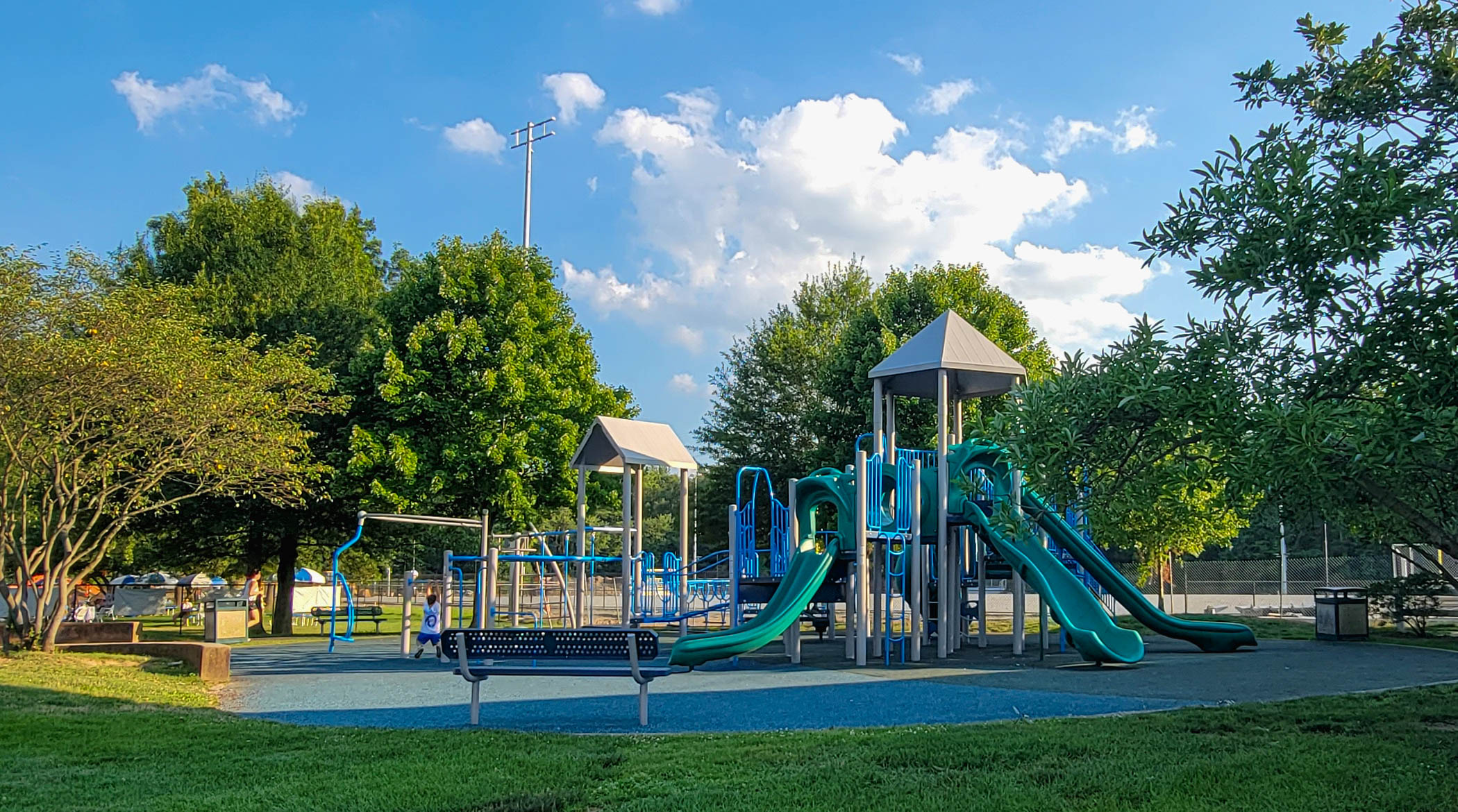
If you’ve lived in Central Jersey for more than a week, you’ve probably driven past the long, green stretch of River Road without thinking twice. It’s just there. A massive, five-mile-long strip of land tucked between the Raritan River and the suburban sprawl of Piscataway and Highland Park. But honestly, Johnson Park Piscataway NJ is one of those places that feels like a bunch of different parks mashed into one.
One minute you’re watching someone practice cricket, and the next you’re staring at a goat.
Most people know it for the traffic or as "that place near Rutgers," but once you actually pull in, you realize it’s nearly 480 acres of weirdly specific activities. It’s named after the Johnson family—yes, the Johnson & Johnson ones—who basically gifted the first 100 acres to Middlesex County back in the day. Now, it’s this sprawling floodplain that somehow manages to house a zoo, a literal 18th-century village, and enough picnic groves to host half the state’s family reunions at once.
Why the Johnson Park Zoo Isn't Really a Zoo
Let’s get the "zoo" thing out of the way. If you’re expecting lions or giraffes, you’re going to be disappointed. It’s officially an animal haven, which is a polite way of saying it’s a collection of very friendly, very hungry farm animals and local wildlife.
You’ve got your basics: goats, pigs, horses, and sheep. Then it gets a bit more "Jersey" with the deer and the occasionally loud peafowl. The goats are the stars. They act like puppies, sticking their heads through the fence the second they see a human hand move. There’s a feed dispenser there, but pro tip: keep your Italian ice far away from the deer fence unless you want a very pushy new best friend.
It’s a circular walk, totally paved, so it’s easy for strollers or anyone who just wants a low-effort stroll. Most of these animals were rescued or donated, so the vibe is more "retirement home for farm animals" than "exotic exhibit." It’s charming in a way that big-city zoos never are.
Time Travel at East Jersey Old Town Village
Right in the middle of the park sits something that feels totally out of place: a collection of 16 historic buildings called East Jersey Old Town Village. This isn't just a bunch of old sheds. We’re talking about a reconstructed 18th and 19th-century settlement that represents the old merchant communities of the Raritan Valley.
The crazy part? These buildings were actually moved here. In the 1970s, a guy named Dr. Joseph Kler realized a lot of local history was being bulldozed for development. He and some volunteers basically saved these structures from demolition and hauled them to Johnson Park.
- The Indian Queen Tavern: You can stand in the spot where George Washington was honored.
- The Cato Hoagland House: This one is a big deal. It focused on the story of Cato Hoagland, a free Black man who lived there in the late 1800s. It’s now a designated site on the New Jersey Black Heritage Trail.
- Living History: Between April and October, you’ll find actual blacksmiths and printers working. They use 19th-century techniques, and they aren't just for show—they actually know their stuff.
Getting Active (Or Just Avoiding the Mud)
Because the park is a floodplain, it gets soggy. After a big storm, the Raritan River likes to remind everyone who's boss. But when it’s dry, the trail system is top-tier. There’s a 1.5-mile paved path that’s perfect for kids or casual bikers who aren't trying to win the Tour de France.
If you’re into sports, this is basically the mecca of Middlesex County. You’ve got:
- Cricket Pitches: Often packed on weekends.
- Tennis and Basketball: Standard, but well-maintained.
- The Horse Track: It’s a half-mile dirt track. You’ll occasionally see sulky racing (harness racing) practice here, which is a rare sight in this part of the state.
Then there are the ponds. They recently did a bunch of work dredging them because, frankly, they were getting pretty swampy. Now there are these nice ADA-accessible fishing piers and observation decks. If you're into bird watching, the "eutrophication" pond (Pond #2) was left partially messy on purpose to show how nature takes over. It sounds like an excuse for not cleaning it, but it’s actually a pretty cool science lesson in person.
The Logistics: What You Need to Know
Parking is free, which is a miracle in 2026. The park runs parallel to River Road, so there are multiple entrances.
If you’re coming for a picnic, you need a permit for the big groves, especially the ones with gazebos like Grove 1. Don't be that person who shows up with 50 people and a grill without a reservation; the park rangers actually check. Also, a weirdly specific rule: if you’re grilling, bring your own portable one if you can, but be careful with the coals. There aren't special bins for hot coals everywhere, and throwing them in a plastic trash can is a great way to start a fire.
Actionable Tips for Your Visit:
- Best Time to Visit: Weekend mornings before 10:00 AM. After that, the picnic crowds move in and the noise level triples.
- Check the Calendar: They do a "Roaring 20s Jazz Party" and Revolutionary War reenactments that are actually worth seeing.
- The "Secret" Connection: You can walk from the park right over to the Cornelius Low House, which is another historic museum just up the road.
- Food: There’s usually an Italian ice stand by the zoo, but otherwise, you’re better off heading across the bridge into New Brunswick for actual food.
Keep an eye on the weather. If it’s rained in the last 48 hours, wear boots. The trails stay fine, but the grass turns into a sponge. Other than that, it's one of the few places left where you can see a blacksmith and a pig in the same afternoon without paying an entrance fee.