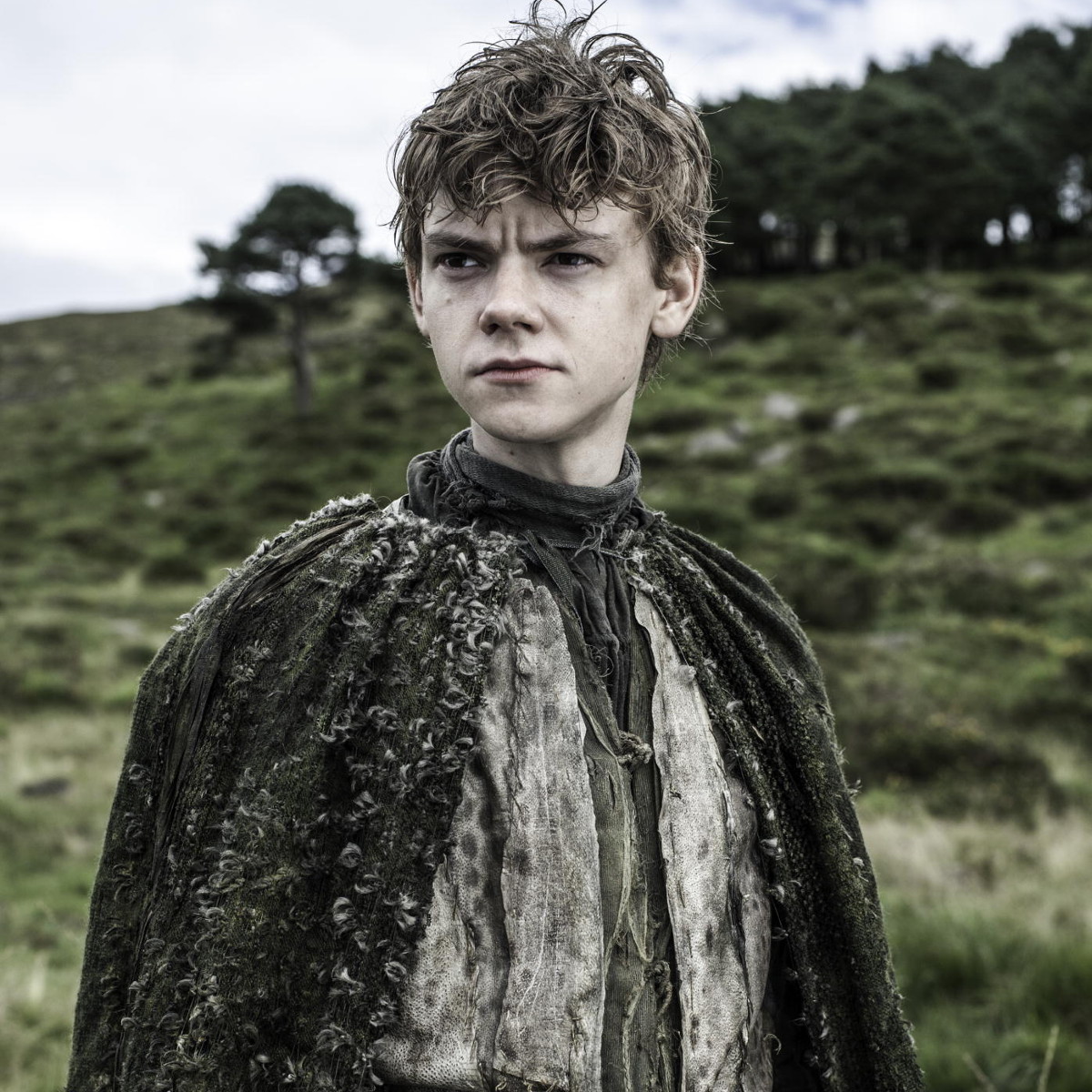
He knew. Honestly, that’s the most haunting thing about Jojen Reed in Game of Thrones. From the very second he stepped out of the Greywater Watch bogs and into Bran Stark’s path, Jojen was a boy living on borrowed time, and he didn't just suspect it—he had seen the date on the calendar.
Most people remember him as the scrawny kid who followed Bran around the North. Maybe you remember the moss-green tunic or the way Thomas Brodie-Sangster played him with this weird, ageless authority. But if you really look at the mechanics of the story, Jojen wasn't just a sidekick. He was the literal engine for Bran's transformation into the Three-Eyed Raven. Without Jojen, Bran is just a broken boy hiding in a crypt. With Jojen, Bran becomes a god.
The Greenseer Who Wasn't
Let’s get the technical stuff out of the way first because the show and the books (George R.R. Martin’s A Song of Ice and Fire) handle Jojen a bit differently. In both versions, Jojen has "greensight." These are prophetic dreams—prophetic visions, really—that aren't metaphoric. They are literal. When Jojen says the sea is coming to Winterfell, he doesn't mean a tidal wave; he means Ironborn soldiers.
But here is the catch: Jojen isn't a Greenseer.
That sounds like a contradiction, right? It's not. In the lore, a Greenseer is someone like Bran or the original Three-Eyed Raven (Brynden Rivers). Greenseers can slip into the skins of animals and even whisper through the weirwood trees. Jojen is just a messenger. He has the dreams, but he lacks the power to change anything. He’s basically a cosmic GPS system that knows the bridge is out five miles ahead but can't turn the steering wheel. That helplessness defines his entire arc. It’s why he’s so somber. Imagine being 13 years old and knowing exactly how you’re going to die, but also knowing you have to walk toward it anyway to save the world.
Why Jojen Reed Matters to the Endgame
Think about the journey to the Cave of the Three-Eyed Raven. It was a suicide mission. Meera Reed, Jojen’s sister, was the muscle. Hodor was the transport. But Jojen was the soul. He spent the entire trip essentially gasping for air.
If you rewatch those Season 3 and 4 episodes, you’ll notice Jojen gets physically weaker as they get closer to the Heart of Winter. The "Greensickness" is a real thing in Martin’s world. Having these visions takes a massive physical toll. By the time they reach the cave in the Season 4 finale, "The Children," Jojen is a shell.
His death in the show was brutal. Attacked by wights (those skeleton versions, specifically), stabbed repeatedly, and then mercy-killed by his own sister before being blown up by a fireball to prevent him from turning into an undead. It was a heavy departure from the books, where his fate is still technically "unknown," though many fans subscribe to the "Jojen Paste" theory. If you haven't heard that one, it's the idea that Jojen was sacrificed and fed to Bran to "awaken" his powers. Dark, right? But it fits the "blood for power" theme the series loves.
The Dynamic with Meera
You can't talk about Jojen without talking about Meera. Their relationship is one of the most tragic in the series. Meera is a warrior. She’s fierce, capable, and protective. And she has to watch her little brother slowly wither away because of a "gift" she doesn't fully understand.
The tragedy of the Reeds is that they gave everything for the Starks. Their father, Howland Reed, saved Ned Stark at the Tower of Joy. Jojen gave his life for Bran. Meera gave her youth and her sanity. And in the end? Bran, as the Three-Eyed Raven, barely even thanked her. He was "gone" by then, replaced by the memories of the world. Jojen knew this would happen. He knew his sacrifice wouldn't result in a "thank you." He did it because the Raven told him he had to.
Breaking Down the Visions
Jojen’s visions provided the some of the best foreshadowing in the early seasons. Let's look at a few:
- The Sea at Winterfell: As mentioned, this predicted Theon Greyjoy’s betrayal. Jojen saw the sea flowing over the walls and drowning the people of Winterfell.
- The Winged Wolf: Jojen saw Bran as a wolf bound in stone chains. This symbolized Bran’s untapped potential and his physical paralysis. Jojen’s job was to break those chains.
- The End of the Journey: Jojen saw his own death. He told Meera, "This isn't the end for you, but it is for me." He wasn't guessing. He had seen the skeletons in the snow.
What Most People Get Wrong About Jojen
The biggest misconception is that Jojen was some kind of wizard. He wasn't. He was a kid with a fever. In the books, he’s described as having eyes the color of moss, and he’s much smaller than Bran despite being older. He’s fragile.
Another mistake is thinking Jojen’s story was a failure because he died before the "big fight." But Jojen’s "big fight" was the journey itself. He was the mentor figure who had to die so the hero could grow. It’s a classic Joseph Campbell "Hero’s Journey" trope, but subverted because Jojen’s death wasn't glorious. It was cold, lonely, and messy.
The Crannogman Connection
Jojen is a Crannogman. This is a specific culture in Westeros that lives in the Neck—the swampy bit between the North and the rest of the kingdoms. They are short, they live in moving castles (Greywater Watch), and they are rumored to be closer to the Children of the Forest than any other humans.
This is why Jojen had the sight. The blood of the First Men runs thick in the Neck. While the rest of the world was worrying about who sat on the Iron Throne, the Reeds were the only ones looking North. They never forgot the old pacts. Jojen was the embodiment of that ancient memory.
Actionable Insights for Fans and Writers
If you’re revisiting the series or writing your own fantasy lore, there are a few things to take away from Jojen Reed’s character arc:
- Prophecy should have a cost. In fiction, knowing the future shouldn't be a "superpower." It should be a burden. Jojen’s physical decline makes his visions feel weighty and dangerous.
- The Mentor doesn't have to be old. Making the "wise guide" a child created a unique tension. It made the audience feel protective of Jojen even though he knew more than anyone else.
- Contextualize the sacrifice. Jojen’s death only matters because of what it enabled. He didn't just die; he died so Bran could become the person who eventually stops the Night King (or becomes King, depending on which version you’re following).
If you want to understand the deeper lore of the series, look into the history of the First Men and the Children of the Forest. Jojen is the bridge between the human politics of the south and the magical reality of the north. He is the "canary in the coal mine" for the return of magic to Westeros.
Next time you do a rewatch, pay attention to Jojen’s eyes. He’s never looking at what’s in front of him. He’s always looking at what’s coming next. That’s the curse of the Reed family, and it’s why Jojen remains one of the most underrated characters in the entire saga.
Check out the "History and Lore" features on the Season 3 and 4 Blu-rays for more on the Crannogmen; they provide a lot of context that the main show skipped. Also, reading the "Bran" chapters in A Clash of Kings gives a much more intimate look at Jojen's specific brand of melancholy.