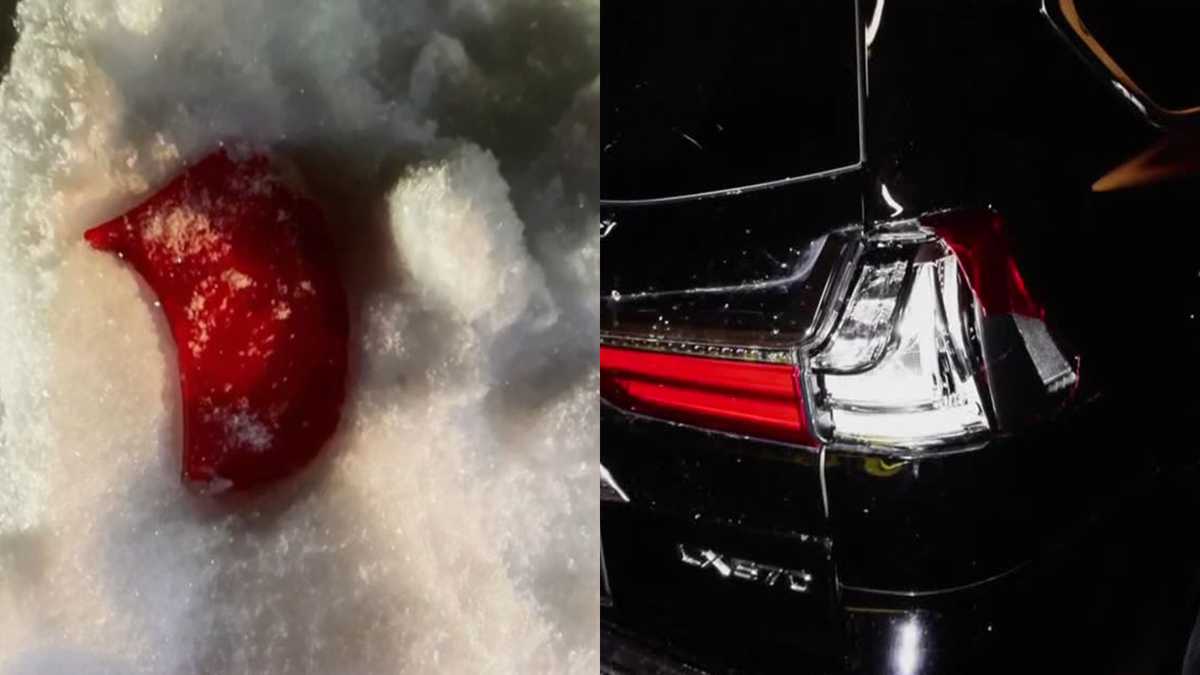
The snow was coming down hard in Canton on January 29, 2022. By 6:00 a.m., John O’Keefe, a 16-year veteran of the Boston Police Department, was found lying in the grass outside a fellow officer’s home. He was barely alive. Actually, by the time help arrived, he was essentially gone. This single spot on the lawn of 34 Fairview Road became the most debated Karen Read crime scene in modern Massachusetts history.
Was it a tragic accident caused by a girlfriend backing up in a drunken fog? Or was it something much darker involving a house full of people?
The Red Solo Cups and the Leaf Blower
Honestly, the way the initial evidence was handled at the Karen Read crime scene is one of the biggest reasons this case blew up. Instead of the high-tech forensic kits you see on TV, the Canton police used red Solo cups to collect blood-stained snow. You can’t make this up. They didn't have a crime scene van ready, so they improvised.
Then there’s the leaf blower.
Investigators used a leaf blower to clear snow off the area where O’Keefe was found. If you’re a defense attorney, that’s a gift from heaven. Alan Jackson and David Yannetti, Read's lawyers, hammered this point for years. They argued that blowing high-powered air over a delicate scene could easily move or plant evidence.
By the time the sun came up, the scene was a mess.
- Six Solo cups filled with blood and snow.
- A leaf blower used to "uncover" evidence.
- No yellow tape for hours.
What the Taillight Pieces Actually Tell Us
The prosecution’s case lived and died by the plastic. They found dozens of pieces of red and clear plastic at the scene. They claimed these were fragments of Karen Read’s Lexus LX 570 taillight. If the plastic was there, her car had to be there, right?
But here is where it gets weird.
The first responders who were there at 6:00 a.m. didn't see any plastic. Not a single shard. It wasn't until hours later—after Read’s car had been seized by police—that investigators started finding these pieces. The defense calls this "evidence planting." The prosecution calls it "snow melting."
They also found O'Keefe's DNA on the bumper.
And a microscopic hair.
For the prosecution, this was the "smoking gun." They brought in experts like Judson Welcher to show how the geometry of the taillight matched the scratches on O'Keefe's arm. But even Welcher had to admit the "black box" data in the Lexus didn't record a collision. It recorded a "trigger event"—a fast reverse—but no actual impact.
The Basement Theory vs. the Lexus
You’ve probably heard the "dog bite" theory. It’s the centerpiece of the "Free Karen Read" movement. O'Keefe had deep, parallel scratches on his arm. Forensic pathologist Dr. Marie Russell testified that these looked exactly like marks from a large dog—specifically, a German Shepherd.
The Alberts, who owned the house, had a German Shepherd named Chloe.
The dog was rehomed shortly after the incident.
If O’Keefe was bitten by a dog, he was inside the house. If he was inside the house, he wasn't hit by a car on the lawn. This is the fundamental divide of the Karen Read crime scene. The prosecution points to the head injury—a massive blunt force trauma to the back of the skull—and says he fell after being clipped by the car. The defense says he was beaten in the basement, bitten by the dog, and dumped in the snow to die of hypothermia.
Data Doesn't Lie, But People Might
The digital evidence at the Karen Read crime scene is a maze.
Jennifer McCabe, who was inside the house, allegedly Googled "hos long to die in cold" at 2:27 a.m. That’s hours before the body was "found." If that timestamp is right, the whole "accident" story falls apart. However, digital forensics experts for the state argued the search actually happened at 6:23 a.m., after the body was discovered, and the 2:27 a.m. time was just a lingering tab from a previous search.
Then you have the "steps."
John O'Keefe's Apple Health data showed he climbed the equivalent of three flights of stairs between 12:21 a.m. and 12:24 a.m. Read’s team says this proves he went into the house. The prosecution says the phone's accelerometer was just confused by the movement of the car.
The Aftermath and the Verdict
In June 2025, a jury finally spoke. They found Karen Read not guilty of second-degree murder and manslaughter. She was convicted of a lesser charge related to driving under the influence, but the big ones didn't stick. The "reasonable doubt" was just too thick.
As of early 2026, Karen Read is out. She’s living with her parents and pursuing civil lawsuits against the investigators.
The lead investigator, Michael Proctor, was fired from the Massachusetts State Police. His texts—calling Read a "whack job" and making fun of her health—destroyed the investigation's credibility. It didn't matter what they found at the scene after those texts came out. No one trusted the source.
Moving Forward: Actionable Insights for True Crime Followers
If you are following cases like this, the Karen Read crime scene serves as a masterclass in why "chain of custody" matters. Evidence isn't just about what is found; it's about how and when it's found.
- Check the Timestamps: In modern trials, phone data is king. Look for the "raw" data files, not just the summaries presented in court.
- Scrutinize the "First Look": Compare what the first person on the scene saw versus what was found 12 hours later. If new evidence "appears" after a suspect's vehicle is in custody, that's a red flag.
- Evaluate Expert Bias: Remember that both sides pay their experts. Look for "independent" experts, like the ARCCA engineers in this case, who were hired by the DOJ, not the local DA.
The Fairview Road house has been sold. The dog is gone. But the questions about what really happened in that snowstorm will likely haunt Canton for decades. Read's story is now heading toward a book deal and potentially a scripted series, but the truth of that night remains buried somewhere under the 2022 snow.
To stay updated on the ongoing civil litigation and federal investigations into the Norfolk County DA's office, you should monitor the Massachusetts Trial Court electronic records and the U.S. Attorney’s Office for the District of Massachusetts press releases. These documents provide the most direct, unfiltered access to the legal maneuvers currently shaping the case's long-term legacy.