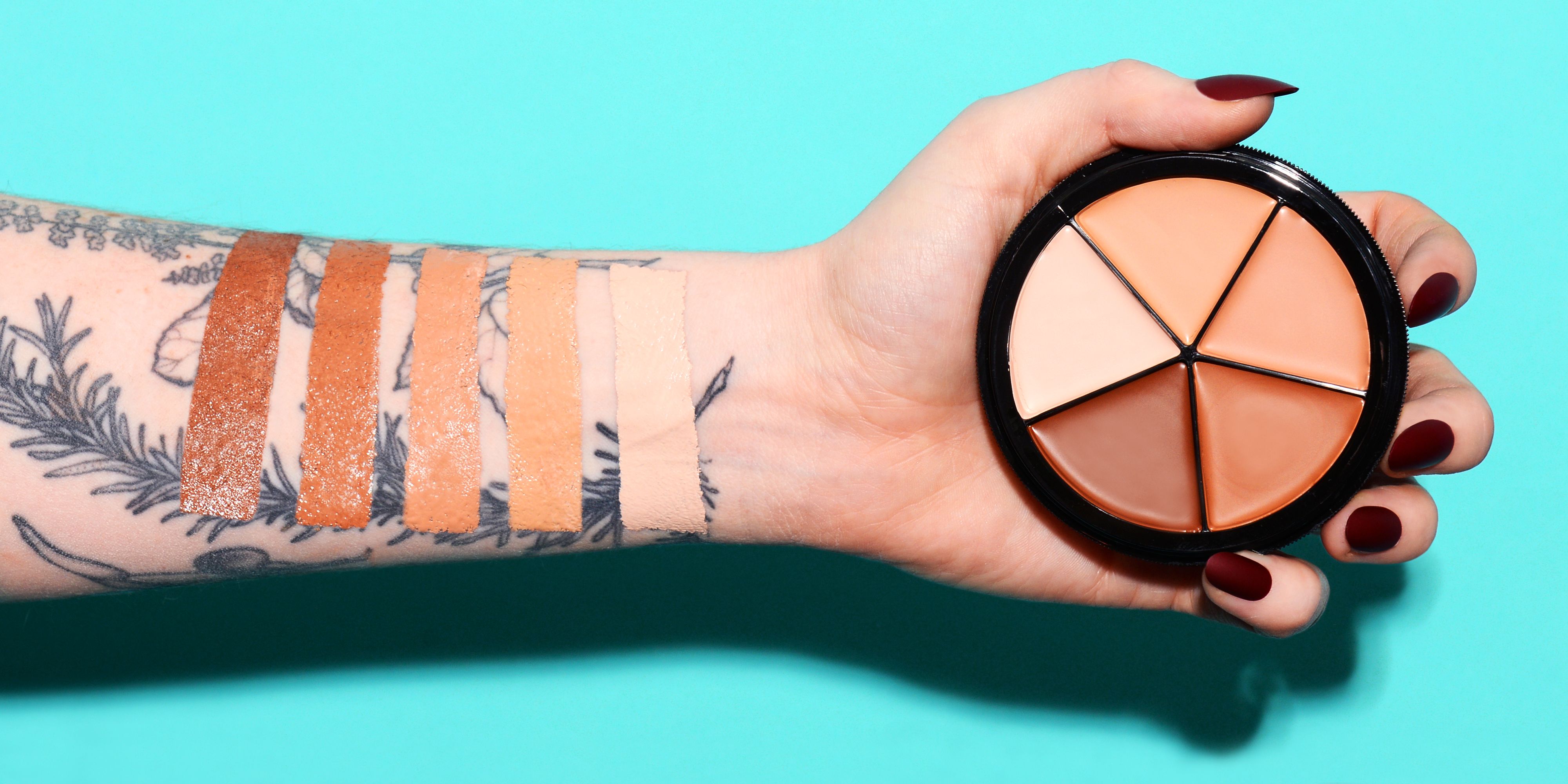
Honestly, it’s kinda wild how long the legend of Kat Von D’s original formula has lasted in the beauty world. If you were around the Sephora aisles circa 2012, you remember the hype. It was peak "indie-sleaze" era. Kat was the queen of the tattoo world, and when she dropped a foundation that promised to literally delete ink from your skin, people lost their minds.
It worked. Mostly.
But things have changed a lot since then. The brand isn't even owned by Kat anymore, and if you walk into a store asking for "Kat Von D tattoo cover up makeup," you might get a confused look from a Gen Z employee who only knows the brand as KVD Beauty.
The truth about covering tattoos with makeup is a lot messier than those old 30-second commercials made it look. You can't just slap on some foundation and call it a day. If you try that, you’ll end up with a weird, gray, cakey smudge on your arm that looks like you tried to hide a crime scene with pancake batter.
The Rise and Fall of the "Lock-It" Era
The original Kat Von D Lock-It Tattoo Foundation was basically house paint in a fancy bottle. It was thick. It was heavy. It was pigmented enough to cover a bad decision from 2005 in one swipe.
I remember the demo videos. They’d take a guy covered in neck tattoos, paint half his face, and he’d look like a blank canvas. It was revolutionary at the time because most "high coverage" foundations back then were still pretty translucent. Kat changed the game by bringing stage-quality pigment to the masses.
But here’s the thing: it was a nightmare for your pores. It was dry. If you didn't prep your skin like a pro, it would settle into every fine line you didn't even know you had.
Then came the drama. Kat sold her shares in 2020. The brand rebranded to KVD Vegan Beauty (and then just KVD Beauty). They changed the formulas. They moved away from that heavy, gothic "tattoo" aesthetic and tried to go more "kindness and vibes."
Fans were ticked.
The reformulated Lock-It Foundation just wasn't the same. And then, it basically vanished. By 2024, KVD shifted focus to things like the Good Apple Skin-Perfecting Foundation Balm.
Why Good Apple Isn't Always the Answer
When the Good Apple balm went viral on TikTok, everyone claimed it was the second coming of the original tattoo cover-up. It is incredibly pigmented. One swipe and your redness is gone.
But for a tattoo? It’s tricky.
Tattoos are made of ink deep in the dermis. Most of them have dark outlines—blacks and blues. If you put a flesh-toned balm directly over black ink, the blue tones will bleed through. It creates a "bruised" look.
Basically, you’re trying to cover a dark color with a lighter color without neutralizing the undertone first. It’s Color Theory 101, but most people forget it when they’re in a rush to hide a sleeve for a wedding.
The Step-By-Step That Actually Works (2026 Edition)
If you’re serious about using KVD products or any high-coverage makeup to hide a tattoo, you have to follow a specific ritual. Don't skip steps.
- The Color Corrector is Non-Negotiable. You need a peach or orange corrector. If your tattoo is black/blue, orange cancels it out. Use a product like the KVD ModCon Liquid-Gel Contour in a warm shade or a dedicated corrector from a brand like Dermablend.
- Set the Corrector. This is where people fail. If you put foundation directly on wet orange corrector, they just mix. You get orange-tinted foundation. Dust it with a tiny bit of translucent powder first.
- Stipple, Don't Swipe. Take your KVD Good Apple Balm or a similar high-coverage cream. Use a dense brush. Tap it on. If you swipe, you’re just moving the makeup around. You want to build layers of "coverage" on top of each other.
- Hairspray or Heavy Duty Setting Spray. This isn't just for your face. Tattoos are usually on parts of the body that move or rub against clothes. You need a "barrier" spray. Something like Ben Nye Final Seal or even a cheap, high-alcohol hairspray in a pinch will lock that pigment down so it doesn't end up on your bridesmaid dress.
Is KVD Still the Best?
Honestly? Maybe not.
In 2026, the market is flooded. Brands like Dermablend have stayed in their lane and perfected the art of body camouflage. Huda Beauty’s #FauxFilter is another heavy hitter that gives KVD a run for its money in terms of sheer "I want to look like a mannequin" coverage.
The KVD brand has struggled with its identity lately. It was recently sold again—this time to Belle Beauty/Windsong—and the future of their core products is always a bit up in the air.
If you still have an old bottle of the original Lock-It, cherish it. But don't use it. Makeup expires, and 10-year-old foundation is a one-way ticket to a breakout.
What You Should Do Next
If you have a big event coming up and you need to disappear some ink, don't just buy a bottle of foundation and hope for the best.
Go to a store and grab a sample of a peach color corrector first. Test it on a small section of your tattoo. See how much of that "blue" it actually kills. That’s 80% of the battle.
Also, consider the texture of your skin. If your tattoo is on your wrist or an area with a lot of movement, a cream balm like Good Apple might crease. You might be better off with a high-pigment liquid that sets to a matte finish.
Covering a tattoo is an art form, not a quick fix. Take your time, layer your products, and for the love of everything, don't forget the setting powder.
Actionable Takeaways for Your Next Cover-Up:
- Identify the Undertone: Use orange for blue/black ink and green for red-toned tattoos.
- Layering is Key: Three thin layers will always look more natural and last longer than one thick, "cakey" layer.
- Test for Transfer: Once you think you’re done, wait 10 minutes and press a white paper towel against the area. If it comes off, you need more setting spray.
- Shade Match for the Body: Remember that your arm or leg is rarely the same shade as your face. Match the foundation to the skin surrounding the tattoo, not your forehead.
The era of Kat Von D might be over, but the techniques she popularized are still the gold standard for hiding ink. You just have to be smarter than the bottle of makeup you're holding.