Honestly, it’s hard to remember a time when you couldn’t walk into a grocery store or flip through radio stations without hearing that heavy, clicking trap beat.
Dark Horse was everywhere.
When Katy Perry dropped it in late 2013, it wasn't just another pop song. It was a massive, genre-bending risk that basically shifted how mainstream pop sounded for the next decade. But behind the 20 million units sold and the billions of views, there’s a messy trail of lawsuits, religious controversy, and a "witchy" vibe that almost cost Katy her reputation.
The Song That Changed the Sound of Pop
Before "Dark Horse," Katy was the queen of bubblegum. Think whipped cream cans and blue wigs. Then came Prism. She wanted something "darker" and "witchier."
She teamed up with Sarah Hudson in Santa Barbara to write a warning. The vibe? A seductress who is essentially a magical trap. If you fall in love with her, it’s your last time.
Katy actually reached out to Dr. Luke and Max Martin to bring in Juicy J. It was a weird move at the time. A Southern rap legend on a Katy Perry track? It shouldn't have worked. But that "chopped and screwed" vocal style and the icy, simplistic production created a "Southern rap-techno mashup" that the world hadn't really heard from a "Main Pop Girl" before.
It’s now 2026, and looking back, this song is widely credited with dragging trap elements into the top 40.
The $2.8 Million Lawsuit: Who Really Wrote the Beat?
This is where things got legally exhausting.
In 2014, a Christian rapper named Marcus Gray (who goes by Flame) sued Katy and her team. He claimed "Dark Horse" ripped off his 2008 track, "Joyful Noise." Specifically, he pointed to a 16-second instrumental loop—an ostinato—that sounded strikingly similar.
The Back-and-Forth Battle
- 2019: A jury actually agreed with Flame. They ordered Katy and her label to pay roughly $2.8 million in damages. It sent shockwaves through the industry. Could you really own a basic musical building block?
- 2020: A judge overturned the verdict. She ruled that the specific 8-note pattern was too "trite" and "commonplace" to be copyrighted.
- 2022: The Ninth Circuit Court of Appeals officially shut the case down for good. They basically said you can’t have a monopoly on the "alphabet of music."
The "Allah" Pendant and the Music Video Backlash
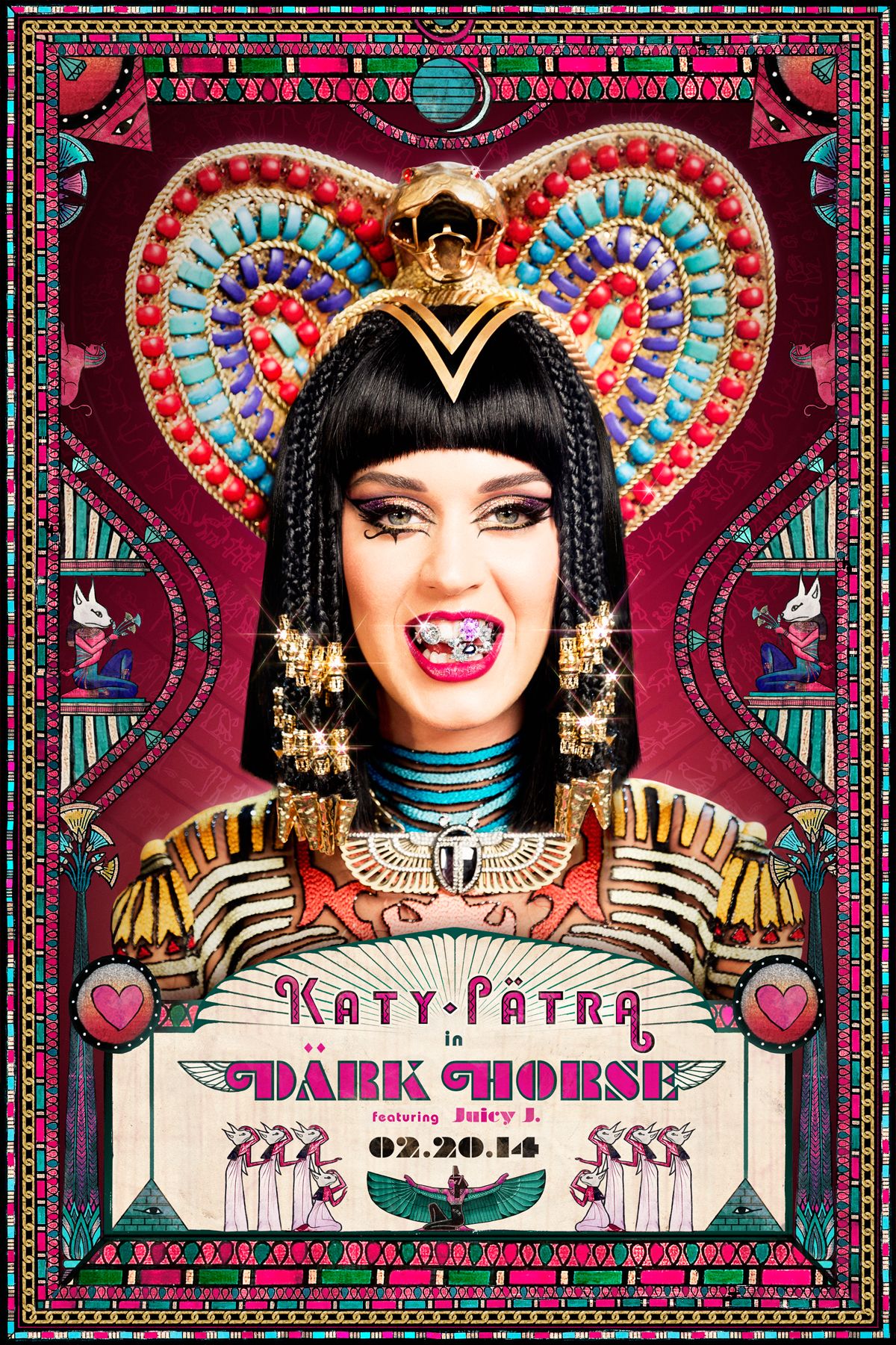
The music video was a whole other level of chaos. Set in "Memphis, Egypt," the "Katy Pätra" visual is a neon-soaked fever dream. But it hit a major snag when it first came out.
In the original version, a suitor wearing a pendant that spelled "Allah" in Arabic was disintegrated into sand.
Over 65,000 people signed a petition on Change.org calling it blasphemous. They argued that "burning" the word for God was offensive. Katy’s team didn't take the video down, but they did go back in and digitally scrub the pendant from the frame.
Aside from the religious angle, the video has been picked apart by academics for years for "cultural appropriation" and "orientalism." It’s a polarizing piece of art, to say the least.
Why Dark Horse Still Matters in 2026
Despite the drama, the numbers are staggering.
Just recently, "Dark Horse" became the first song by a female artist to surpass 20 million units sold in the United States. It’s eligible for 2x Diamond status. That's a level of success most artists never even see once, let alone twice for the same track.
It paved the way for artists like Billie Eilish or Olivia Rodrigo to mix dark, moody textures with massive pop hooks.
What You Can Learn From This
If you're looking at why this song "won" despite the hurdles, it comes down to a few specific factors:
- Genre Blending: Don't be afraid to mix "bubblegum" with "trap." The contrast is what catches the ear.
- Visual Identity: Even with the controversy, the "Katy Pätra" look is iconic and instantly recognizable.
- Legal Resilience: The lawsuit proved that while copyright is tight, "building blocks" of art belong to everyone.
If you're diving back into Katy's discography or studying pop history, start by comparing the "Dark Horse" stems to the "Joyful Noise" beat yourself. You'll see why the jury was confused, but also why the judges ultimately protected the freedom to use basic scales. The song remains a masterclass in how to take a "dark" risk and turn it into a global diamond.
To get the most out of this pop history, you should listen to the official "Dark Horse" instrumental track and pay attention to the sub-bass layers—it's those specific technical choices that made the song a club staple for over a decade.