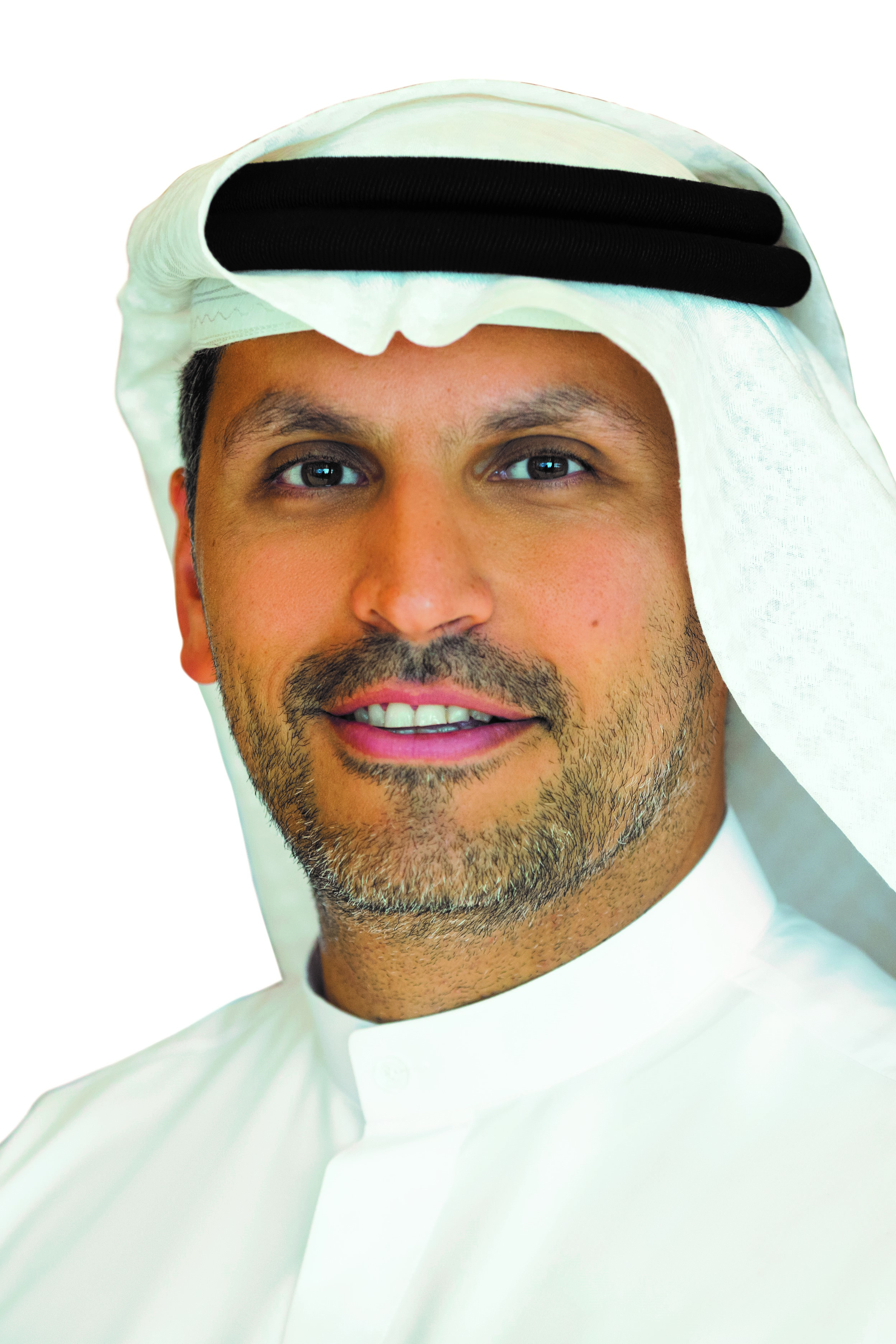
You’ve probably seen him on the pitch at the Etihad Stadium, standing next to Pep Guardiola or holding a trophy. To the average football fan, he’s just the face of Manchester City’s ownership. But honestly, that’s like looking at an iceberg and thinking the tip is the whole story. Khaldoon Khalifa Al Mubarak is much more than a "football guy."
He is basically the architect of modern Abu Dhabi. While most people focus on the billions spent on transfers, they miss the fact that this man is managing a global portfolio worth over $300 billion through Mubadala. He’s the guy who gets a call when a sovereign state needs to negotiate with China or when a massive tech merger needs a steady hand.
It’s easy to get lost in the glitz. But if you really want to understand how power works in the 2020s, you have to look at how Khaldoon operates. He doesn’t just buy assets; he builds ecosystems.
The Tragic Backstory Nobody Mentions
Most people assume Al Mubarak was born into a life of effortless luxury. That’s not quite the case. His father, Khalifa Ahmad Al Mubarak, was a high-ranking UAE diplomat and the ambassador to France. In 1984, when Khaldoon was just a young boy, his father was assassinated in Paris.
That kind of trauma changes a person.
Instead of retreating, he leaned into public service. He went off to the United States, studied Economics and Finance at Tufts University, and came back to the UAE with a very specific mindset. He wasn’t just looking for a job; he was looking to fulfill a legacy. He started at ADNOC, the national oil company, but he didn't stay in the oil lane for long. He was hungry for something broader.
Why He’s the Most Important Person in the Room
If you look at his current list of roles in 2026, it’s actually a bit exhausting to read. He is the Managing Director and Group CEO of Mubadala Investment Company. That alone is a full-time job. But then you realize he’s also:
- The Chairman of the Executive Affairs Authority (the group that advises the UAE President).
- The Presidential Special Envoy to China.
- The Chairman of Abu Dhabi Commercial Bank.
- A board member at ADNOC and G42 (the AI giant).
- The Secretary General of the Artificial Intelligence and Advanced Technology Council.
Basically, if it matters to the future of the UAE, Khaldoon is probably in the meeting.
He’s the bridge. He bridges the gap between the old-school oil wealth of the past and the high-tech, AI-driven economy of the future. When he talks about Mubadala, he’s not just talking about ROI. He’s talking about "economic diversification." It sounds like corporate speak, but it’s literally about making sure his country still has a future when the world stops using oil.
The Manchester City "Project" Explained (Simply)
Let’s talk about the football, because that’s where the "what most people get wrong" part really kicks in. Critics love to talk about the "oil money" as if it’s just a bottomless pit of cash. But Khaldoon has always viewed Manchester City as a business startup.
When the Abu Dhabi United Group bought the club in 2008, he didn't just buy a team; he bought a brand that could be scaled. Today, the City Football Group (CFG) owns or has stakes in over a dozen clubs worldwide—from New York to Mumbai to Melbourne.
It’s a network.
By creating a global web of clubs, they share scouting data, coaching philosophies, and marketing power. It’s a "financial and economic machine," as he once called it. In 2023, the club achieved the Treble—winning the Premier League, FA Cup, and Champions League—but for Khaldoon, the real victory was likely the club’s profitability. Manchester City isn't just winning trophies anymore; it’s actually making money. That was the plan all along.
He’s patient. Kinda scary patient, actually. He stood by Pep Guardiola when things were rocky in the beginning, and he stood by the club’s long-term strategy even when UEFA investigations were swirling. He doesn't panic. That’s his superpower.
The Shift to AI and the 2026 Landscape
Lately, his focus has shifted. If you’ve been following the news in early 2026, you’ve noticed his name popping up more in tech circles than in sports ones. As the Chair of the Board of Trustees for the Mohamed bin Zayed University of Artificial Intelligence (MBZUAI), he is pushing the UAE to become a global hub for AI.
He’s not just buying chips; he’s building the infrastructure. Through companies like G42 and the newly formed MGX, he’s positioning Abu Dhabi as a serious competitor to Silicon Valley.
Why? Because data is the new oil.
He sees the writing on the wall. He knows that the influence of the next fifty years won't come from what’s under the ground, but from who owns the algorithms and the compute power. It’s the same playbook he used with football and renewable energy (through Masdar). Find a sector that’s going to be huge, invest heavily, and build a global network around it.
What You Can Learn From His Leadership
You don't have to be a billionaire or a government official to take something away from how Khaldoon Al Mubarak operates. Honestly, his style is a masterclass in a few things:
- Long-termism is everything. He doesn’t care about the headlines this week. He cares about where the company (or the club) will be in ten years.
- Loyalty pays off. His relationship with the UAE President, HH Sheikh Mohamed bin Zayed Al Nahyan, is built on decades of trust. In business, his "inner circle" at City and Mubadala stays consistent for years.
- Diversify before you have to. He didn't wait for oil prices to crash to start investing in tech. He did it while the coffers were full.
- Stay calm under fire. Whether it's a global financial crisis or a massive sports controversy, he remains the most composed person in the room.
Moving Forward
If you want to keep an eye on where global power is shifting, stop looking at the politicians and start looking at the people who manage the capital. Khaldoon Al Mubarak is the person who connects the dots between Wall Street, the Silicon Valley AI race, and the boardrooms of Beijing.
To stay updated on his impact, watch the moves of Mubadala in the semiconductor and AI sectors over the next twelve months. That's where the real "game" is being played now. You can also follow the annual City Football Group financial reports—they’re a better indicator of his success than any league table.
Success isn't just about winning today; it's about making sure you're the one holding the cards for the next twenty years. Khaldoon has been playing that game for a long time, and he's nowhere near finished.