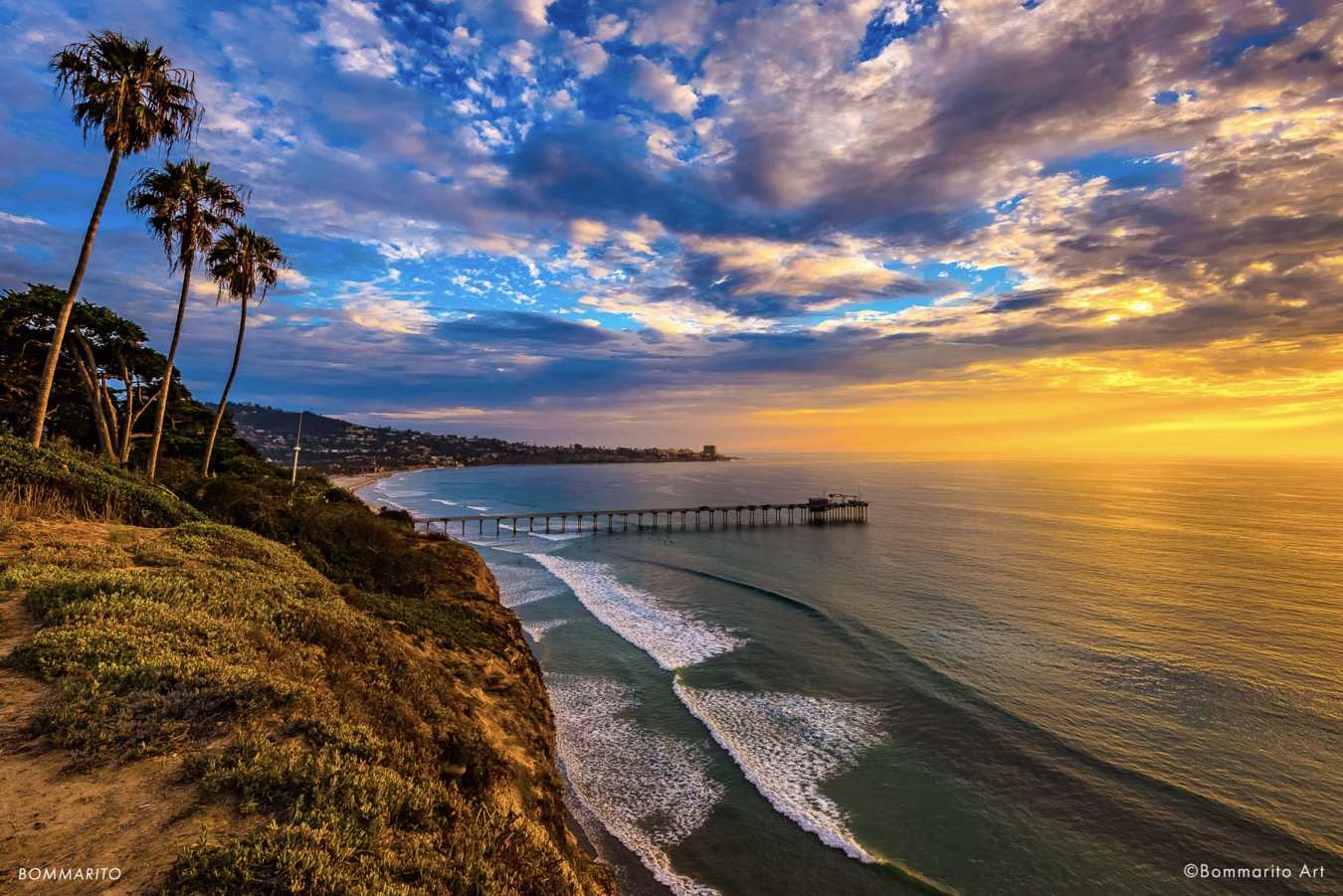
Honestly, if you type La Jolla Cove San Diego CA 92037 into a search bar, you're probably looking for a postcard. You want the turquoise water, the barking seals, and that specific "Southern California dream" vibe. But here is the thing. Most people show up totally unprepared for the reality of the Cove. They expect a quiet beach day. What they get is a pungent, crowded, beautiful, and sometimes chaotic slice of ecological drama.
It is spectacular. It is also kind of gross if you aren't ready for the smell of a thousand sea birds.
Located at the foot of Scripps Park, the Cove is a small, deep-water bay tucked between sandstone cliffs. It is technically part of the Matlahuayl State Marine Reserve. That means no fishing, no taking shells, and definitely no poking the wildlife. People forget that last part. They see a sea lion and think "Ooh, photo op," not "Ooh, three-hundred-pound predator with teeth." If you want to actually enjoy this place without getting a ticket or a bite, you have to understand how the ecosystem works.
The Smell, the Seals, and the Great Sea Lion Debate
Let's address the elephant—or rather, the sea lion—in the room. If you visit La Jolla Cove San Diego CA 92037 during a heatwave, the scent is... memorable. It is a mix of guano and marine mammal musk.
For years, there has been a literal war between local residents and the pinnipeds. The "Point La Jolla" area, which is the rocky outcrop just south of the main beach, is now seasonally closed to the public to protect pupping sea lions. You used to be able to walk right up to them. Now? Not so much. The City of San Diego has been under immense pressure from groups like the Sierra Club and various "seal watch" volunteers to keep humans at a distance.
Why? Because tourists are, frankly, a bit much. I've seen people try to put their kids on the back of a sleeping bull sea lion for a picture. That is how you end up in the emergency room. The sea lions at the Cove are California Sea Lions (Zalophus californianus), while the ones at the nearby Children’s Pool are mostly Harbor Seals. Learn the difference. Sea lions have external ear flaps and can "walk" on their flippers. Harbor seals just kind of sausages-roll around on the sand.
The closure of Point La Jolla is a polarizing topic. Locals who grew up diving there feel like they’ve lost their backyard. Environmentalists argue that the skyrocketing tourism was stressing the animals to the point of abandonment. If you visit today, expect fences and very clear signs. Stick to the boardwalk if you want to watch the pups. It’s safer for everyone.
Diving and Snorkeling the Ecological Reserve
If you can get past the crowd on the sidewalk, the real magic of La Jolla Cove San Diego CA 92037 is underwater.
The visibility here is unique for California. Because the Cove is tucked into a corner, it's protected from the massive swells that churn up sand at nearby shores like La Jolla Shores or Windansea. On a good day, the water is gin-clear. You’ll see the Garibaldi—California’s state marine fish. They are bright orange, almost neon, and surprisingly territorial. If you get too close to their nest, they might actually charge at your mask.
What You’ll See Down There
- Giant Sea Bass: These things are the size of a Volkswagen Beetle. Well, maybe a small one. They can weigh up to 500 pounds. Seeing one emerge from the kelp forest is a religious experience.
- Leopard Sharks: Don't freak out. They are harmless bottom-feeders. They congregate in the shallow, warmer waters near the Marine Room restaurant just down the coast, but they frequently cruise through the Cove.
- The Kelp Forest: The Giant Kelp (Macrocystis pyrifera) grows up to two feet a day. Swimming through it feels like flying through a submerged jungle.
A lot of people rent gear from shops up the hill on Prospect Street or down in the Shores. If you are a novice, take a guided tour. The "Seven Sea Caves" are right around the corner, and while you can kayak to them, you can only swim into the Clam’s Cave from the water side. It’s dark, it’s loud, and the surge can be tricky. Don't be the person the lifeguards have to pull out of a crevice.
The Logistics of 92037: Parking is a Nightmare
Let's talk about the 92037 zip code. It is one of the wealthiest in the country. This means the infrastructure is charmingly old and completely inadequate for the number of people who visit.
If you arrive at La Jolla Cove San Diego CA 92037 at 10:00 AM on a Saturday, you have already lost. You will spend forty-five minutes circling Coast Boulevard. You will get frustrated. You might even consider parking illegally in a residential red zone. Don't. The parking enforcement here is legendary. They will ticket you before the engine is cool.
Your best bet is the underground pay lots on Herschel or Prospect. Yes, it’s $20. But your time is worth more than that. Or, honestly? Park way up the hill near the high school and walk down. The walk back up is a calf-burner, but the view of the Pacific as you descend is worth the sweat.
Beyond the Beach: Where to Actually Eat
Most tourists fall into the trap of eating at the first place they see with a view. The views are great; the food is often mediocre and overpriced.
If you want the real La Jolla experience, walk a couple of blocks inland. The Taco Stand on Pearl Street usually has a line down the block, and for good reason. Their Al Pastor is legit. If you want something fancy, George’s at the Cove is the classic choice, but specifically the "Ocean Terrace" (the top floor). It's the same view as the fine dining downstairs but with a better breeze and slightly more reasonable prices for a burger or a local IPA.
For coffee, skip the big chains. Go to Better Buzz. It’s a local San Diego staple. Their "Best Drink Ever" is basically a vanilla latte but somehow more addictive. It’s the fuel you need to hike the Coast Walk Trail.
The Coast Walk Trail: The Secret Escape
If the crowds at the main Cove lookout are suffocating, head north. Just past the Cave Store (where you can pay a few bucks to walk down a man-made tunnel into a sea cave), the Coast Walk Trail begins.
It is a dirt path that hugs the cliffs. Most people don't even know it’s there. You get a bird’s eye view of the surfers at "The Shores" and the massive pier at Scripps Institution of Oceanography. It is quiet. You can hear the water hitting the rocks without the sound of a hundred camera shutters. It’s the best place for a sunset.
Essential Tips for a Respectful Visit
We have to talk about the "Leave No Trace" aspect. The 92037 community is very protective of this area. The Cove is small. One piece of trash from every visitor would bury the beach in a week.
- Sunscreen: Use reef-safe stuff. The chemicals in standard sunscreen can bleach the very kelp and coral you’re there to see.
- Tides: Check a tide chart. At high tide, the actual "beach" at the Cove almost disappears. At low tide, the tide pools are exposed, revealing anemones, crabs, and the occasional octopus.
- Lifeguards: The lifeguards at the Cove are part of the San Diego Fire-Rescue Department. They are elite. If they tell you to get out of the water because of a swell or a shark sighting, don't argue.
Navigating the Seasons
Winter is actually the best time to visit La Jolla Cove San Diego CA 92037. I know, that sounds counterintuitive. But the "June Gloom" is real. In May and June, the coast is often trapped under a thick layer of marine clouds until 2:00 PM. It’s chilly and grey.
In January and February, the air is crisp, the visibility is peak, and the sunsets are purple and orange fire. Plus, that’s when the Gray Whales are migrating. You can often see them breaching way out on the horizon from the top of the cliffs.
Actionable Steps for Your Trip
- Arrival Time: Aim for 8:00 AM. You’ll beat the heat, the worst of the smell, and the parking madness.
- Gear: Bring a thick wetsuit (at least 3/2mm). Even in summer, the Pacific here is rarely "warm." It’s a cold-water upwelling zone.
- Distance: Maintain at least 50 feet from all marine mammals. Use a zoom lens. It keeps you legal and keeps the animals calm.
- Footwear: Wear shoes with grip. The sandstone around the Cove becomes incredibly slick when wet or covered in sea spray.
- Education: Stop by the Birch Aquarium nearby first. It gives you context for the species you’re about to see in the wild.
The Cove isn't just a park. It’s a living, breathing, slightly stinky, and incredibly vibrant marine sanctuary. Respect the boundaries, plan for the crowds, and don't forget to look down into the water—that’s where the real show is.
Next Steps for Your Visit
- Check the Surf Report: Use sites like Surfline to check for "Water Quality" alerts, especially if it has rained in the last 72 hours. Runoff can make the water unsafe for swimming.
- Book Your Gear: If you need a snorkel or fins, reserve them online at a shop in La Jolla Shores the day before to avoid the "walk-in" premium.
- Download a Tide Map: Aim for a "minus tide" if you want to explore the tide pools without getting soaked.