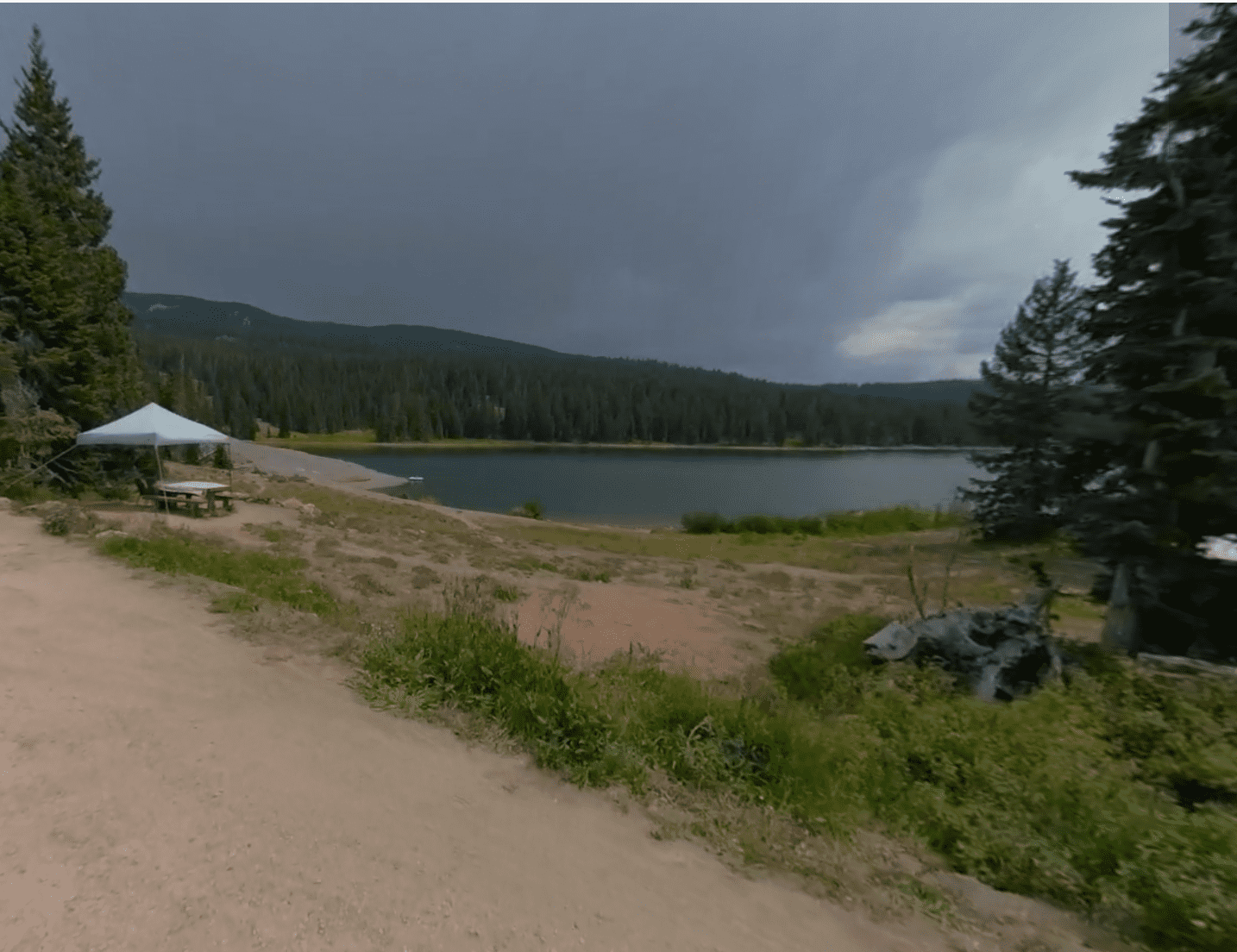
You’re driving up a gravel road that feels a bit too steep for your comfort level. The trees are getting tighter. Then, the sky opens up. You see it. That's Lake Irwin. Honestly, it’s one of those places that looks like a desktop wallpaper, but the reality is way more grit and thin air. Located about 10 miles west of Crested Butte, Lake Irwin Campground Colorado sits at a dizzying 10,200 feet. If you aren't used to the altitude, your lungs will let you know within five minutes of hopping out of the truck.
It’s spectacular. It’s also crowded. People love this place for a reason, but if you show up without a plan, you’re basically asking for a headache.
The High-Altitude Reality of Camping Here
Most people think of Colorado camping as a summer-long affair. Not at Lake Irwin. Because of that 10,000-plus elevation, the snow hangs out until July. No joke. I’ve seen drifts blocking the campground entrance in late June. The Forest Service usually tries to open things up by mid-June, but "opening day" is a moving target dictated by the previous winter’s snowpack.
Once you’re in, the sites are tucked into a dense forest of Engelmann spruce and subalpine fir. It’s moody. Even when the sun is blazing, the shadows under those trees stay chilly. You’ve got to pack for four seasons. I’ve seen it go from 70 degrees at noon to a skin-stinging frost by 9:00 PM. That’s just the high country for you.
The campground itself is managed by the Grand Mesa, Uncompahgre, and Gunnison (GMUG) National Forests. There are 25 campsites. That’s it. Just twenty-five. In a state with millions of people looking for an escape, twenty-five spots is practically nothing.
Hard Truths About Reservations
You can’t just roll up on a Friday afternoon and expect a spot. This isn't 1995. You basically have to treat the Recreation.gov booking window like you’re trying to buy front-row concert tickets. Sites open up six months in advance on a rolling basis.
If you miss that window, your options are slim. There are a few first-come, first-served spots, but unless you’re arriving on a Tuesday morning, don't bet your vacation on them.
Why the Water is the Real Draw
The lake is the centerpiece. Obviously. It’s a gorgeous alpine basin filled with clear, cold water that mirrors the Ruby Range. Most mornings, the water is like glass. It’s the kind of quiet that makes you feel bad for clanking your coffee mug.
- Paddleboarding and Kayaking: This is the move. Since there are no motorized boats allowed—thankfully—the water stays peaceful. You can launch right from the day-use area.
- Fishing: It’s stocked. You’ll find rainbow trout mostly. It’s not exactly secret-spot fishing, but it’s great for kids or a lazy afternoon.
- The "Beach" Area: It’s not sand. It’s rocky and cold. But on a hot July day, sitting by the shore with your feet in the water is unbeatable.
The lack of motors is a huge deal. It changes the whole vibe. Instead of hearing outboard engines, you hear the wind through the pines and the occasional splash of a fish. It's restorative.
Hiking Trails You Actually Want to Do
If you just sit at your campsite, you’re missing half the point of Lake Irwin Campground Colorado. The surrounding terrain is some of the best in the West Elk Mountains.
The Scarp Ridge Trail is the heavy hitter. It starts near the campground and climbs quickly. You’ll be huffing. The payoff, though, is a ridgeline view that looks down on the lake and out toward the Maroon Bells-Snowmass Wilderness. If the wildflowers are peaking—usually late July—it looks like a floral bomb went off.
Then there’s the Dyke Trail. It’s famous among mountain bikers, but it’s a killer hike too. It takes you through massive aspen groves. If you’re there in September when the leaves turn, the light coming through the yellow canopy is almost hallucinogenic.
The Dispersed Camping Alternative
Sometimes the main campground is a no-go. It happens. If you can't snag a spot in the official loop, the area around Lake Irwin has historically been a hotspot for dispersed camping.
But wait.
The Forest Service has been cracking down because, frankly, people were trashing the place. You can’t just pull over anywhere anymore. There are designated "dispersed" spots along Kebler Pass Road. Look for the brown signs with the tent symbols. If you go this route, you’ve got to be self-sufficient. No toilets. No trash cans. No water pumps.
Honestly, dispersed camping here is better if you want actual privacy. The official campground puts you pretty close to your neighbors. If you don't want to hear a stranger unzip their tent at 6:00 AM, go dispersed.
Wildlife and Safety (The Boring but Important Stuff)
This is bear country. Not "maybe" bear country—"definitely" bear country. Black bears are frequent visitors because campers are sometimes messy. The campground provides bear-resistant food lockers (bear boxes). Use them. Every single time. Even for your toothpaste.
Also, the mosquitoes. They are legendary. In July, they don't just bite; they swarm. Bring the heavy-duty spray or a head net if you’re sensitive. Once the first freeze hits in late August, they disappear, which is one reason why late-season camping here is actually superior.
A Note on Facilities
Don't expect luxury.
- Vault toilets (fancy word for a hole in the ground).
- Hand-pumped water (check the FS website to make sure the pump is working before you go).
- No cell service. This is a dead zone. Embrace it.
Getting There Without Wrecking Your Car
You take Kebler Pass Road (Gunnison County Road 12) out of Crested Butte. It’s a dirt road, but usually well-maintained. However, once you turn off toward Lake Irwin, it gets rougher. Most SUVs will be fine. If you’re trying to haul a 30-foot trailer, you better know what you’re doing. The turns are tight and the road is narrow.
Kebler Pass itself is one of the most famous drives in Colorado. It’s home to one of the largest living organisms on earth—a massive aspen grove that shares a single root system. Driving through it to get to the lake is part of the experience.
Planning Your Trip: Actionable Steps
- Mark the Calendar: Calculate exactly six months out from your desired date. Set an alarm for 8:00 AM MST. Be logged into Recreation.gov with your credit card saved.
- Check the Snow Report: If it was a heavy winter (like 2019 or 2023), don't book for June. Aim for late July or August to ensure the trails are clear.
- Water Strategy: The lake water isn't for drinking unless you filter it. Even if the hand pump is working, it sometimes tastes like iron. Bring a few gallons of your own for coffee and cooking.
- Fire Restrictions: Always check the Gunnison County fire maps. This area dries out fast in the summer, and Stage 1 or Stage 2 fire bans are common. If there's a ban, no campfires—period.
- Leave No Trace: Pack out everything. Even your orange peels. High-altitude ecosystems are fragile and take forever to recover from human impact.
The magic of Lake Irwin isn't just the scenery; it's the stillness that comes with being that high up. It’s a place where the stars feel close enough to touch because the air is so thin and the light pollution is nonexistent. Respect the terrain, prepare for the cold, and you’ll understand why people fight so hard for these 25 spots every year.