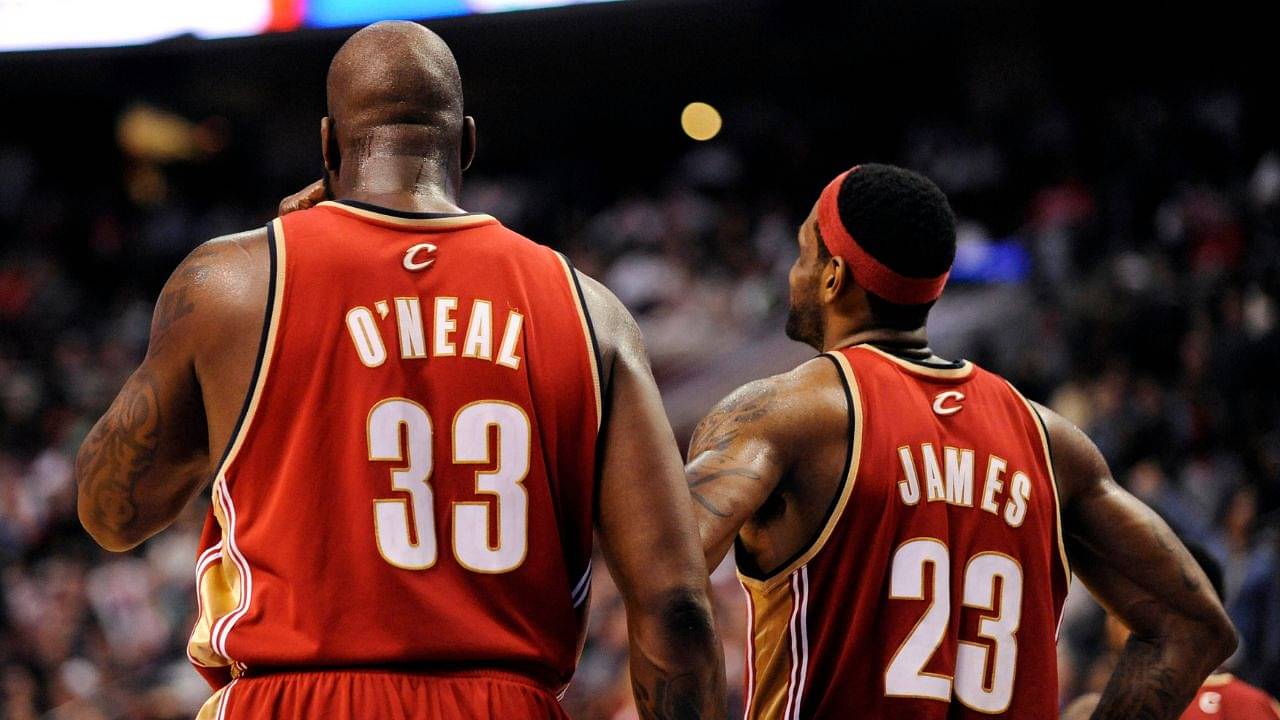
If you’ve watched basketball for any significant length of time, you know the drill with LeBron James. He’s the guy who broke the mold. A 6-foot-9, 250-pound freight train who somehow has the vision of a pure point guard and the scoring touch of a legendary wing. For nearly two decades, we tucked him neatly into the "Small Forward" box, maybe sliding him to Power Forward when the "Heatles" era in Miami got frisky with small-ball lineups.
But then 2021 happened.
Specifically, the 2021-22 NBA season. If you're asking when did LeBron play center, that is your definitive, statistically backed answer. While he’s always been a "positionless" player in theory, that season was the first time it became a nightly reality. It wasn’t just a gimmick or a late-game adjustment. It was a tactical survival strategy that turned a 37-year-old veteran into one of the most efficient "big men" in the league.
The Night the Shift Became Official
It’s December 28, 2021. The Los Angeles Lakers are spiraling. Anthony Davis is out with a knee injury. Dwight Howard and DeAndre Jordan—the traditional centers on the roster—are either struggling with age or simply not providing the spacing the team desperately needs.
Frank Vogel, the Lakers' coach at the time, decided to do something radical. He started LeBron James at center against the Houston Rockets.
LeBron didn’t just "fill in." He exploded. He dropped a 32-point triple-double, the Lakers won, and a new era of "LeCenter" was born. For that season, the numbers are actually staggering. According to Basketball Reference, LeBron spent roughly 50% of his total minutes at the center position during the 2021-22 campaign. Compare that to his career average of about 4% at the five, and you realize just how massive this shift was.
Why "LeCenter" Actually Worked (and Why It Didn't)
Honestly, it’s kinda wild that a guy in his 19th season could just decide to play a new position and immediately rank among the best at it. Offensively, the Lakers were a different beast with LeBron at the five.
Think about the math. If LeBron is the "center," the opposing team’s biggest, slowest defender has to come out to the perimeter to guard him. You’ve basically emptied the paint. This created a highway for players like Russell Westbrook to get to the rim. It also turned LeBron into a terrifying "short roll" playmaker. If he set a screen and caught the ball in the middle of the floor, the defense was essentially cooked.
But there’s always a catch.
- Rim Protection: LeBron is a great chase-down artist, but he’s not a 7-footer who can anchor a defense for 35 minutes. The Lakers' defensive rating often plummeted because he couldn't be everywhere at once.
- Physical Toll: Imagine being 37 and having to bang bodies with guys like Joel Embiid or Nikola Jokic. It’s exhausting. You could see the fatigue in the fourth quarters of those games.
- Rebounding: While he’s a great rebounder for a wing, giving up 3-4 inches to "true" centers meant the Lakers often got killed on the offensive glass.
Despite these flaws, the experiment was a statistical success for LeBron personally. He averaged 30.3 points per game that season—his highest scoring average since 2006. Being at center allowed him to hunt mismatches constantly. Basically, he was too fast for bigs and too strong for anyone else.
The Miami Heat "Small-Ball" Precursor
Before the 2021 Lakers went full-time with it, we saw "prototype" versions of LeBron at center during his time in Miami. Coach Erik Spoelstra is famous for "positionless basketball," and between 2011 and 2014, he frequently used LeBron as a nominal center in "death lineups."
Usually, this happened when Chris Bosh went to the bench or played as a "stretch five." There were moments in the 2013 NBA Finals against the San Antonio Spurs where LeBron was effectively the biggest guy on the floor for Miami. He wasn't listed as a center, but he was doing the center's job: protecting the paint, hedging on screens, and battling for boards.
It’s important to distinguish between "playing the five" and "starting at center." In Miami, it was a tactical nuclear weapon used for 5-10 minutes a game. In 2022, it was the daily grind.
The Evolution of the "Big" LeBron
If you look at his career arc, the move to center was almost inevitable.
- Early Cavs Era: Pure athleticism. Played almost 100% at Small Forward.
- Miami Era: The "Power Forward" transition. He started posting up more, using his strength.
- Lakers Era (2020): He actually led the league in assists as a "Point Guard."
- Lakers Era (2022-Present): The hybrid center.
Nowadays, you’ll still see him slide to the five during the playoffs or in high-leverage "clutch" minutes. In the 2024 and 2025 seasons, the Lakers have used LeBron at center to close out games, pairing him with shooters like Rui Hachimura or Austin Reaves to maximize spacing.
It's essentially the ultimate chess move. If the opponent goes big, LeBron outruns them. If they go small, LeBron bullies them.
What the Stats Say
When you dive into the lineup data from that 2021-22 season, the Lakers' offense was nearly 10 points better per 100 possessions when LeBron played center compared to when he played forward. That's a massive swing. It basically proved that in the modern NBA, "position" is mostly about who you can guard, not where you stand on offense.
He finished that year with a Player Efficiency Rating (PER) of 26.2. For a guy playing out of position at nearly 40 years old, that is basically unheard of.
Actionable Insights for Fans and Analysts
If you're trying to win a debate at the bar or just understand the game better, here is how you should view LeBron's time at center:
- Look at the Lineup, Not the Program: Just because LeBron is listed as a forward doesn't mean he is playing like one. If he's the one defending the opposing team's big man, he's the center.
- The Spacing Factor: LeBron at center is the ultimate "five-out" offense. It forces the opponent to remove their rim protector from the basket.
- Longevity Strategy: Playing center actually saves LeBron some "miles" on his legs because he doesn't have to chase fast guards around the perimeter as much. He can "park" in the paint more often on defense.
LeBron James playing center wasn't a sign of him slowing down; it was a sign of him outsmarting the league. By moving to the five, he found a way to remain the most dangerous offensive threat in basketball well into his fourth decade of life.
To track his current usage, keep an eye on the "Play-by-Play" section of Basketball Reference or Cleaning the Glass. They break down his percentage of minutes at each position in real-time. You'll likely see that "Center" percentage spike every time a teammate gets injured or the Lakers need a comeback.