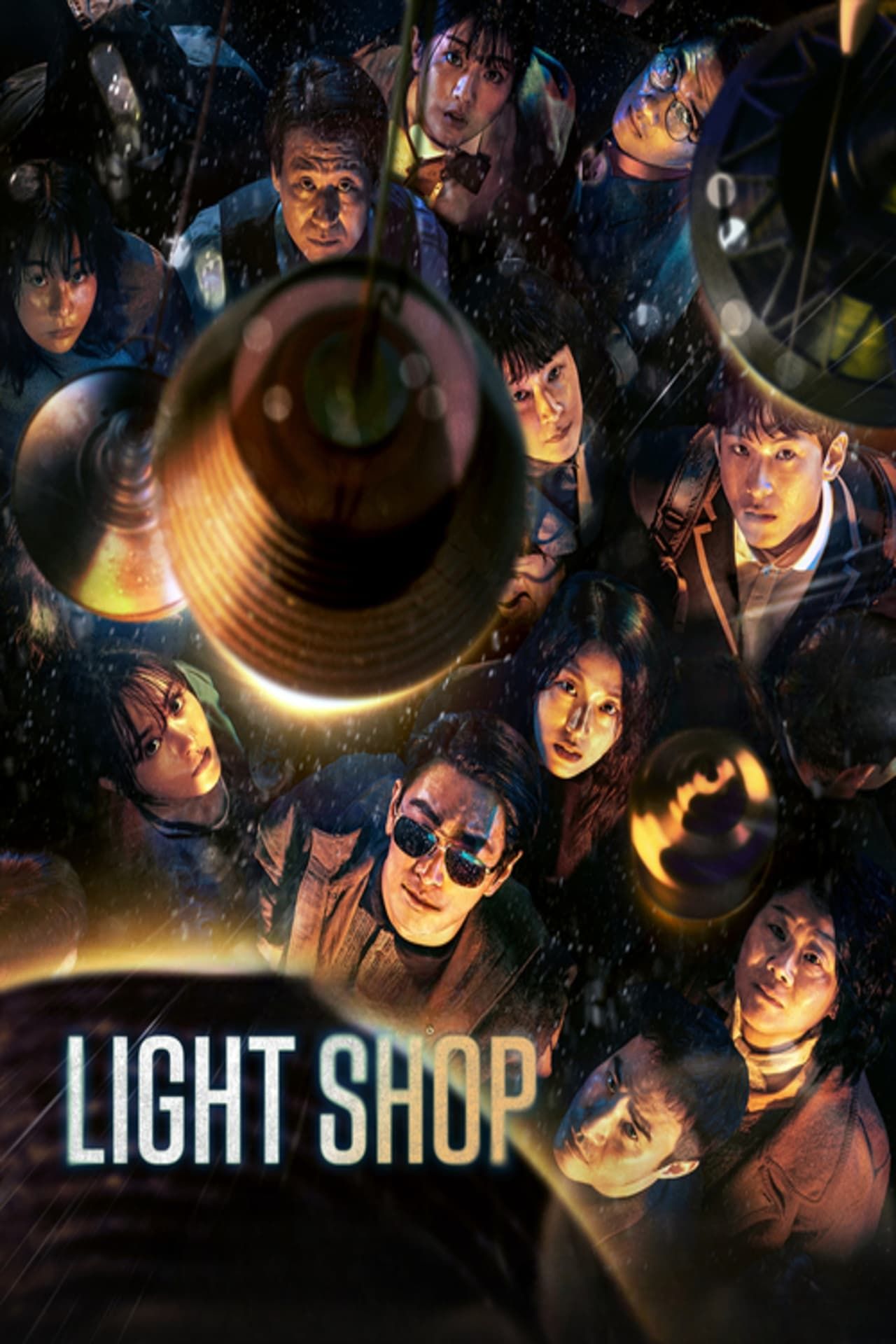
You’ve probably seen the posters. A dimly lit alleyway, a dusty shop filled with glowing bulbs, and Ju Ji-hoon looking like he knows a secret that could ruin your life. If you are looking for light shop sub indo, you aren’t just looking for another K-drama. You are looking for a way into Kang Full’s brain. It’s a weird place. Honestly, after the massive success of Moving on Disney+, the expectations for this specific adaptation were sky-high, and for good reason. Kang Full doesn't do "normal" ghost stories. He does "human" stories that happen to involve the supernatural, and Light Shop (Jomyeonggage) is arguably his most atmospheric work to date.
It’s about the boundary between life and death. That sounds heavy. It is. But it’s also remarkably simple.
The premise revolves around a mysterious shop at the end of a dark road. People visit it. Some are dead. Some are "between." The owner, played with a sort of weary gravitas by Ju Ji-hoon, just sells lamps. But these aren't IKEA floor lamps. They are symbols of the soul's flicker. If your lamp goes out, you’re done. If you can keep it lit, maybe you find your way back.
Why Everyone Is Obsessed With Light Shop Sub Indo Right Now
The surge in searches for light shop sub indo isn't just because of the star power. It's the "Kang Full Effect." For years, webtoon fans heralded Light Shop as one of the "big three" of his supernatural universe. Unlike the high-flying action of Moving, this is a slow burn. It’s claustrophobic. It’s moody.
Korean horror often relies on jumpscares, but this series leans into "K-Horror" in the traditional sense—grief, regret, and the things we leave unsaid. When you watch it with Indonesian subtitles, you realize how much of the nuance is in the dialogue. The way characters address each other matters. The honorifics, the subtle shifts from formal to casual—it all points to their status in the "living" world versus the "other" side.
Fans are literally scouring the internet for the best translations because the official ones sometimes miss the cultural weight of certain phrases. You’ve got Park Bo-young playing a nurse who seems to have a strange connection to these patients. Her performance is heartbreaking. She’s the emotional anchor in a show that could easily become too "out there" for a general audience.
The Cast That Makes the Mystery Work
Let’s talk about the cast. It’s stacked.
Ju Ji-hoon as Jung Won-young is a masterclass in subtlety. He spends half the time just staring at lightbulbs, yet you can feel the weight of a thousand souls on his shoulders. Then you have Park Bo-young as Kwon Young-ji. Most people know her from Strong Girl Bong-soon, but this is a pivot. She’s grounded. She’s tired. She represents the viewer—the person trying to make sense of the inexplicable.
The supporting cast includes heavy hitters like Bae Seong-woo and Uhm Tae-goo. If you’ve seen Save Me or Night in Paradise, you know Uhm Tae-goo has a voice that sounds like gravel over velvet. He brings a terrifying intensity to the screen.
There's a specific scene in the third episode where the lighting shifts from a sickly yellow to a harsh, sterile white. It’s a visual cue for the transition between memories and reality. Most viewers miss it. You shouldn't. It's the key to understanding who is actually "alive" in the shop.
The Connection to the Kang Full Universe
Is this connected to Moving? Yes and no.
While they exist in the same creative universe, Light Shop functions as a standalone psychological thriller. However, rumors have been circulating among Korean netizens that we might see small cameos or "easter eggs" that link back to the superhuman world. Don't expect Kim Bong-seok to fly past the window, though. This is a different vibe.
The source material—the original webtoon—is much darker than the Disney+ adaptation. The showrunners had to soften some of the more gruesome imagery to make it palatable for a global streaming audience. Even so, the "mouth-ghost" sequences are enough to keep you up at night. Seriously.
Decoding the Symbolism of the Bulbs
What’s the deal with the lights? In light shop sub indo circles, this is the main topic of debate.
- Flickering Bulbs: These represent people on life support. The "flicker" is the heart rate monitor.
- Broken Filaments: These are the regrets. If the filament is snapped, the person can't move on until they "fix" something from their past.
- The Shop Itself: It's a bus stop. A terminal. A waiting room.
It’s interesting how the director uses reflections. Look at the windows. Often, you’ll see a character’s reflection doesn't match their physical movement. It’s a classic horror trope, but here, it’s used to show the fragmentation of the soul. It’s brilliant. It’s also incredibly depressing if you think about it too long.
Common Misconceptions About the Show
A lot of people think this is a straight-up horror show. It’s not. If you go in expecting The Conjuring, you’ll be disappointed. It’s more of a "supernatural melodrama."
Another misconception is that the "Light Shop" is a metaphor for heaven. It's more like Purgatory, but with better electrical wiring. The owner isn't God; he's more like a cosmic handyman. He doesn't decide who lives or dies; he just provides the tools for them to make the choice themselves. This agency is what makes the show so compelling. The characters have to save themselves. No one is coming to rescue them.
Watching Light Shop: A Practical Roadmap
If you're diving into this, don't binge it. I know, that sounds counterintuitive. But the emotional weight of each episode is a lot to process. The "Sub Indo" versions are available on several platforms, but the official Disney+ Hotstar version is generally the most reliable for timing and accuracy.
Pay attention to the background noise. The sound design is insane. You’ll hear faint dripping, buzzing, and distant whispers that aren't subtitled because they aren't "speech"—they're atmospheric clues. Use headphones. It changes the experience entirely.
Key Episodes to Watch Twice
- Episode 1: For the world-building and the introduction of the "unusual" customers.
- Episode 4: This is where the emotional core of the nurse’s story really hits home.
- The Finale: Obviously. But watch it specifically for the color grading changes.
The show tackles the concept of "unresolved business" without being cheesy. In one arc, a character is obsessed with a lost key. It’s not about the key; it’s about the person who gave it to them. The show handles these transitions with a delicacy that most Western horror lacks. It’s quiet. It’s patient. It’s very, very Korean.
Actionable Insights for Fans
To get the most out of your light shop sub indo viewing experience, keep these points in mind:
- Check the Webtoon: If you can find the translated webtoon, read the first few chapters. It provides a much deeper context for the shopkeeper’s stoicism.
- Follow the Color Palette: If a scene feels "too bright," something is wrong. The show uses overexposure to signal a character’s denial of their death.
- Note the Shoes: In Korean folklore, shoes are often linked to the transition of the soul. Notice how many characters in the shop are missing a shoe or have worn-out soles. It’s a deliberate design choice.
- Join the Community: Groups on Telegram and X (formerly Twitter) are constantly dissecting the lore. Search for "Jomyeonggage theory" to see some of the wilder (and likely accurate) fan predictions.
The beauty of Light Shop is that it respects the audience's intelligence. It doesn't over-explain. It lets the shadows do the talking. Whether you're a fan of Kang Full or just a casual viewer looking for something more substantial than a typical slasher, this series delivers a haunting, beautiful look at what it means to hold onto the light.
Watch it for the mystery, but stay for the profound meditation on how we remember the people we've lost. Just make sure your own lights are turned on while you watch. You’ll feel better that way.