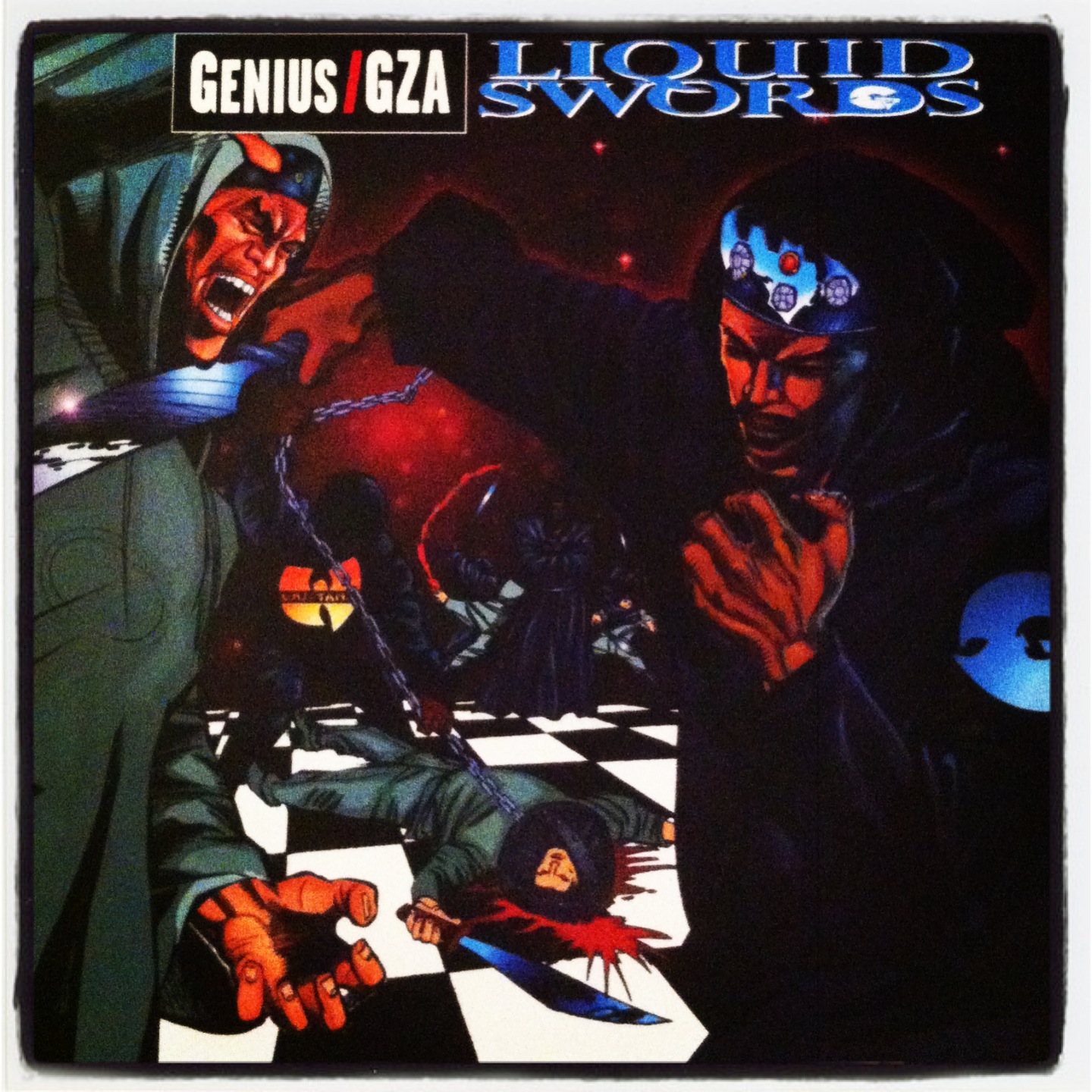
Hip hop art is usually pretty predictable. You get the rapper leaning against a car, maybe a moody black-and-white portrait, or a wide shot of the neighborhood. But in 1995, GZA decided to drop something that looked less like a rap record and more like a comic book you’d find in a dusty long-box at the back of a shop. The liquid swords album cover didn’t just break the mold; it shattered it with a katana.
If you’ve ever stared at that cover while "4th Chamber" rumbled your speakers, you know there’s a lot going on. It’s a chaotic, violent, yet oddly disciplined scene of ninjas engaging in a bloody skirmish across a giant chessboard. Honestly, it’s the perfect visual metaphor for what GZA (Gary Grice) was doing with his pen.
The Comic Book Legend Behind the Art
The art wasn’t just a random commission. GZA’s manager, Geoffrey L. Garfield, was a massive comic book nerd. He reached out to Denys Cowan, a co-founder of Milestone Media and a certified legend in the comic world. If you know Static Shock or Cowan's run on The Question, you know his style: gritty, kinetic, and deeply atmospheric.
Cowan didn't just phone this in. He worked with inker Prentis Rollins and colorist Jason Scott Jones to create something that felt "street" but also mythological. This was back when digital coloring was brand new, and Jones used it to give the blood and the steel that cold, sterile glow. It fits the "wintry" vibe of the RZA's production perfectly.
The coolest part? GZA was actually involved in the concept. This wasn't a label executive's idea. GZA had been playing a ton of chess in 1992 to "sharpen his sword," often hitting up East New York to play Masta Killa or his neighbors Jeru Tha Damaja and Afu-Ra. He originally wanted the chess-battle image for a single, but it was so good they made it the face of the whole project.
Why the Chessboard?
In the Wu-Tang universe, chess isn't just a game. It’s a philosophy. It’s about "the game of life," where every move has a consequence and you’re constantly under pressure from the "system."
On the liquid swords album cover, you see these masked warriors—decked out in Wu-Tang insignias—slaughtering their opponents on the checkered floor. It represents the "Duel of the Iron Mic." Every rhyme is a move. Every verse is a strike. GZA isn't just rapping; he's outmaneuvering the industry.
Breaking Down the Visual Cues
- The "G" Logo: Look closely and you’ll see the custom "G" logo, which was actually designed by Wu-Tang DJ and graphic artist Mathematics. He’s the same guy who drew the original "W" logo.
- The Ninjas: They aren't just there to look cool. They represent the internal discipline of the Wu-Tang Clan. While other rappers were talking about "keeping it real," GZA was talking about "the art of war."
- The Chess Pieces: Note how the pieces are scattered. It’s total war. There’s no "checkmate" here yet; there’s only survival.
The Legacy of the Artwork
It's hard to overstate how much this cover influenced the "nerd-rap" aesthetic. Before Liquid Swords, hip hop and comic books were separate worlds. After this, the floodgates opened. Marvel even paid tribute to it years later with a variant cover for Contest of Champions, featuring Iron Man and the Maestro in the same positions as the ninjas on GZA’s cover.
When you look at the liquid swords album cover today, it doesn't look dated. It looks like a classic because it was built on timeless themes: strategy, skill, and the cold reality of the "Cold World."
Actionable Insights for Fans and Collectors
If you're a fan of the artwork or the album, there are a few things you should know to truly appreciate the history:
- Check the Liner Notes: If you can get your hands on an original vinyl or CD, look at the credits. Seeing Denys Cowan’s name alongside RZA and GZA is a reminder of how much cross-pollination happened between NY's art scenes in the 90s.
- Look for the Marvel Variant: If you’re a collector, the Marvel Hip-Hop variant of Liquid Swords is a must-have. It’s a beautiful full-circle moment for the artwork's comic book roots.
- Study the Lyrics Alongside the Art: Listen to "Chessboxin'" or "Duel of the Iron Mic" while looking at the cover. You’ll realize the lyrics aren't just metaphors; they are descriptions of the visual world GZA and Cowan built together.
The liquid swords album cover remains one of the most iconic images in music history because it didn't try to be "hip hop." It tried to be The Genius. And in doing so, it became the gold standard for how to visualize a concept album.