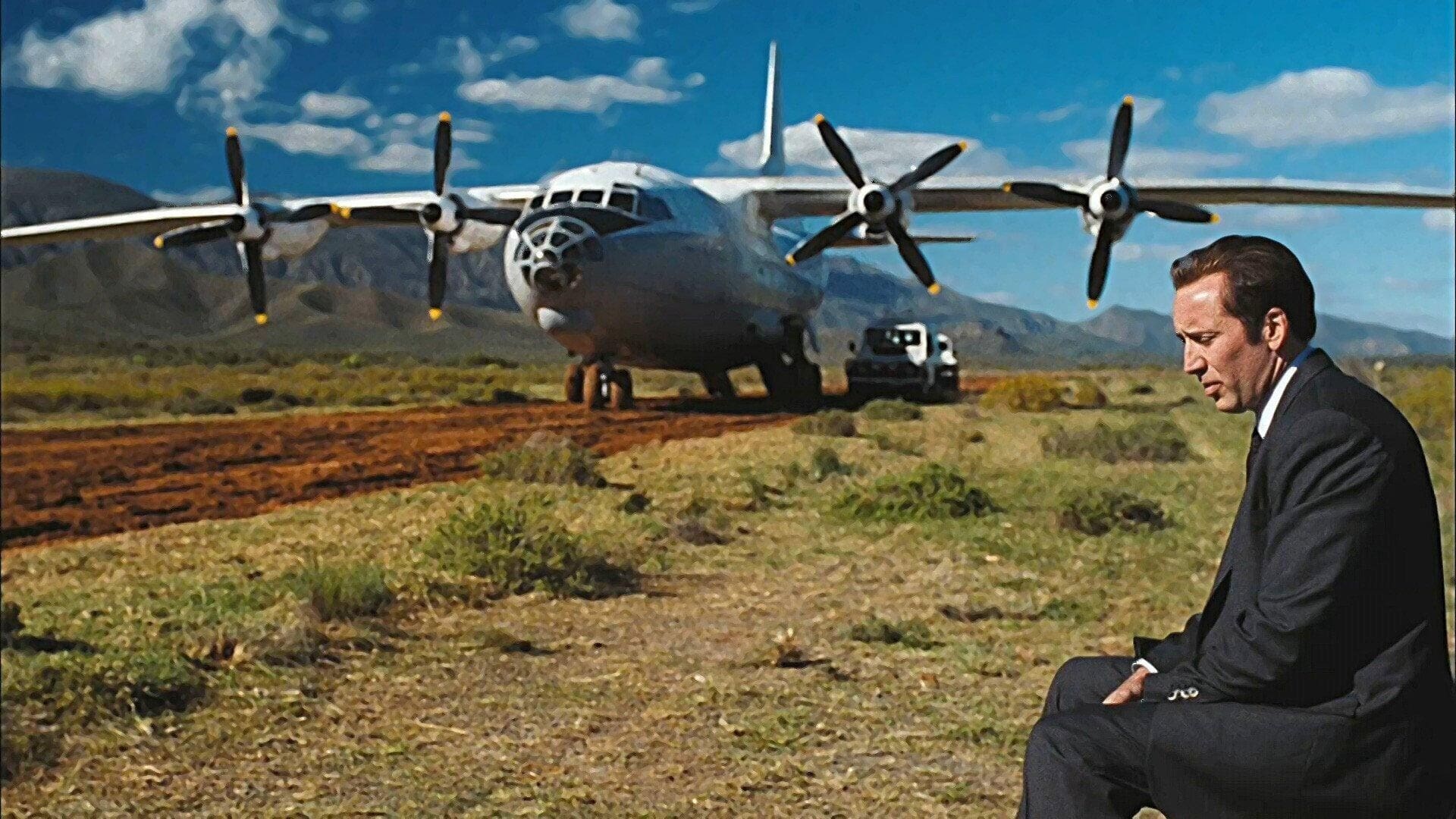
The first time I saw the Lord of War movie, I thought it was just another stylized Nicolas Cage flick. You know the vibe. Flashy editing, a bit of dark humor, and Cage being, well, Cage. But then I looked into how they actually made it. Honestly? The production story is almost as insane as the plot itself.
Andrew Niccol, the director, basically had to become an arms dealer to make a movie about arms dealers. That’s not a metaphor.
When they were filming in the Czech Republic, the crew realized that buying real weapons was actually cheaper than renting props. Think about that for a second. It cost less to source 3,000 live Kalashnikovs than to get fake ones made of rubber or plastic. They bought thousands of SA Vz. 58 rifles—which look like AK-47s to the untrained eye—from a real-life dealer. To make sure they didn’t accidentally arm a small militia after filming, Niccol had some of them sawn in half.
They also rented a fleet of 50 T-72 tanks. The guy who rented them out was a legitimate arms dealer who told the crew they had to be done by December. Why? Because he’d already sold the tanks to Libya and had a delivery deadline.
The Lord of War movie isn't just a "based on a true story" marketing gimmick. It's a collage of very real, very ugly history.
The Real Man Behind Yuri Orlov
Most people think Yuri Orlov is a single person. He's not. He's a composite, but the primary DNA for the character comes from Viktor Bout.
Bout was known as the "Merchant of Death." He was a former Soviet military translator who saw the collapse of the USSR and realized there was a gold mine sitting on abandoned runways. Thousands of tons of surplus weaponry and cargo planes were just... there.
Bout grabbed them.
He didn't care about politics. He’d fly frozen chickens one day and rocket launchers the next. In the movie, Yuri says he never sold to Osama bin Laden because of "moral grounds," but in reality, Bout was accused of supplying almost everyone, including the Taliban and the Northern Alliance at the same time. He was a pure capitalist in the worst way possible.
Bout was finally caught in a 2008 sting operation in Thailand. He thought he was selling missiles to FARC rebels to kill Americans. He wasn't. He was talking to the DEA.
In a weird twist of fate that feels like a sequel script, Bout was actually released in 2022. He was traded for American basketball player Brittney Griner in a high-profile prisoner swap. Now he’s back in Russia, even dabbling in politics. It makes the ending of the movie—where Yuri walks free because he’s a "necessary evil"—feel a lot more prophetic than we’d like to admit.
Why the Opening Sequence Still Hits Hard
You've probably seen the "Life of a Bullet" intro. It starts in a Soviet factory and ends in the skull of a child soldier in Africa.
It’s brutal.
But it’s also the most honest part of the Lord of War movie. It strips away the glamor of the "international man of mystery" and shows the logistics of death. The movie doesn't rely on massive CGI explosions to make its point. It uses the sheer scale of inventory.
Breaking Down the Logistics
- The Scale: Yuri notes there are 550 million firearms in circulation. One for every twelve people.
- The Profit: He makes more on a shipment of old AK-47s than most people make in a decade.
- The Customers: He moves from selling Uzis in Little Odessa to arming dictators like André Baptiste (based on the real-life Charles Taylor of Liberia).
The script was originally summarized to producers as "Goodfellas in the world of arms dealing." It fits. Just like Henry Hill, Yuri is seduced by the lifestyle, the travel, and the "respect" that comes with being the guy who can get anything for anyone.
The NATO Incident You Didn't Know About
Here is a detail that sounds like a joke but is 100% real.
When they were filming the scene with the 50 T-72 tanks lined up in the Czech Republic, the production team actually had to warn NATO. They knew that satellite surveillance would pick up a sudden massing of tanks in that region. If they hadn't called it in, they could have accidentally triggered a massive military response.
Imagine being the guy on satellite duty seeing a sudden armored division appear out of nowhere.
The movie had a tough time getting US financing. Most of the money came from foreign investors. It’s not hard to see why. The film takes a massive swing at the five permanent members of the UN Security Council, basically calling them the biggest arms dealers on the planet. It’s an uncomfortable truth that makes for a risky investment in Hollywood.
What Most People Miss About the Ending
The Lord of War movie doesn't have a traditional hero's journey. Yuri doesn't find redemption. He doesn't go to jail for life. He loses his family, sure, but he wins the game.
The scene where Ethan Hawke’s character, Jack Valentine, finally catches him is the most important part of the film. Yuri explains that he’s going to be let go because his boss is the President of the United States. He explains that sometimes the government needs a guy who isn't on the books to deliver things they can't be seen delivering.
It’s a cynical ending. It’s also incredibly grounded in how "gray market" logistics actually work.
If you want to understand the impact this movie had, look at the organizations that supported it. Amnesty International actually endorsed the film for highlighting the lack of regulation in the global arms trade. It’s rare for a Nicolas Cage thriller to be used as an educational tool for human rights, but here we are.
Next Steps for the Deep Dive
If you're looking to verify the crazier parts of this story, start with the documentary The Notorious Mr. Bout. It uses Viktor Bout's own home videos to show his rise and fall. It's chilling to see how much of the "Yuri" personality was pulled from real life.
You should also look into the Arms Trade Treaty (ATT), which was a real-world effort to fix the loopholes shown in the movie. While the film is over 20 years old now, the "gray market" it describes is still very much in operation.