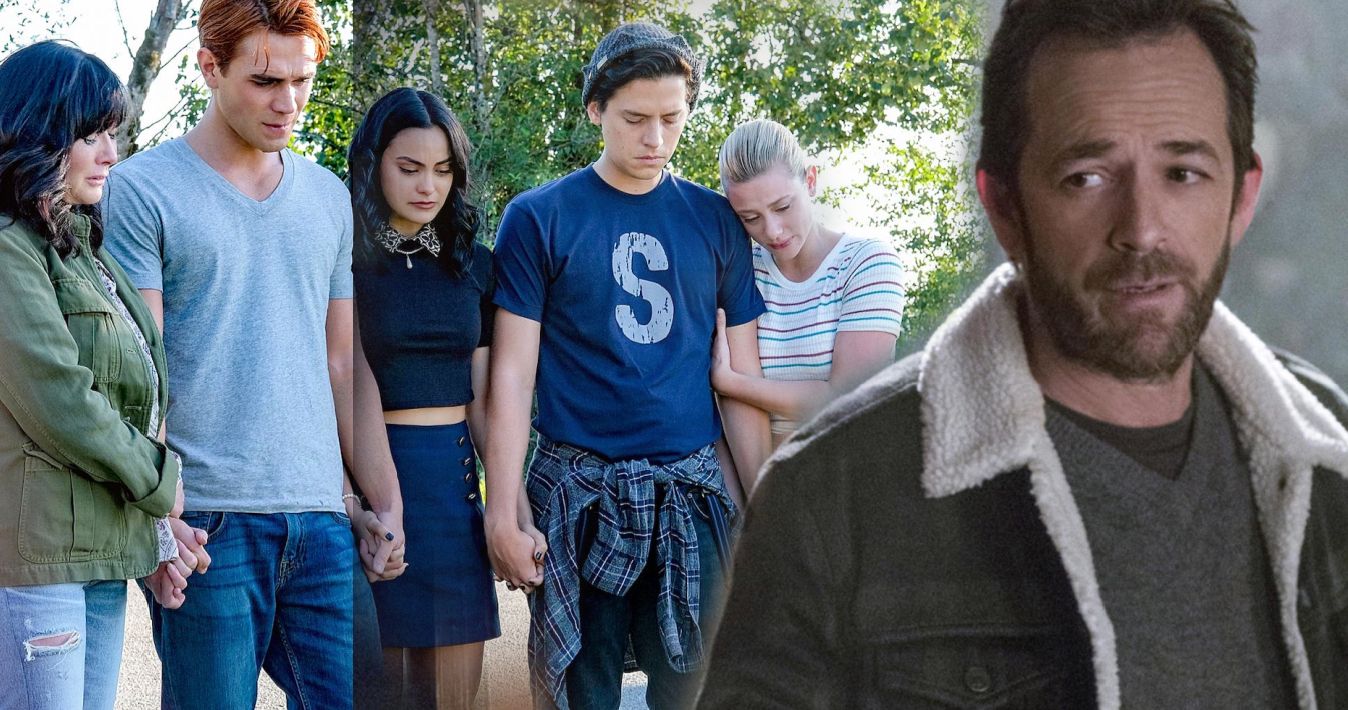
It feels like a lifetime ago that Archie Andrews was just a kid with a guitar and a messy love life. But for those of us who stuck through the cults, the parallel universes, and the bear attacks, one face remains anchored in our memory. Luke Perry. Honestly, when Riverdale first premiered in 2017, the buzz was all about "the hot dad from 90210" playing a construction worker in a flannel shirt.
Nobody expected him to become the show's moral compass.
Perry didn't just play Fred Andrews; he inhabited him with a sort of quiet, blue-collar dignity that felt out of place in a town full of maple-syrup-running mobsters and teenage detectives. While everyone else was busy joining secret societies or murdering their classmates, Fred was just trying to fix a sink and raise a decent son. He was the anchor. When that anchor was lost, the show changed forever.
The Man Behind the Flannel
Luke Perry was 50 when he took the role of Fred Andrews. He'd been the ultimate teen idol as Dylan McKay on Beverly Hills, 90210, so seeing him step into the "father figure" role was a trip for Gen X viewers.
He didn't ham it up. He didn't play it for laughs. Perry brought a weary, grounded energy to a show that was increasingly obsessed with the surreal. Think about it: in a town where fathers were routinely trying to frame, exile, or literally kill their children (looking at you, Hiram Lodge), Fred was the only one who just wanted to grill burgers and keep the lights on.
KJ Apa, who played Archie, often talked about how Perry was a mentor off-screen too. He wasn't just "playing" the dad. He was the guy the younger cast went to when they needed to know how to handle the sudden, overwhelming fame that comes with a CW hit. He had been there. He knew the drill.
Why Fred Andrews Mattered
- The Hero of the Ordinary: In a world of superheroes and villains, Fred was a guy with a mortgage.
- The Moral Center: Showrunner Roberto Aguirre-Sacasa famously called him the "one good parent" in Riverdale.
- The Construction Worker Ethic: He represented the middle-class struggle, trying to keep Andrews Construction afloat against the tide of corporate greed.
What Really Happened With Luke Perry in Riverdale
The world stopped on March 4, 2019. Luke Perry died after suffering a massive stroke at the age of 52. It was sudden. It was devastating. And for the production of Riverdale, it was a logistical and emotional nightmare.
The show was in the middle of filming Season 3.
They didn't rush to write him out immediately. Instead, production halted for several days. They needed to breathe. When they did come back, they finished the season without mentioning Fred's absence too heavily, simply saying he was "away on business." They wanted to do it right. They didn't want a "death by plot twist" that felt cheap.
"In Memoriam": The Episode That Broke Everyone
The Season 4 premiere, titled "Chapter Fifty-Eight: In Memoriam," is widely considered one of the best episodes of the series. It’s raw. You can see the actual grief on the actors' faces. This wasn't just Archie losing Fred; it was KJ losing Luke.
The show chose a heroic end for Fred Andrews. He didn't die in a gang war or a supernatural event. He died on the side of a road, helping a stranded motorist. That motorist was played by Perry's real-life friend and former co-star, Shannen Doherty.
It was a beautiful, meta-tribute. Fred pushed her out of the way of a speeding car, sacrificing his life for a stranger. It was exactly how Fred Andrews—and by all accounts, Luke Perry—would have wanted to go.
The Long Shadow of Fred Andrews
After Fred died, the show spiraled. Some fans argue that the loss of Perry was the exact moment Riverdale lost its soul. Without Fred to ground Archie, the character went on some... questionable journeys. Vigilantism? Sure. Joining the army? Okay. Developing literal superpowers? Yeah, it got weird.
But throughout the later seasons, the "ghost" of Fred Andrews was always there.
Archie’s entire motivation for the rest of the series was essentially: "What would my dad do?" He turned his house into a community center. He tried to save the town from becoming a ghost town. He even named his son (in various timelines/realities) Fred.
The show eventually ended in 2023, and even in that final, nostalgic series of episodes set in the 1950s, the legacy of Fred was the backbone of Archie’s character. It proved that you don't need to be in every scene to be the most important part of the story.
Actionable Takeaways for Fans and Creators
If you're looking back at Perry's impact or working on your own creative projects, here’s the reality of what made his performance work:
- Groundedness is a Superpower: In high-concept fiction (like Riverdale), you need one character who feels like a real person. Fred was that person.
- Mentorship Matters: The chemistry between Apa and Perry worked because it was real. If you're a veteran in any field, being the "Luke Perry" to the newcomers is how you build a lasting legacy.
- Honor the Absence: Riverdale succeeded by not "replacing" Fred. They allowed the hole he left to stay a hole.
Luke Perry in Riverdale wasn't just a casting choice; it was the show's heartbeat. When it stopped, the town of Riverdale became a much darker, much stranger place.
If you want to revisit the best of Fred Andrews, start with the pilot and watch the Season 4 premiere. It’s a masterclass in how to say goodbye to a legend. Pay attention to the way Perry uses his eyes—he rarely needed a big monologue to show Archie he loved him. That’s the kind of acting you can’t teach. It’s just soul.