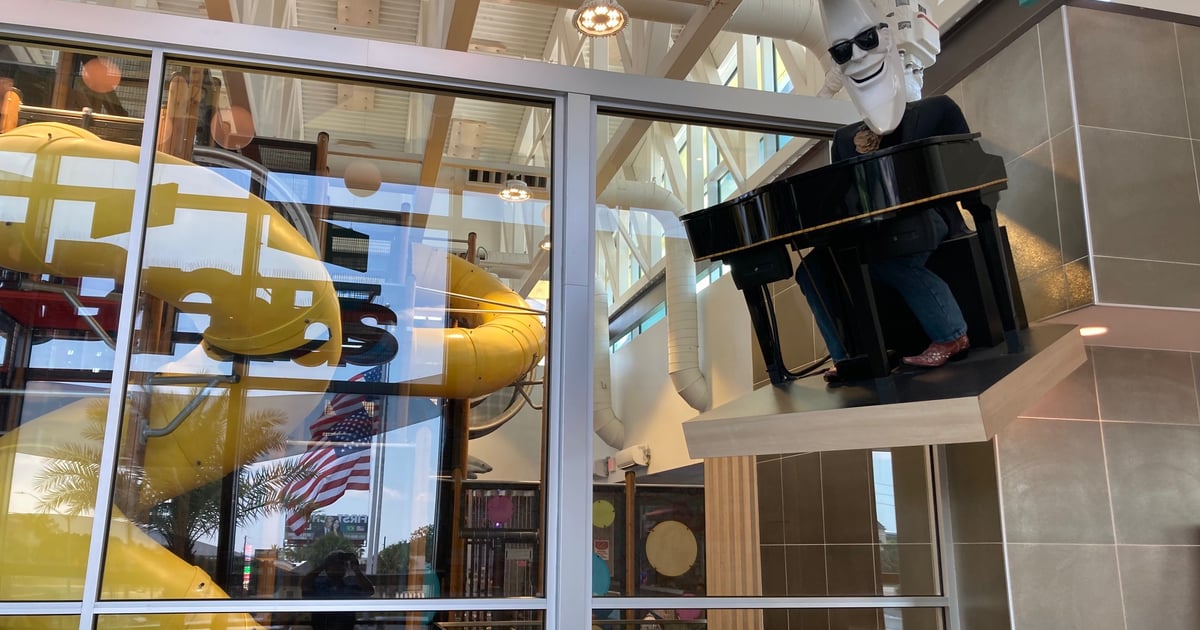
He was weird. He was suave. He had a crescent moon for a head and a tuxedo that looked like it smelled of expensive cologne and fry grease. If you grew up in the late 1980s, Mac Tonight was basically the king of after-dark dining. You couldn't escape him. He’d be there on your TV screen, perched on a giant floating hamburger, tinkling away at a grand piano while singing a repurposed version of Bobby Darin’s "Mack the Knife."
But today? McDonald’s treats him like a family secret they'd rather you forget.
Most of the original 27 to 29 commercials (the count varies depending on who you ask) are floating around YouTube in various states of crusty, VHS-ripped quality. But for the hardcore preservationists, the Mac Tonight lost media hunt is about more than just low-res nostalgia. It’s about the stuff that actually vanished—the 60-second radio cuts, the localized regional spots, and the "Nightmare Fuel" animatronics that used to live in the corners of 1990s franchise locations.
The Search for the "Full" Mac Tonight Jingle
For decades, we all thought the jingle was just a 30-second snippet. You know the one: "When the clock strikes... half past six, babe... time to head for golden lights." It turns out, that was only the tip of the moon.
Actually, a full 60-second version of the song existed, mostly for radio play. This was the "holy grail" for a long time. People knew it existed because Doug Jones—the legendary creature actor who actually played Mac in the suits—would mention it at conventions. He’d even sing it for fans, proving there were lyrics about McDLTs and chicken nuggets that never made it to the standard TV spots.
Honestly, it wasn't until fairly recently, around late 2024, that a high-quality recording of this extended version surfaced. It was found in some old footage from a restaurant opening in Boca Raton, Florida. It’s a trip to hear. It turns out the full song has this weirdly upbeat bridge that makes the character feel less like a mysterious crooner and more like a high-pressure burger salesman.
Even with that win, the hunt isn't over. Several regional variations of the commercials—specifically those tailored for the California market where the campaign started—remain "lost" or unarchived in their original broadcast quality.
The Animatronic Grave: Where Did the Robots Go?
If the commercials are the "lost media," the animatronics are the "lost artifacts." In the early 90s, McDonald’s tried to bring Mac into the physical world. They hired a company called Mannetron to build hydraulic animatronics.
These things were massive. They sat at a piano, their heads moved, and their eyes were perpetually hidden behind those iconic shades. They were meant to encourage "dinner business," but they mostly just looked slightly haunting when the lights went down.
- The Orlando Exception: One of these robots famously lived at the "World's Largest Entertainment McDonald's" in Orlando. It was renovated and "fixed" recently, which is a rare win for mascot preservation.
- The Missing Units: Dozens of these units were shipped to various "Mac Tonight" themed restaurants across the US. When the campaign died, most were either scrapped, hidden in storage, or sold to private collectors who don't always share their location.
- The NASCAR Mystery: There was a brief period where Mac Tonight was the primary sponsor for a NASCAR car (the #94 Ford driven by Bill Elliott). While photos exist, some of the specific promotional footage and "behind the scenes" marketing materials from this era are incredibly hard to find.
Why McDonald's Nuked the Moon
You can't talk about Mac Tonight lost media without addressing why the media became lost in the first place. It wasn't just a change in marketing taste. It was a legal disaster.
In 1989, the estate of Bobby Darin sued McDonald’s for $10 million. They claimed the character was a blatant rip-off of Darin’s persona and singing style. They didn't just want money; they wanted the campaign dead. McDonald’s eventually settled and, for the most part, mothballed the character in the US.
Then, the internet happened.
In the mid-2000s, the character was hijacked by the "Moon Man" meme—a hateful, racist parody that turned the innocent mascot into a symbol of the alt-right. It got so bad that the Anti-Defamation League eventually added the character to its database of hate symbols in 2019. This basically ensured that McDonald’s Corporate would never, ever officially release a "Mac Tonight Greatest Hits" collection or high-def remasters of the old tapes. To them, the character is radioactive.
What is actually still missing?
If you're looking to help the search, here is the current "hit list" for collectors:
- The "Lost" 2-Minute Cinema Spot: Rumors have persisted about a longer theatrical advertisement shown in California theaters. No copy has ever been uploaded to the web.
- The Southeast Asia "Chibi" Ads: In 2007, Mac Tonight had a brief, weird revival in Southeast Asia (specifically Malaysia and the Philippines) with a 3D animated, small-stature version of the character. Some of these are found, but several "lifestyle" spots are still missing.
- The Raw Tapes from Doug Jones: While Doug has some photos, the raw, unedited footage of his performances in the 10-pound moon head is largely sitting in a vault at Davis, Johnson, Mogul & Colombatto (the original ad agency) or buried in the McDonald’s archives.
How to Find Mac Today
If you want to experience what's left of the Mac Tonight era, the best bet is looking through "VHS Trash" or "Commercial Compilation" channels on YouTube. Don't just search for the character name; look for "Commercial breaks from October 1987" or similar timestamps. That’s where the best quality rips usually hide.
You've also got the Five Nights at Freddy's fan community to thank for keeping the interest alive. The "Five Nights with Mac Tonight" fan game basically introduced a whole new generation to the character, even if it turned him into a literal monster.
Basically, Mac Tonight is a case study in how a corporate mascot can lose its soul, its legality, and its history all at once. For now, the hunt continues.
If you're interested in helping the search, you should check out the Lost Media Wiki or the r/lostmedia subreddit. Many users there are currently cross-referencing old local TV station archives to see if any of those missing regional California spots have survived the magnetize-and-rot process of old magnetic tape.