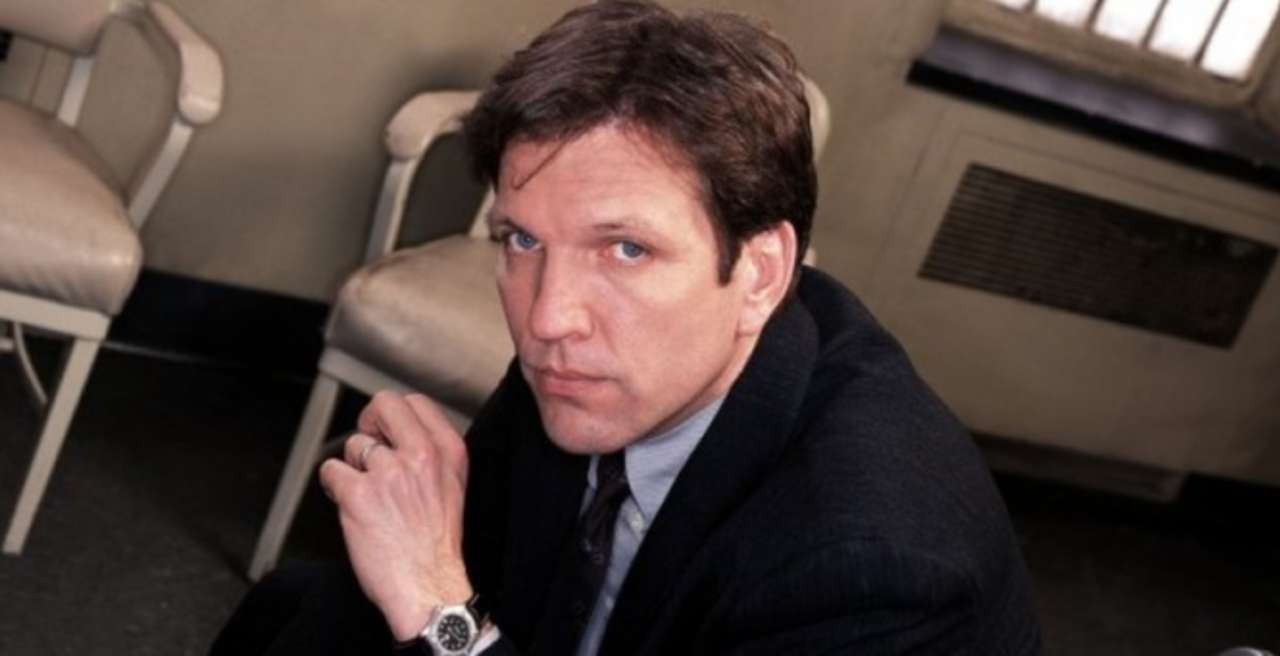
You know that face. Even if the name doesn’t immediately click, the vibe does. Martin Donovan is the guy who shows up in a scene and suddenly, the IQ of the room feels like it just jumped twenty points. He’s got this specific, weary intelligence. He’s the DEA agent you actually trust, the father with a dark secret, or the high-level operative who knows exactly where the bodies are buried.
Honestly, looking at the trajectory of Martin Donovan movies and TV shows, it’s a weirdly brilliant roadmap of independent cinema and prestige television. He isn’t just an actor; he’s a mood. From the deadpan, hyper-stylized world of 1990s indie darlings to the sprawling, high-concept blockbusters of Christopher Nolan, Donovan has carved out a space as the thinking man’s character actor.
He doesn’t chew the scenery. He doesn't need to. He just stands there, stares with those piercing blue eyes, and makes you wonder what he’s holding back.
The Hal Hartley Era: Where the Legend Started
If we’re being real, you can’t talk about Martin Donovan without talking about Hal Hartley. In the early '90s, these two were the Lennon and McCartney of the Long Island indie scene. It was a match made in cinematic heaven—or maybe a very stylish version of purgatory.
Hartley’s films are famous for their rhythmic, stilted dialogue and choreographed movements. Most actors would look ridiculous doing it. Donovan, however, made it look like the only natural way for a human to communicate.
- Trust (1990): This is the big one. Donovan plays Matthew Slaughter, an angry electronics genius who carries a grenade in his pocket. It sounds like the plot of a generic thriller, but it’s actually a bizarrely touching romance. Matthew is the blueprint for the "Donovan Archetype": brilliant, volatile, and deeply principled in a way that makes him a social outcast.
- Simple Men (1992): He plays Martin, a guy on a quest to find his father, an anarchist former baseball player. It’s got a famous dance scene. It’s got existential dread. It’s basically everything the '90s indie scene stood for.
- Amateur (1994): Here, he’s an amnesiac named Thomas who might have been a monster in his past life. He stars opposite Isabelle Huppert, who plays a former nun turned pornographer. Yeah, Hartley’s movies were like that.
These roles established Donovan as the face of "cool intellectualism." He wasn't the action hero. He was the guy the action hero was probably afraid of.
Why Martin Donovan Movies and TV Shows Always Feel "Smart"
Transitioning from indie icon to mainstream mainstay is a trap most actors fall into. They either get stuck in "Dad" roles or become the "Villain of the Week." Donovan avoided that by leaning into his natural gravitas.
Take a look at his work with Christopher Nolan. In Insomnia (2002), he plays Al Pacino’s partner, Hap Eckhart. It’s a thankless role on paper, but Donovan makes Hap’s moral compromise feel heavy. Then, nearly two decades later, Nolan brought him back for Tenet (2020). As Fay, the high-level contact who recruits the Protagonist, he has maybe five minutes of screen time. But he sets the entire tone for the movie. "Welcome to the afterlife," he says, and you believe him.
The Television Renaissance: Weeds, Boss, and Beyond
If you grew up in the mid-2000s, you probably know him best as Peter Scottson. In Weeds, he was the DEA agent who fell for Nancy Botwin. It was a masterclass in playing a "straight" character who is slowly unraveling. One minute he’s the ultimate authority figure; the next, he’s a man dangerously out of his depth.
His TV resume is frankly exhausting to read because he’s everywhere:
- Boss: He played Ezra Stone, the right-hand man to Kelsey Grammer’s Mayor Tom Kane. If you want to see Donovan do "political shark," this is the one.
- Big Little Lies: He showed up as Martin Howard, bringing that signature "quietly judging you" energy to the Monterey elite.
- Archive 81: As Virgil Davenport, he was the shadowy billionaire at the center of a cosmic horror mystery. Again, he’s the guy who knows more than he’s letting on.
The 2024 Shift: Playing Fred Trump
Most recently, Donovan took a massive swing in The Apprentice (2024). He plays Fred Trump Sr., the domineering patriarch. It’s a departure from his usual "restrained" roles. He has to embody a specific kind of cold, transactional cruelty.
Playing a real-life figure, especially one as baggage-heavy as the Trump patriarch, is a minefield. Most actors go for a caricature. Donovan didn't. He played him as a man who simply didn't understand why anyone would ever choose weakness over power. It’s chilling because it feels human, not like a cartoon villain.
A Career of Nuance
What most people get wrong about Martin Donovan is thinking he’s a "one-note" actor. They see the stillness and mistake it for a lack of range. But if you look at The Opposite of Sex (1998), he’s doing something entirely different. He’s Bill Truitt, a grieving, gay teacher dealing with a manipulative teenager (Christina Ricci). He’s soft, vulnerable, and deeply empathetic.
Then you flip to Ant-Man (2015), where he’s Mitchell Carson, a corrupt S.H.I.E.L.D. official. He’s slimy. He’s arrogant. He gets his nose broken by Michael Douglas. It’s a different kind of "quiet." It’s the quiet of a snake.
Making the Most of a Donovan Binge
If you’re looking to dive into his filmography, don’t just stick to the hits. You’ve got to see the weird stuff.
Start with the "Indie Starter Pack":
Watch Trust followed by The Opposite of Sex. It shows the two poles of his early career—the volatile genius and the empathetic soul.
Move to the "Shadowy Operative" Phase:
Watch his scenes in Tenet and then jump into his arc in Homeland or Boss. You’ll see how he uses silence as a weapon.
The Recent Heavy Hitters:
BlackBerry (2023) and The Apprentice (2024). In BlackBerry, he plays Rick Brock, and it’s a great example of how he can anchor a fast-paced, chaotic ensemble cast.
The reality of Martin Donovan movies and TV shows is that he’s the ultimate "safety net" for a director. If a scene feels thin, put Donovan in it. If a character needs to explain a complex scientific theory without sounding like a textbook, give the lines to him. He’s the actor who makes the unbelievable feel grounded.
To truly appreciate his work, pay attention to his eyes in the moments between lines. That's where the real acting happens. Whether he's playing Jesus Christ (which he did in The Book of Life) or a suburban dad with a weed-dealing girlfriend, he treats every character with a level of intellectual respect that is rare in Hollywood.
Next time you're scrolling through a streaming service and see that familiar, sharp-featured face in the thumbnail, click on it. Even if the movie is a mess, Donovan won't be. He’s incapable of being uninteresting.
Actionable Insights for Fans:
- Search for the "Hartley Box Set": If you want to see his best work, look for the Hal Hartley Long Island Trilogy collections. They are often available on specialty Criterion-style platforms.
- Track his Directorial Work: He wrote and directed Collaborator (2011). It’s a tense chamber piece that stars David Morse and Donovan himself. It’s the purest distillation of his artistic voice.
- Check the Guest Spots: He often does one-off episodes of shows like Law & Order: SVU or CSI. Even in a 42-minute procedural, he usually ends up being the most memorable part of the episode.