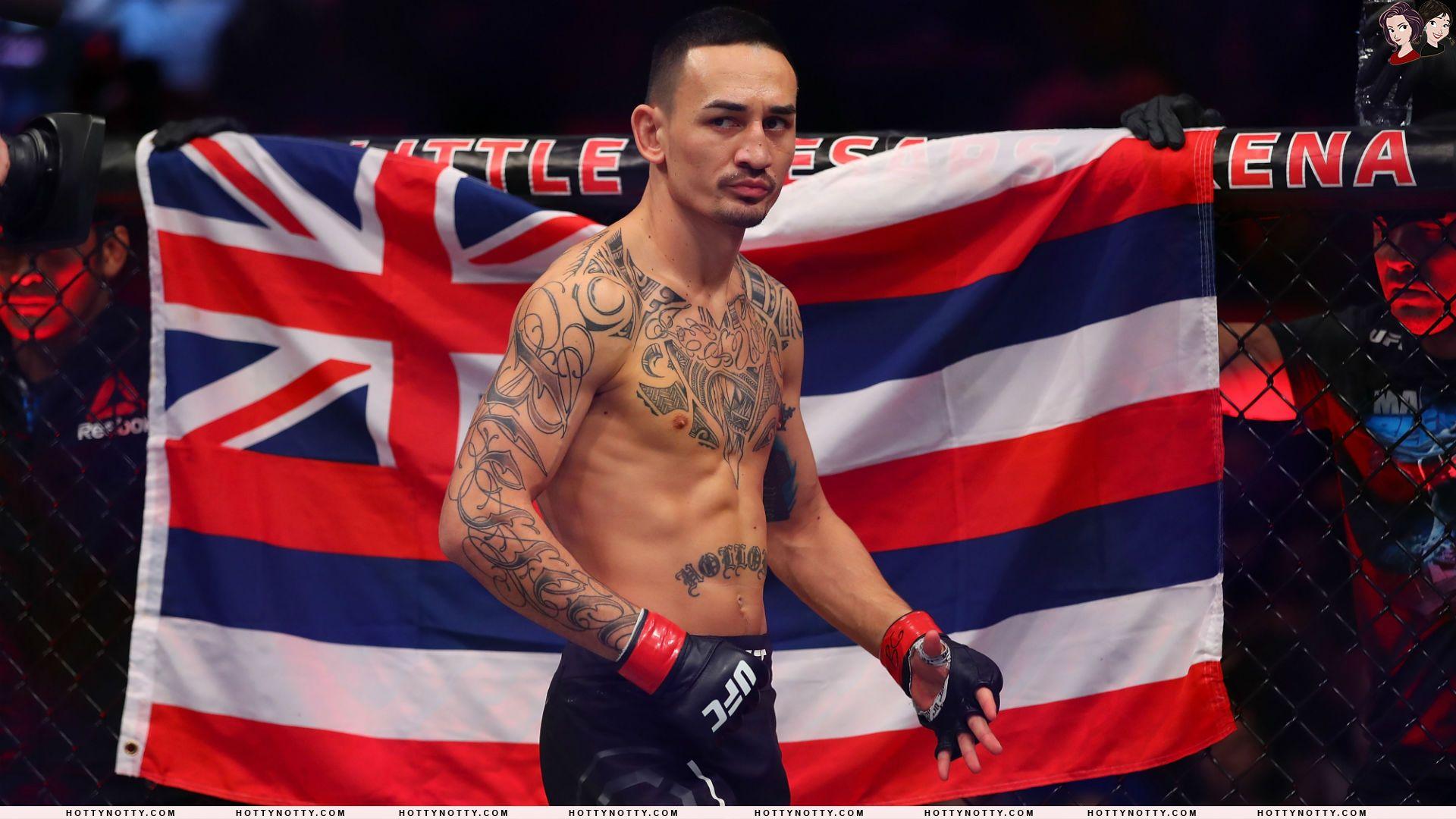
If you've ever watched Max Holloway walk toward the Octagon, you've seen it. It’s hard to miss. That massive piece of ink spanning his entire back—two giant wings that, if you look closely, don't actually match.
It isn't a mistake. It’s deliberate.
The Max Holloway back tattoo is one of the most recognizable designs in the UFC, often compared to the wings on Tony Ferguson's back. But while Ferguson’s ink is largely about his own journey and "flying" through adversity, Holloway’s piece is a study in contradiction. It's about the thin line between being a "Blessed" father and a cold-blooded fighter.
The Angel and the Gargoyle: A Study in Duality
Most people assume they’re just "wings." Simple, right? Not really. One side is an angel wing, soft and feathery. The other side is a gargoyle wing, sharp, jagged, and skeletal.
Max has been vocal about the fact that this represents balance. It's his personal version of a Yin and Yang. In the fight game, you can’t just be a nice guy. You need that dark side to survive twenty-five minutes with a killer like Justin Gaethje or Ilia Topuria.
- The Angel Side: Represents his faith, his role as a father to Rush, and the "Blessed" persona.
- The Gargoyle Side: Represents the grit, the "Blessed Express" that runs people over, and the darker side of combat.
"You need balance," Max explained in a GQ breakdown. He basically said that too much of a good thing can kill you, and too much of a bad thing is obviously a problem. You have to find that happy medium. It's kinda poetic for a guy who makes his living punching people in the face.
One Session, Four Hours, Zero Breaks
This is the part that actually sounds insane to anyone with tattoos. Max got his back piece done when he was just 18 years old. Most back pieces of that scale take multiple sessions—maybe twelve to fifteen hours total.
Max did the whole thing in four hours. One session.
If you’ve ever sat under a needle, you know that the four-hour mark is usually when your body starts to go into shock. The adrenaline wears off. The vibration starts to feel like a bone-deep ache. Doing a full back piece in that timeframe suggests the artist was moving at light speed and Max was sitting like a statue. Honestly, it explains a lot about his legendary chin and pain tolerance.
Who is the artist?
Max is notoriously loyal. He has mentioned that almost all of his work is done by one specific artist in Hawaii. While he keeps the name somewhat low-key to ensure he can actually get an appointment—admitting the guy is usually booked months in advance—the work is deeply rooted in Hawaiian tattoo culture.
It's Not Just the Back
While the wings get the most "Discover" clicks, they are part of a larger narrative. Max treats his body like a map of his life.
- The Chest: A massive, intricate Polynesian/Hawaiian tribal piece. This is about his heritage and his ancestors.
- The "Blessed" Script: This is his identity. It’s what he's known by, and it sits on his arm as a reminder of his journey from Waianae to the top of the world.
- The Neck: He has a "Jesus" tattoo, further cementing that religious pillar that balances out the "gargoyle" on his back.
- The Son's Name: He has his son's name, Rush, inked as well.
The contrast between the "Holy" side of his body and the "Polynesian" side is something he’s planned out. He once said he wanted one side to be dedicated to his religion and the other to his culture.
Why the "Copycat" Rumors are Wrong
You’ll see it on Reddit all the time: "Who had the wings first? Max or Tony Ferguson?"
The truth is, wing tattoos are a staple in combat sports. They represent a certain level of freedom and the "warrior spirit." But the designs are fundamentally different. Tony’s wings are more traditional and uniform. Max’s are asymmetrical by design. They don't look the same because they don't mean the same thing.
Max's ink is about the struggle of being a "good man" in a "bad man's sport."
Living with the Ink
Tattoos in the UFC aren't just for show. They become part of a fighter's brand. When Max points to his back or his chest after a win, he's pointing to the things that got him there: his faith, his family, and his island.
If you're thinking about getting something similar, remember the "Holloway Rule": don't just get art because it looks cool. Get it because it represents a duality you actually live. And maybe don't try to cram a full back piece into four hours unless you have the cardio of a former featherweight king.
What to do next
If you're looking to get work done that mirrors this style, look for artists specializing in Black and Grey Realism for the wings and Traditional Polynesian Tatau for the chest work. Always ask for a portfolio that shows healed work; what looks good on Instagram doesn't always look good five years later when you're sweating in a gym.