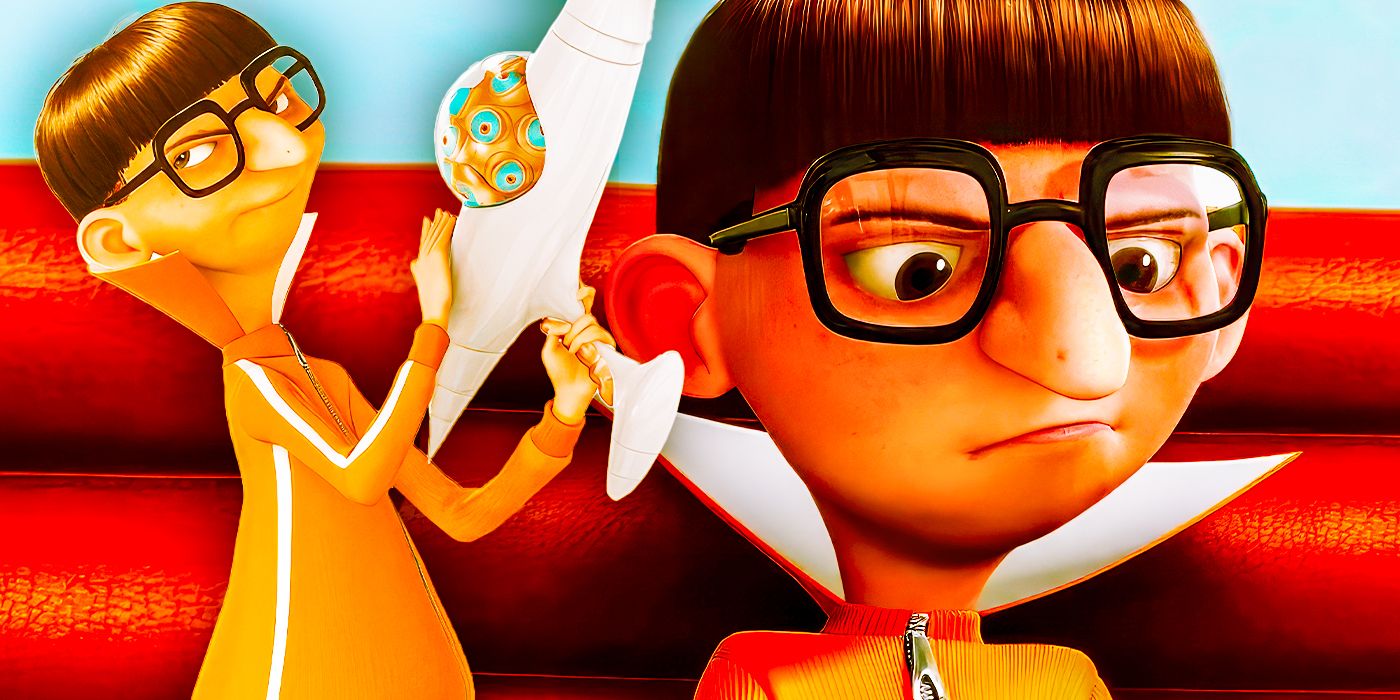
He wears a suit made of cockroach wings. Honestly, that should be enough to tell you everything you need to know about the guy. While the Despicable Me franchise has spent over a decade cycling through villains like Vector, El Macho, and Balthazar Bratt, Maxime Le Mal represents something a little bit different for the series. He isn't just another guy with a gimmick; he’s a direct link to Gru’s past, a literal manifestation of high school grudges that never died.
People usually watch these movies for the Minions. We know that. But in Despicable Me 4, Maxime Le Mal brings a certain weird, French-accented energy that shifts the stakes from "saving the world" to "saving the family from a very specific, very petty threat." He’s voiced by Will Ferrell, which basically guarantees a level of unhinged performance that balances out Steve Carell’s iconic Gru voice.
It's actually kind of funny how long it took the series to give Gru a legitimate rival from his school days at Lycée Pas Bon.
The Cockroach King: Breaking Down Maxime Le Mal
Maxime isn't your standard-issue bad guy. Most villains in this universe want to steal the moon or become the most famous criminal on the planet. Maxime? He just wants to ruin Gru’s life because of a talent show incident from 1985. Talk about holding a grudge.
His primary "power" or theme revolves around cockroaches. It's gross. It's weird. It’s effective. He has a massive, insect-shaped ship and a literal army of roaches that he controls with high-tech equipment. But the real kicker is the Maxime Le Mal transformation technology. He’s obsessed with biological modification, specifically turning things (and people) into human-insect hybrids.
When you look at the design, it’s intentionally gaudy. He’s got the thin mustache, the sleek hair, and a girlfriend named Valentina (voiced by Sofia Vergara) who seems to be the only person capable of keeping his ego in check. The contrast between Gru’s bulky, scarf-wearing aesthetic and Maxime’s flashy, high-fashion villainy creates a visual conflict before they even exchange a single word.
Why the 1985 Talent Show Matters
The core of the conflict is a song. Specifically, "Karma Chameleon" by Culture Club. At their villain school graduation, Gru "stole" Maxime’s act or outshone him, and Maxime spent the next several decades stewing in that resentment.
It’s petty.
Really petty.
But that’s why it works for the tone of Despicable Me 4. By making the villain’s motivation so personal and rooted in adolescent embarrassment, the movie moves away from the global stakes of the previous films and focuses on the internal dynamics of the Gru family. They have to go into witness protection. They have to change their names. All because of a guy who couldn't get over a high school talent show.
How Maxime Changes the Gru Dynamic
For the first time, Gru isn't just fighting a villain; he's protecting a son. The introduction of Gru Jr. adds a layer of vulnerability that Maxime Le Mal exploits perfectly. When Maxime kidnaps the baby and begins the process of "roach-ifying" him, the stakes feel significantly higher than a stolen landmark.
- He forces Gru into hiding: The AVL (Anti-Villain League) sends the family to Mayflower, a posh town where they have to pretend to be normal.
- He targets the next generation: Maxime’s plan to turn Gru Jr. against his father is perhaps the darkest thing a villain has tried in this franchise.
- The Insect Factor: Let’s be real—the cockroach army is a nightmare for anyone with a phobia. It gives Maxime a "creep factor" that Vector or Balthazar Bratt lacked.
Most people think of these movies as bright and colorful. They are. But Maxime brings a slightly more menacing, albeit still ridiculous, edge. The way he carries himself—part flamboyant superstar, part bug-obsessed scientist—makes him a standout in the Rogue’s Gallery.
The Voice Behind the Villain
Will Ferrell’s performance as Maxime Le Mal is what truly sells the character. He uses this thick, over-the-top French accent that feels like a nod to classic Inspector Clouseau villains, but with that signature Ferrell "yelling-for-no-reason" energy.
There's a specific nuance to how Ferrell plays Maxime. He’s not just "evil." He’s insulted. He treats every interaction with Gru like they’re still teenagers in the hallway at school. If you've ever seen Ferrell in Zoolander as Mugatu, you’ll recognize that same flavor of high-fashion madness here.
Fact-Checking the "Evil" History
There’s some confusion online about where Maxime fits into the timeline. Since Minions: The Rise of Gru established Gru’s childhood, some fans expected Maxime to appear there. He didn't. He was saved specifically for the fourth mainline entry to serve as the catalyst for Gru's mid-life crisis as a father.
Unlike the Vicious 6, who were legends Gru looked up to, Maxime was a peer. He was a contemporary. That makes the rivalry equal. They aren't mentor and student; they are two guys who have been competing since they were kids.
The Transformation of Gru Jr.
One of the most talked-about sequences involving Maxime Le Mal is the climax where he actually succeeds (temporarily) in altering Gru Jr.’s DNA. Seeing the baby sprout extra limbs and bug eyes was a bold move for a family film. It showcased Maxime’s genuine threat level. He isn't just talk. He has the tech to actually change the people Gru loves into something unrecognizable.
The resolution of this, involving a heartwarming father-son moment, is the emotional peak of the film. It proves that while Maxime has the gadgets, Gru has the one thing a narcissist like Maxime will never understand: genuine connection.
Why Some Fans Found Him Divisive
Look, not everyone loved the bug theme. It's a bit "much" for some viewers. Some critics argued that Maxime’s motivation was too simple. However, in a franchise that’s now six movies deep (including the spin-offs), simplicity is often a virtue. We don't need a complex geopolitical reason for a villain to exist in a world with yellow tic-tacs that speak gibberish.
Maxime Le Mal works because he mirrors Gru.
- Gru is heavy; Maxime is thin.
- Gru wears dark, drab clothes; Maxime wears gold and designer silk.
- Gru has moved on and found a family; Maxime is stuck in 1985.
This "stuck in the past" trope is common, but it fits perfectly with the 80s nostalgia that the Despicable Me films love to play with. From the music to the tech, Maxime is a walking time capsule of bitterness.
The Legacy of the Cockroach Suit
It’s hard to imagine Maxime returning in a major way for Despicable Me 5, mostly because his story feels so neatly tied up by the end of the fourth film. He gets his moment of "redemption" (or at least, a musical finale) during the prison scene where he performs "Everybody Wants to Rule the World" alongside Gru and every other villain from the previous movies.
This prison sequence is a goldmine for long-time fans. Seeing Maxime Le Mal on stage with Vector, El Macho, and the Vicious 6 confirms his place in the "official" villain lineup. It’s a literal and figurative curtain call.
Actionable Insights for Fans and Collectors
If you're looking to dive deeper into the world of Maxime or the production of the film, there are a few things you should actually do rather than just reading about them.
Watch the Credits and Backgrounds
The animators at Illumination packed the Lycée Pas Bon scenes with easter eggs. If you freeze-frame during the flashback sequences, you can see early versions of other villains and references to the AVL's founding.
Explore the Voice Work
To really appreciate what Ferrell did with the character, watch the behind-the-scenes footage of his recording sessions. The physical comedy he brings to the voice booth is a huge reason why Maxime’s movements on screen feel so erratic and lively.
Understand the Animation Tech
The "Cockroach Ship" and the fluid movement of the insect swarms required a significant upgrade in Illumination's rendering capabilities. Unlike the rigid structures of the moon-stealing ships in the first movie, Maxime's tech is organic and "squishy," which is a technical feat often overlooked by casual viewers.
Compare the Rivalries
If you want to understand the writing better, watch the first Despicable Me and Despicable Me 4 back-to-back. Vector was a rival for the title of "Best Villain." Maxime is a rival for the title of "Best Person." It shows how the series has matured from being about professional villainy to being about personal growth.
Maxime Le Mal might not be the most "evil" villain Gru has ever faced, but he is certainly the most annoying—in a good way. He forced the world's most famous reformed villain to face his past and, in doing so, helped Gru become a better father to his new son.
Whether you love or hate the cockroach suit, you can't deny that Maxime brought a fresh, frantic energy to a franchise that could have easily gone stale. He’s a reminder that sometimes the biggest threats aren't the ones trying to take over the world, but the ones who remember exactly how you messed up in the tenth grade.