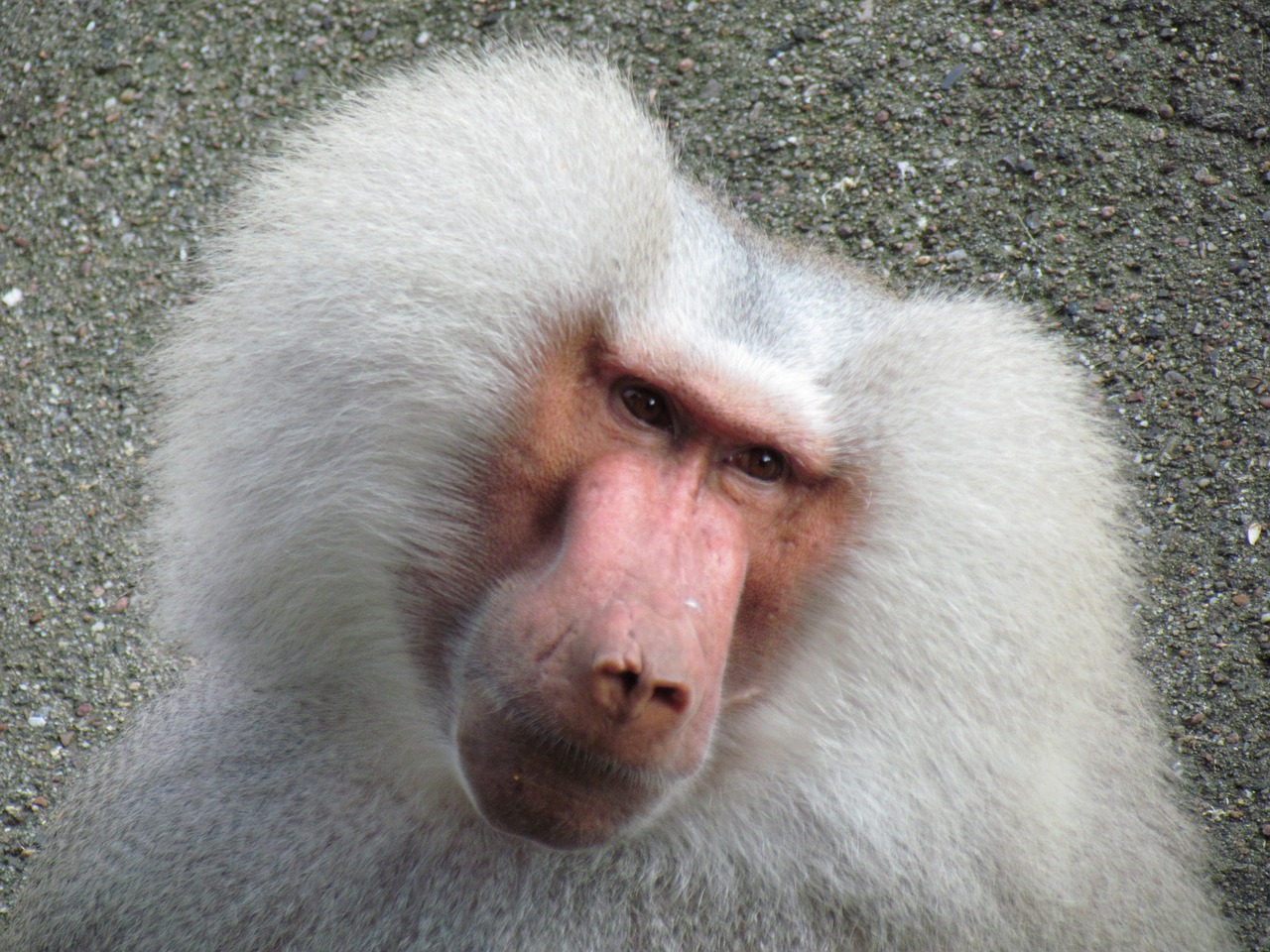
Ever seen a monkey that looks like it just stepped out of an 80s hair metal video? It’s a trip. When people search for a monkey with long hair, they usually aren’t looking for a pet—they’re looking for the Gelada or the White-faced Saki. These creatures are weird. Truly. Nature didn't just give them fur; it gave them floor-length capes and shaggy manes that make a lion look like it’s balding.
Most primates have short, practical coats. Think about a Chimpanzee or a Rhesus Macaque. Their fur is utilitarian, designed for heat dissipation or basic protection. But then you have the outliers. Evolution sometimes takes a turn toward the dramatic.
The Gelada: The Real King of Rock and Roll
You’ve probably seen photos of them sitting on high, grassy cliffs in Ethiopia. The Gelada (Theropithecus gelada) is often called the "Bleeding-Heart Monkey" because of that bright red, hourglass-shaped patch of skin on its chest. But honestly, the chest isn't the first thing you notice. It’s the hair.
The males sport a massive, flowing mantle of golden-brown hair that drapes over their shoulders like a Victorian-era cloak. It is thick. It is heavy. If you saw one in the mist of the Simien Mountains, you’d swear it was a small person in a fur coat.
Why the long hair?
It’s freezing up there. They live at altitudes between 6,000 and 14,000 feet. At that height, the air is thin and the nights are brutal. That long hair isn't for vanity; it’s a high-tech sleeping bag. But there’s a social layer to it, too. In the world of Geladas, hair is a status symbol. A male with a thick, lush mane is signaling to every female in the "harem" (their actual social unit) that he is healthy, parasite-free, and capable of defending the group.
Not actually a baboon
People call them Gelada Baboons. Don't. They aren't baboons. They are the last surviving species of a once-diverse lineage of grass-eating primates. While other monkeys were evolving to eat fruit or meat, the Gelada stayed in the highlands to munch on blades of grass. They spend about 60% of their day just sitting on their butts, shuffling along the ground, and plucking green shoots. This sedentary lifestyle actually helped the monkey with long hair evolve such a heavy coat. Since they aren't swinging through trees like a Spider Monkey, the extra weight doesn't slow them down.
The White-faced Saki: The Shaggy Ghost of the Amazon
If the Gelada is the "king," the Saki is the "ghost."
Living deep in the rainforests of South America, the White-faced Saki (Pithecia pithecia) looks like a ball of frizz with a face. The males have this stark, white face surrounded by a massive shock of black, shaggy hair. It’s a look.
The hair is extremely coarse. If you touched it, it wouldn't feel like a Golden Retriever; it would feel more like a dried coconut husk. This serves a very specific purpose in the humid Amazon. It sheds water like a raincoat. When the tropical downpours hit—and they hit hard—the Saki’s long, oily hair allows the water to roll right off the outer layer, keeping the skin underneath relatively dry.
Sexual Dimorphism is wild here
You might see two Sakis sitting together and think they are different species. They aren't. This is what scientists call sexual dimorphism. The males have the iconic "white face" look. The females? They are a mottled brown and grey, blending perfectly into the tree bark. Their hair is still long and shaggy, but it lacks the high-contrast drama of the males.
Interestingly, Sakis are known as "Flying Monkeys" in some local regions. They can leap up to 30 feet between branches. Imagine a five-pound ball of long, black hair flying through the canopy at top speed. It’s terrifying and impressive all at once.
The Lion-Tailed Macaque: The Aristocrat
Let's talk about the Lion-tailed Macaque (Macaca silenus). Found only in the Western Ghats of India, this is perhaps the most refined monkey with long hair. They have a silver-white mane that frames their black face, making them look like a dignified elder or a scientist from a 1950s sci-fi flick.
They are incredibly rare.
Estimates suggest there are fewer than 4,000 of them left in the wild. Their long hair is a bit of an evolutionary mystery. Unlike the Gelada, they don't live in freezing temperatures. The leading theory among primatologists like Dr. Ajith Kumar, who has studied these macaques for decades, is that the mane serves as a visual amplifier. When a male barks or displays his teeth, that massive ring of white hair makes his head look twice as big. It’s an intimidation tactic. "Don't mess with me; look how big my head is."
Why don't all monkeys have long hair?
Energy. Everything in nature has a cost.
Growing hair requires protein and calories. Keeping it clean requires time—lots of it. If you’ve ever watched a nature documentary, you’ve seen monkeys grooming each other. They aren't just being nice; they are removing ticks, lice, and debris. A monkey with long hair spends a disproportionate amount of its "social budget" on maintenance.
If a species lives in a hot, buggy environment, long hair is a death sentence. It traps heat and becomes a breeding ground for skin infections. This is why most jungle-dwelling primates are relatively sleek. The Sakis and Macaques are the exceptions that prove the rule, usually having specialized hair textures or living in specific microclimates that make the trade-off worth it.
The Bald Uakari: The Polar Opposite
To understand why the monkey with long hair is so special, you have to look at the Bald Uakari. This monkey has a completely bald, bright red head. Why? Because in their specific part of the Amazon, malaria is rampant. A bright red, bald face is a sign of health—it shows the monkey hasn't been weakened by parasites.
So, when you see a Gelada with a five-pound mane, you aren't just looking at "fur." You are looking at a biological boast. It’s the monkey equivalent of driving a Ferrari. It says, "I have so much extra energy and such a strong immune system that I can grow this ridiculous hair and still survive."
What Most People Get Wrong
People often see photos of these animals and think they'd make cool pets. They wouldn't.
Long-haired primates are notoriously difficult to care for. In captivity, their coats often matt or fall out due to stress and improper humidity. A Gelada in a cage in a dry climate will lose that magnificent mane in months. Furthermore, many of these species are endangered. The Lion-tailed Macaque is struggling because its forest home is being turned into tea and coffee plantations.
Actionable Insights for Wildlife Lovers
If you're fascinated by these shaggy primates, here’s how to actually engage with the topic responsibly:
- Support the Simien Mountains National Park: This is the primary stronghold for the Gelada. Supporting conservation efforts in Ethiopia is the best way to ensure the "Bleeding-Heart" monkey keeps its mountain home.
- Look for "Bird-Friendly" Coffee: Since Lion-tailed Macaques share their habitat with coffee plantations in India, buying shade-grown or "bird-friendly" certified coffee helps preserve the canopy they need to survive.
- Visit Accredited Zoos: If you want to see a Saki or a Macaque, check the AZA (Association of Zoos and Aquariums) website. Only visit facilities that participate in Species Survival Plans (SSP). These organizations manage the breeding of long-haired monkeys to prevent extinction.
- Identify the difference: Next time you see a "weird monkey" online, look at the tail. If it’s got a tuft at the end like a lion, it’s a Macaque. If it’s huge and sitting on a cliff, it’s a Gelada. If it looks like a wig with a face, it’s a Saki.
The world of primates is diverse, but the monkey with long hair remains one of nature's most bizarre and beautiful design choices. Whether it's for warmth, waterproofing, or just showing off to potential mates, these manes are a testament to how wild evolution can get when it stops being practical and starts being flashy.