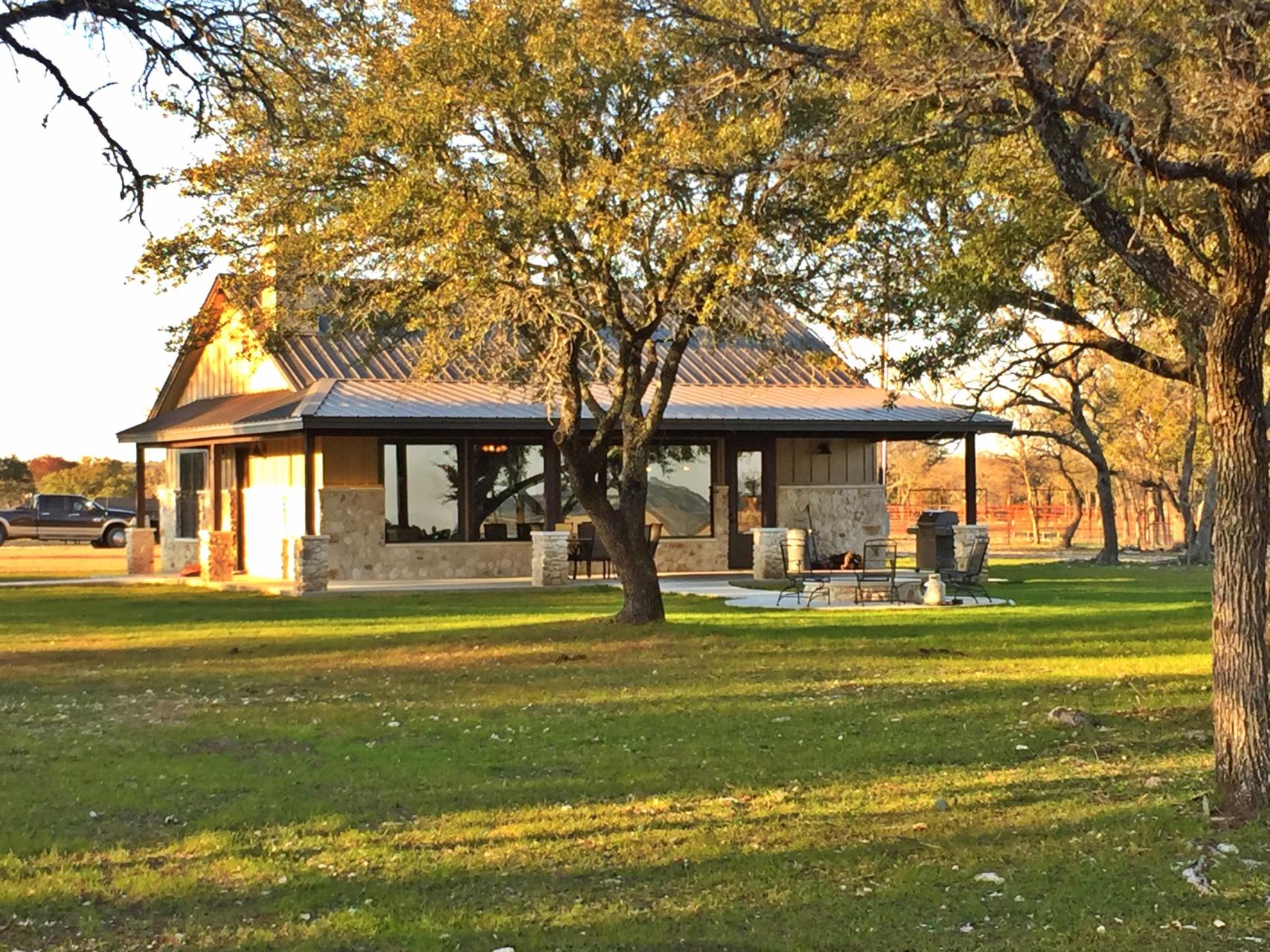
When you think of the Texas Panhandle, you probably imagine flat, dusty plains and endless horizons of nothingness. Honestly, most of it is exactly that. But then there’s Mesa Vista Ranch TX. It’s this weird, beautiful anomaly that shouldn't really exist in such a harsh climate. For decades, it was the private kingdom of T. Boone Pickens, the legendary oilman and corporate raider. He didn't just buy a piece of land; he basically spent 50 years and hundreds of millions of dollars sculpting a desert into an oasis.
It's massive. We’re talking over 64,000 acres of land in Roberts County, just north of Pampa.
Pickens started small in 1971. He bought about 2,900 acres and built a small corrugated metal "gungie house" to sleep in during quail hunting trips. He loved quail. That’s the key to understanding why this place looks the way it does. He wasn't interested in cattle ranching in the traditional sense, though there were cows. He wanted the world’s best quail habitat. To get that, he had to move mountains—or at least a lot of dirt and water.
The Engineering Behind the Oasis
Most people see the photos of the Lodge or the Family House and think "luxury." Sure, it’s luxurious. But the real story is the water. Pickens was obsessed with it. He created a man-made creek that flows for over 20 miles. It’s crystal clear. In a part of Texas where water is usually brown and sluggish, this is a feat of engineering that's hard to wrap your head around. He used recirculating pumps and careful lining to ensure the water stayed pristine.
He planted thousands of trees. If you’ve ever driven through Roberts County, you know trees are a luxury. He brought in mature hardwoods, creating a canopy where there used to be only scrub brush and mesquite.
The main residence is 33,000 square feet. That sounds like a lot because it is. But it doesn't feel like a standard McMansion. It feels like a museum of a very specific, very wealthy life. There’s a library filled with books on Texas history, a 30-seat theater, and a wine cellar that would make a sommelier weep. Then there's the "Lake House," another 11,500 square feet of living space. It’s all interconnected by miles of paved roads. You basically need a car just to visit your neighbor on your own property.
One of the most eccentric parts? The kennel. This isn't just a dog house. It’s a 12,000-square-foot facility for his pointers and setters. It includes a vet clinic and an exercise area. Pickens treated his dogs better than most people treat their kids.
Mesa Vista Ranch TX and the $250 Million Question
When Boone Pickens passed away in 2019, the fate of the ranch became the biggest gossip in the high-end real estate world. He had put it on the market years earlier, in 2017, for a staggering $250 million.
People scoffed.
Even for 100 square miles of land, that’s a lot of money. But he wasn't selling just land. He was selling a life's work. He famously said that the ranch was "the best thing I've ever done." He spent half a century manicuring every square inch.
The problem with a property like Mesa Vista Ranch TX is that the buyer pool is roughly the size of a thimble. You need someone with a net worth in the billions who also happens to love quail hunting and doesn't mind living in a remote part of the Texas Panhandle. It's not like buying a penthouse in Manhattan where you can just flip it. This is a legacy asset.
Eventually, the price dropped. It had to. In 2022, a large portion of the ranch—about 64,000 acres—was sold. The buyer? Bill Kent, a businessman from Midland, Texas. He didn't pay $250 million. While the exact final price for the combined parcels isn't always public record in non-disclosure states like Texas, it was widely reported to be closer to the $170 million mark for the bulk of it. Still, that makes it one of the most expensive ranch sales in history.
What Most People Get Wrong About the Land
There's this myth that the ranch is just a playground. It’s actually a sophisticated conservation project. Pickens was a pioneer in what’s called "quail management." He didn't just let them live there; he built "quail condos"—feeding stations and brush piles designed to protect them from hawks and coyotes.
- He restored the native grasses.
- He controlled the predators without wiping out the ecosystem.
- He managed the water table with an intensity that bordered on manic.
Because of this, the bird density on the ranch is significantly higher than on surrounding properties. Hunters from all over the world used to pay huge sums to experience a weekend there. It was the ultimate "who's who" of corporate America. You weren't just hunting birds; you were networking with some of the most powerful people in the world.
The scale is hard to communicate. You can drive for 45 minutes at 40 miles per hour and still be on the ranch. It has its own airport. The runway is 6,000 feet long—long enough to land a mid-sized private jet. Pickens used it to fly in guests and fly himself out to Dallas for business.
The Architecture of an Oilman
The buildings themselves are a mix of styles, but they all lean into "Texas Traditional."
The Lodge is the centerpiece. It has these massive stone fireplaces and high timber ceilings. It’s rugged but incredibly polished. Then there’s the "Pub," which is a separate building just for entertaining. It’s got a game room, a bar, and more memorabilia than a Hall of Fame.
Interestingly, Pickens also moved his childhood home to the ranch. He had it transported all the way from Holdenville, Oklahoma. It’s a modest little house that sits in stark contrast to the massive stone structures surrounding it. It served as a constant reminder of where he came from. He was a billionaire, but he started as a kid delivering newspapers.
The chapel is another standout. It’s small, quiet, and sits right by the water. Pickens is actually buried on the ranch, near that chapel. He wanted to stay in the place he loved most. That says a lot about the connection he had with this specific patch of Texas soil.
Why This Property Still Matters Today
Mesa Vista Ranch TX isn't just a historical footnote. It represents a specific era of American wealth—the era of the "Great Texan." These were men who made billions in the oil patch and then spent it on massive, sprawling land holdings that reflected their personalities.
Today, wealth is often more digital. Billionaires buy tech companies or sports teams. The "Ranch King" era is fading. Large tracts of land like this are being broken up into smaller ranchettes or sold for wind and solar farms.
By keeping Mesa Vista mostly intact, the new owners are preserving a specific type of ecosystem and a specific type of Texas history. It’s a sanctuary. Not just for birds, but for a way of life that requires an immense amount of capital and even more patience.
Practical Insights for High-End Land Management
If you’re looking at Mesa Vista as a model for your own land, there are a few things to keep in mind. You don't need $200 million to apply some of Boone's logic.
- Water is everything. In arid climates, your land’s value is tied directly to your water rights and your ability to manage them. Pickens fought legal battles for years to protect his water.
- Native is better. He spent a fortune trying to bring back the grasses that were there before overgrazing ruined the Panhandle. Native plants require less maintenance and support more wildlife.
- Infrastructure costs more than the land. The roads, the pumps, the fences, and the electricity lines are where the real money disappears.
- Legacy requires a plan. Pickens spent his final years ensuring the ranch would be sold to someone who would appreciate it. Without a clear succession plan, these large properties usually get carved up by developers.
Actionable Next Steps
If you're interested in the history of the ranch or the legacy of T. Boone Pickens, the best place to start is his own memoir, The First Billion Is the Hardest. It gives a lot of context on why he spent so much time and money on this specific project.
For those looking into high-end Texas real estate or conservation, keep an eye on the Texas and Southwestern Cattle Raisers Association (TSCRA) or firms like Hall and Hall. They often handle the sale of these legacy ranches. Understanding the "water rights" aspect of Texas law is also crucial if you're ever planning on buying more than a few acres in the Panhandle. You can research the Texas Water Development Board (TWDB) for data on the Ogallala Aquifer, which sits beneath the ranch and provides the lifeblood for the entire region.
Lastly, if you're ever near Pampa or Miami, Texas, just drive the perimeter roads. You won't see the Lodge—it's tucked miles away from public view—but you'll see the change in the landscape. You'll see where the dusty scrub ends and the lush, managed greenery of Mesa Vista begins. It's a visible reminder of what one person's obsession can do to the earth.