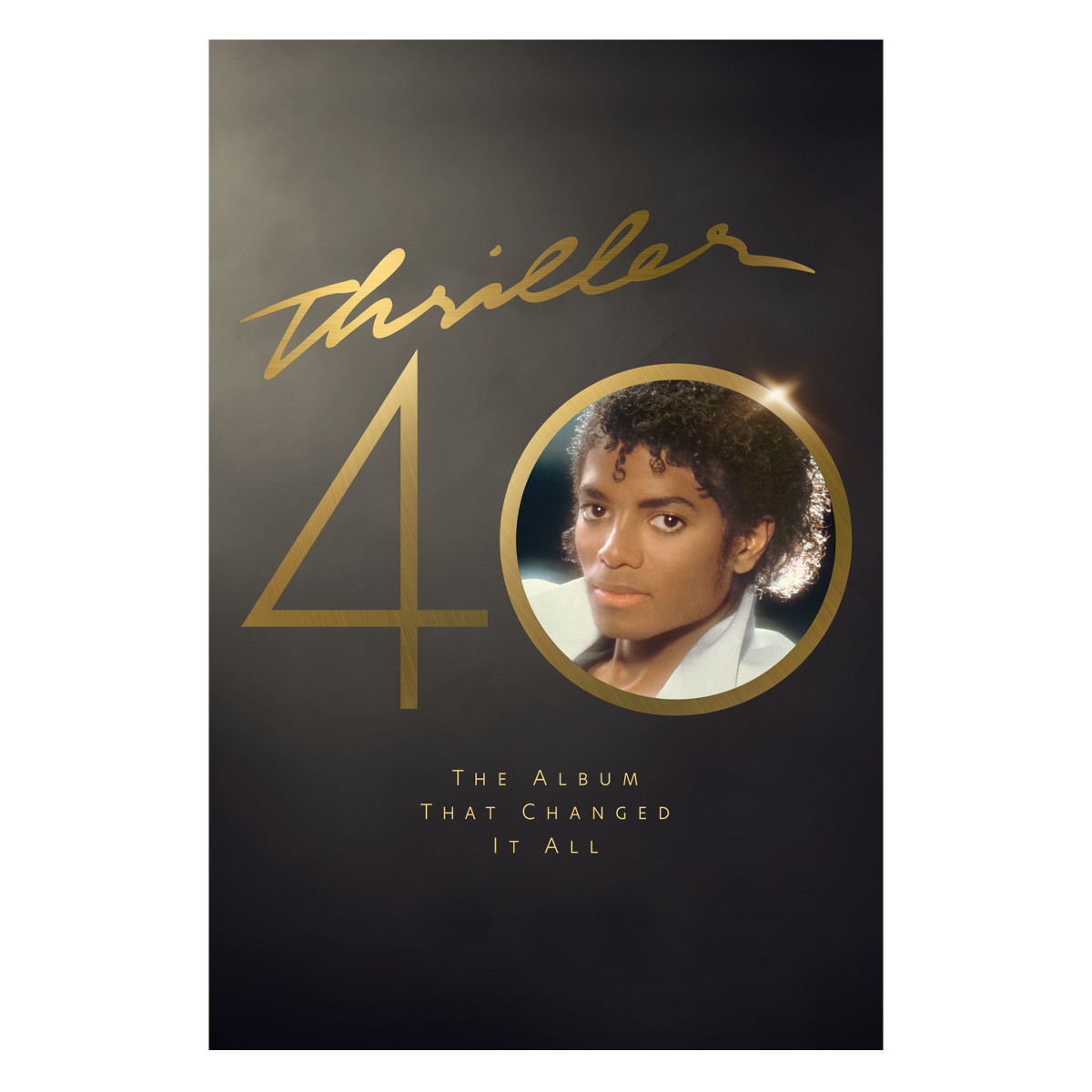
You’ve heard the stories. Quincy Jones and Michael Jackson sitting in Westlake Recording Studios, literal smoke rising from the speakers as they pushed the equipment to its breaking point. It’s the kind of lore that builds up around a record that has sold over 100 million copies globally. But when you look at the Michael Jackson Thriller tracklist, it’s actually a pretty lean machine. Just nine songs.
Nine songs that changed everything.
People tend to treat this album like a greatest hits collection because, well, seven of those nine tracks were Top 10 hits. That’s a ridiculous ratio. Honestly, it’s a feat that shouldn’t have been possible. But if you dig into how these songs were picked from a pile of 600 demos, you start to see why the sequence feels so intentional. It wasn't just a random assortment of catchy tunes; it was a calculated attempt to "save the recording industry," as Quincy famously put it.
The Secret Architecture of the Michael Jackson Thriller Tracklist
The album doesn't start with a safe radio hit. It kicks off with a six-minute-long, high-energy African-influenced groove.
Side One: The Dance Floor and the Dread
"Wanna Be Startin' Somethin'" is a wild choice for an opener. It’s got no real chorus in the traditional sense, just a driving beat and that iconic Swahili chant ("Ma-ma-se, ma-ma-sa, ma-ma-ko-ssa"). Michael actually wrote this one during the Off the Wall sessions but held onto it. Good thing he did.
Then you’ve got "Baby Be Mine." This is the song everyone forgets, but it’s the glue. It’s pure Rod Temperton—the British songwriter who gave Michael "Rock With You." It provides a smooth, post-disco breather before we get into the heavy hitters.
"The Girl Is Mine" comes next. It was the first single, which seems crazy now. A soft duet with Paul McCartney? Record executives were terrified Michael was losing his edge. They wanted a safe, cross-over pop hit to lead the charge. It worked commercially, but critics were skeptical.
And then, the title track.
"Thriller" wasn't even called "Thriller" at first. Temperton originally titled it "Starlight." Can you imagine? "Starlight! Starlight sun!" doesn't quite have the same ring to it. Quincy wanted something "edgy," so Rod went back to his hotel, and "Thriller" was born. They brought in horror legend Vincent Price to record the rap. Fun fact: he did it in two takes. Rod wrote those lyrics in a taxi on the way to the studio.
Side Two: The Perfect Four-Song Run
If side one is about building tension, side two is where the album becomes a legend.
"Beat It" was Michael’s attempt at a rock song. He wanted something "tough." Quincy brought in Eddie Van Halen for that solo. Eddie did it for free, thinking the phone call from Quincy was a prank. He played so loud that the monitors in the control room actually caught fire. That’s not a metaphor. They were literally burning.
"Billie Jean" followed. This is arguably the most important song on the Michael Jackson Thriller tracklist. Quincy actually hated the intro. He thought it was too long. Michael fought for it, saying, "That's the jelly. That's what makes me want to dance." Michael won. The world won.
"Human Nature" and "P.Y.T. (Pretty Young Thing)" round out the energy. "Human Nature" was almost a late-addition accident. Steve Porcaro from the band Toto sent over a demo tape with some rough ideas on one side. Quincy heard the "why, why?" hook and lost his mind. It’s one of the few songs on the album Michael didn’t write, but he made it sound like a personal confession.
Finally, "The Lady in My Life" closes it out. It’s a quiet, soulful ballad. It’s the "lights down" moment after a massive party.
Why the Order Still Matters in 2026
We live in a shuffle culture. Most kids today discover these songs through TikTok loops or AI-generated playlists. But listening to the tracklist in its original order reveals a specific emotional arc. You move from the paranoia of "Billie Jean" into the ethereal wandering of "Human Nature."
Bruce Swedien, the engineer, used something called the "Acusonic Recording Process." Basically, they synchronized multiple 24-track machines to get a sound that was wider and deeper than anything else at the time. When you listen to the transition from "Beat It" to "Billie Jean," you aren't just hearing two hits. You're hearing a masterclass in sonic texture.
The Songs That Didn't Make the Cut
It’s worth mentioning what wasn't there. Tracks like "Carousel" or "Got the Hots" were left on the cutting room floor. Even "Say Say Say" with McCartney was held back for Paul’s album. The discipline to stick to just nine tracks is what makes Thriller so punchy. There is zero filler.
Beyond the Music: The Impact
Thriller didn’t just sell records; it broke the "color barrier" on MTV. Before "Billie Jean," the network was almost exclusively playing white rock artists. The success of this tracklist forced them to change their programming model, which paved the way for every Black artist who followed.
By the time the final single (the title track) was released in late 1983—over a year after the album dropped—Michael was the biggest star on the planet. The music video for "Thriller" became a cultural event. People would stay home just to catch the premiere on TV.
Essential Insights for the Modern Listener:
- Check out the "Thriller 40" demos: If you want to hear how "Starlight" sounded before it became the zombie anthem, the 40th-anniversary release has the original takes.
- Listen for the "Cardboard Tube": On "Billie Jean," Michael sang some of the overdubs through a six-foot-long cardboard tube to get a specific, haunting vocal distance.
- Watch the bass lines: Louis Johnson (of the Brothers Johnson) played the bass on most of these tracks. His "thumb-slapping" technique is what gives "Wanna Be Startin' Somethin'" its drive.
- Pay attention to the Toto connection: Half of the band Toto (Steve Lukather, Jeff Porcaro, Steve Porcaro) basically acted as the house band for this record. Their tight, session-player precision is the secret sauce.
The Michael Jackson Thriller tracklist remains the blueprint for the "perfect" pop album. It’s short, it’s focused, and it refuses to let you be bored. Whether it’s the heavy rock of "Beat It" or the synth-pop gloss of "P.Y.T.," every song serves a purpose. It wasn't an accident. It was the result of two geniuses—Jackson and Jones—refusing to accept anything less than perfection.