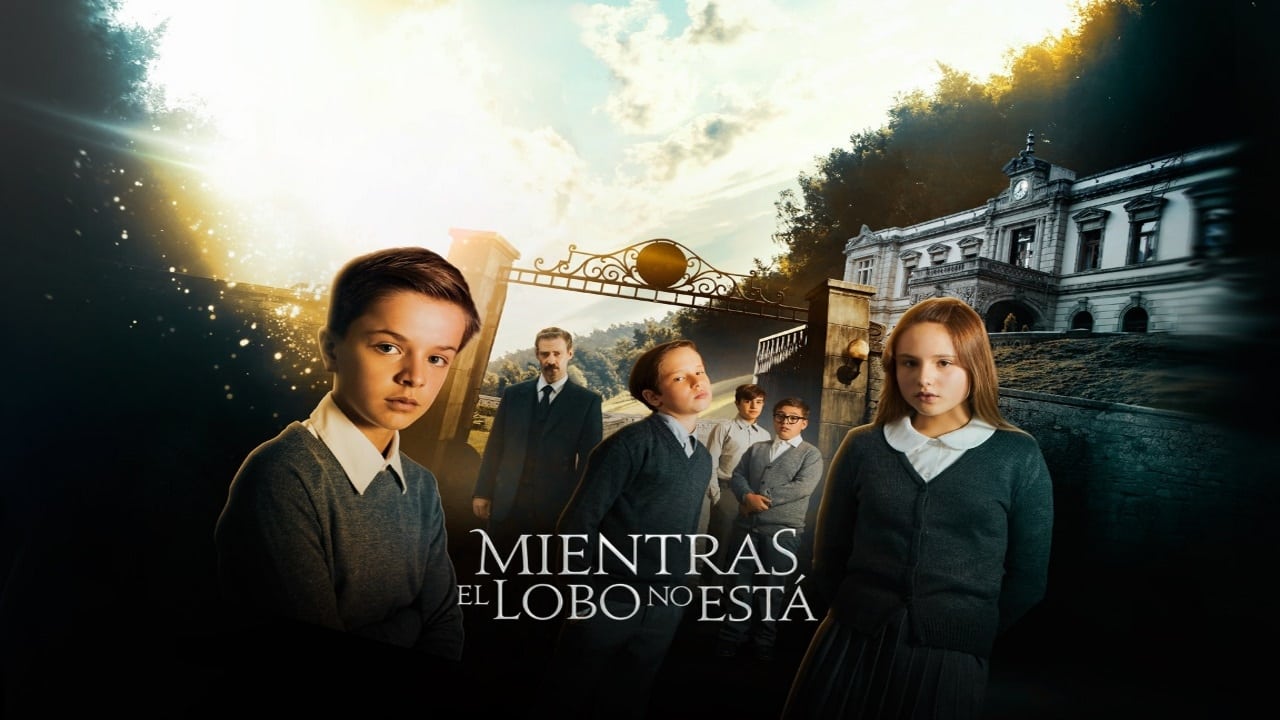
Honestly, walking into a movie about kids in a boarding school usually feels like a trap. You expect Harry Potter or maybe some cliché horror flick where everyone makes the dumbest decisions possible. But Joseph Hemsani’s 2017 debut, mientras el lobo no está, is a different beast entirely. It’s gritty. It’s uncomfortable. It captures that specific, suffocating feeling of being a kid and realizing the adults in charge are actually monsters.
Set in 1950s Mexico, the film follows Alex—played by Luis de la Rosa—who gets shipped off to a strict boarding school nestled deep in a forest. It’s isolated. It’s grey. The atmosphere hits you immediately. It isn't just a "scary movie." It is a coming-of-age story wrapped in a psychological thriller that feels way too real for comfort.
Most people who find this movie on streaming platforms today are surprised by how well it holds up. It doesn't rely on cheap jump scares. Instead, it builds tension through the sheer powerlessness of its young protagonists. They’re stuck. Nobody is coming to save them. That’s the real horror.
The Reality Behind the Walls of "Mientras el lobo no está"
The title itself—which translates to "While the wolf is away"—is a clever nod to the children’s game Juguemos en el bosque. It’s a nursery rhyme. It’s supposed to be innocent. But in the context of this film, the "wolf" is very much present, and he’s wearing a suit.
Mauricio García Lozada plays the headmaster, and he is terrifying. Not because he has superpowers, but because he has total authority. He uses "discipline" as a weapon. In the 1950s setting, this kind of rigid, authoritarian education was the norm, which makes the plot feel grounded in a dark historical reality. The school isn't just a setting; it’s a character. It’s a maze of stone walls and locked doors where secrets go to die.
Alex and his friends—Jerry, Nano, and the girl they both care about, Isabel—spend their nights trying to figure out what happened to the students who "left" before them. They find clues. They find old journals. They find out that the school’s "reform" methods are actually cover-ups for something much more sinister.
What’s interesting is how the film handles the group dynamic. Kids are messy. They get jealous. They fight. In mientras el lobo no está, the internal friction between the boys is sometimes just as dangerous as the headmaster himself.
Why the 1950s Setting Actually Matters
Choosing the mid-century period wasn't just an aesthetic choice for Hemsani. It was a tactical one.
Think about it. No cell phones. No internet. No way to call your parents and tell them the principal is a creep. In the 50s, a child’s word meant nothing against an adult’s, especially an adult in a position of religious or educational power. This creates a vacuum of accountability.
The cinematography uses this era to create a muted, desaturated look. Everything looks like it’s covered in a thin layer of dust and regret. The forest surrounding the school acts as a natural prison. You could run, sure, but where would you go? The trees are dense, the nights are cold, and the "wolf" knows the terrain better than you do.
The Mystery of the Disappearances
The core of the plot revolves around the missing students. Alex finds a notebook that suggests the "wolves" are actually those in power indulging in their darkest impulses. It’s a heavy theme. It touches on systemic abuse without being overly graphic, which arguably makes it more haunting. Your imagination fills in the gaps.
Critics often compare it to The Devil's Backbone or even Pan's Labyrinth, but without the supernatural elements. There are no ghosts here. The monsters are entirely human. That makes the stakes feel higher because there’s no magic spell to fix the situation.
Breaking Down the Cast and Performances
Luis de la Rosa carries a lot of the emotional weight. Before he was in Luis Miguel: The Series, he was this wide-eyed kid trying to survive a nightmare. You see the transition in his eyes from fear to a sort of hardened resolve.
Then you have Richie Mestre and Michel Arluk. Their chemistry feels like actual childhood friendship—raw, impulsive, and occasionally sacrificial. But the standout is definitely the villain. A good thriller lives or dies by its antagonist. If the headmaster felt like a cartoon, the movie would fail. Instead, he feels like a man who truly believes he is doing the right thing, which is the scariest kind of villain.
Technical Execution: Sound and Shadow
Sound design in mientras el lobo no está is top-tier. The creaking of floorboards, the howling wind, the distant sound of the headmaster’s footsteps—it all builds a sensory experience of paranoia.
Hemsani, who also co-wrote the script, uses shadows to hide things that aren't even there. You’re constantly looking in the corners of the frame. The camera stays low, often at the eye level of the children, making the adults look looming and monolithic. It’s a simple trick, but it works every single time.
Why Some Viewers Get the Ending Wrong
I’ve seen a lot of debates online about the final act. Without spoiling the specifics, some find it too bleak, while others think it’s a necessary climax for a story about losing innocence.
The movie doesn't give you a "happily ever after" wrapped in a bow. It’s a survival story. Survival is messy. It leaves scars. The ending forces the audience to reckon with the cost of freedom. Did they win? Technically, maybe. But they’ll never be the same kids who walked into that school.
Actionable Insights for Fans of the Genre
If you haven't seen it yet, or if you're looking for more like it, here is how to get the most out of this specific niche of Mexican cinema.
- Watch for the symbolism: Pay attention to the animal motifs. The wolf isn't just a metaphor; it's reflected in the way the adults hunt and the way the children eventually learn to pack together.
- Check out the director's other work: Joseph Hemsani has a very specific eye for tension. While this was his breakout, his background in production design shows in every frame.
- Contextualize the "Golden Age" influence: This film pays homage to the suspense of old Mexican cinema but strips away the melodrama.
- Look for "The Orphanage" (El Orfanato): If you liked the "isolated kids in a creepy building" vibe, this Spanish classic is the logical next step. It’s a bit more supernatural but shares the same DNA of childhood dread.
- Analyze the social commentary: Beyond the thriller aspects, the movie is a critique of how society hides its "problem" children. It asks what happens when we prioritize order over humanity.
mientras el lobo no está remains a standout because it respects the intelligence of its audience and the agency of its young characters. It’s a reminder that the scariest stories aren't about what’s under the bed, but who is standing at the door.
To truly appreciate the film, watch it in its original Spanish with subtitles rather than a dub. The cadence of the headmaster's voice and the desperate whispers of the children lose their impact when translated into a flat English voiceover. Pay close attention to the use of the song "Juguemos en el bosque"—it serves as a chilling leitmotif that bookends the loss of innocence. Finally, research the history of private boarding schools in 20th-century Latin America; the reality of these institutions often mirrored the grim atmosphere Hemsani captures on screen.