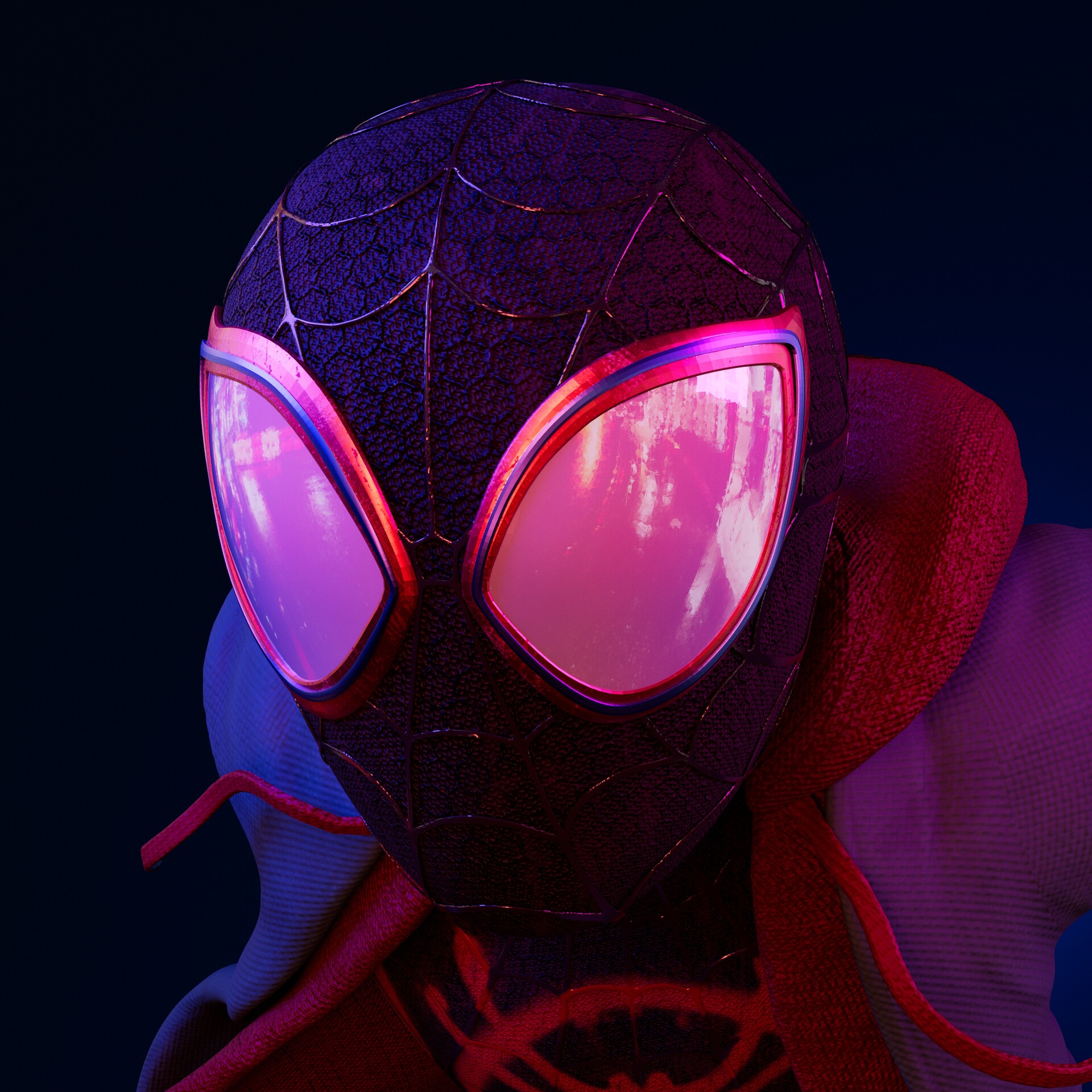
Miles Morales is basically the king of the "unmasked" moment. If you've played the games or sat through the Spider-Verse trilogy, you know he spends a shocking amount of time without that iconic fabric over his face. Honestly, it’s kinda weird for a superhero. Peter Parker usually clings to his mask like a security blanket, but Miles? He’s different.
For Miles, taking off the mask isn't just about breathing better. It’s a narrative tool that creators use to show us who he actually is beneath the hype. From the heartbreaking ending of Across the Spider-Verse to the high-stakes rooftop chats in the Insomniac games, the Miles Morales no mask scenes are where the real story happens.
The Earth-42 Twist: A Maskless Disaster
Let’s talk about that cliffhanger. You know the one. At the end of Across the Spider-Verse, Miles thinks he’s finally made it home to Brooklyn. He sits in his kitchen, heart racing, and decides it’s time. He pulls off the mask. He tells Rio, "I’m Spider-Man."
But it’s a total wreck.
Because he isn’t home. He’s on Earth-42. The Miles in front of Rio isn't her Miles, and the Rio in front of him doesn't even know what a "Spider-Man" is. She thinks he’s just acting weird or "cosplaying" for a convention. Seeing Miles Morales no mask in this scene is physically painful. It’s the ultimate vulnerability met with a blank stare. It highlights the "anomaly" status Miguel O’Hara kept screaming about—Miles is literally a person without a place.
Then, of course, we meet the other Miles. The one with the braids and the Prowler suit. That face-to-face reveal only works because our Miles is unmasked. It’s a mirror image that’s completely shattered.
Why Insomniac’s Miles is So Bad at Secret Identities
If you’ve played Marvel’s Spider-Man 2, you’ve probably yelled at your TV at least once. Miles and Peter are constantly ripping their masks off on rooftops in broad daylight. Like, guys, there are skyscrapers with windows right there!
In the game, the Miles Morales no mask look is almost a default during emotional cutscenes. Remember when he meets Uncle Aaron on the roof? Mask off immediately. When he’s hanging out at Peter’s house in Queens? He’s basically swinging into the driveway and pulling the hood back while the neighbors are probably checking their mail.
Fans on Reddit and GameFAQs have been roasting this for years. They call it "actor-face syndrome." Basically, the developers paid a lot of money for Nadji Jeter’s facial capture, and they want you to see every micro-expression. While it’s a bit silly for "secret" identities, it makes Miles feel more like a kid you know and less like a distant legend. He’s a Harlem local. Everyone in his neighborhood basically knows it’s him anyway—they just don't snitch.
The Cultural Power of the Reveal
In the comics, specifically during the Ultimate Fallout run, the reveal of Miles’ face was a massive cultural moment. When he first took off the mask in the panels, it wasn't just "some guy." It was an Afro-Latino kid from Brooklyn.
- It challenged the "default" look of a hero.
- It showed that the mask could belong to anyone, regardless of heritage.
- It grounded the "Spider-Man" mythos in a specific, modern community.
Brian Michael Bendis and Sara Pichelli didn't just give us a new suit; they gave us a new face. When we see Miles Morales no mask, we see the struggle of balancing a Black and Puerto Rican identity with the burden of a legacy he didn't ask for.
The "Leap of Faith" Paradox
Ironically, Miles’ most famous moment is about putting the mask on. In Into the Spider-Verse, the "Leap of Faith" sequence is powerful because we’ve seen him fail so many times without the mask. He was just a kid in a store-bought suit that didn't fit.
When he finally sprays the black and red suit and pulls that mask down, he isn't hiding. He’s ascending. As Scott McCloud points out in Understanding Comics, a mask allows the audience to project themselves onto the hero. But with Miles, the mask is also a bridge. We need to see him without it to understand his fear, so that when he puts it on, we feel his courage.
Real-World Impact: Why Fans Search for This
Why do people actually look for "Miles Morales no mask"? Usually, it’s for three reasons:
- Reference Art: Artists want to capture his specific features, like his hair or the way he looks compared to Peter.
- Story Spoilers: People are trying to figure out if he reveals his identity to certain characters (like his dad, Jefferson Davis).
- Cosplay/Customization: Gamers want to know if there are "unmasked" suit variants they can play with (sadly, usually limited to specific missions).
Actionable Insights for Fans and Creators
If you're following the Miles Morales journey, pay attention to the lighting in unmasked scenes. In Across the Spider-Verse, unmasked Miles is often bathed in "glitch" colors or harsh shadows, signaling his internal conflict.
Next Steps to Explore:
- Watch the Earth-42 reveal scene again, but focus on Rio’s eyes—the lack of recognition is the real "villain" of that moment.
- Check out the Miles Morales: Spider-Man comic run by Saladin Ahmed for a deeper look at how his parents handle the "no mask" lifestyle.
- If you're playing the games, use the Photo Mode during the few unmasked segments to see the incredible detail in the character models that you usually miss behind the lenses.
The mask makes him a hero, but the face makes him Miles. That’s the balance that keeps us coming back.