If you’ve ever sat on a porch with a drink in your hand, wondering how the hell things went so wrong, you’ve probably felt like the protagonist in a Miranda Lambert song. But specifically, you’ve felt like the woman talking to a fictional character from the 1939 classic The Wizard of Oz.
Miranda Lambert lyrics Tin Man are some of the most gut-wrenching lines in modern country music. Honestly. It’s not just a song; it’s a warning. While the rest of the world sees a quest for a heart as a noble pursuit, Lambert looks at the Tin Man and basically says, "Keep your armor, buddy. You have no idea what you’re asking for."
The Story Behind the Scars
The song didn't come out of a glossy Nashville writing room with a dozen people trying to engineer a hit. Instead, it was born on a porch. Miranda, along with her frequent collaborators Jack Ingram and Jon Randall, wrote it during a period of intense personal scrutiny for Lambert.
It was 2016. The tabloids were having a field day with her divorce from Blake Shelton. She was, in her own words, feeling "pretty empty."
Most of us have seen The Wizard of Oz a thousand times. We root for the Tin Man. We want him to get that clockwork heart so he can feel. But Lambert, sitting there with her guitar, realized that the emptiness the Tin Man felt was actually a gift. To be "hollow" is to be safe. To have a heart is to be vulnerable to a total, catastrophic breakdown.
"Whatever influenced you the most at whatever time of your life, it some way or another comes out in your art," Lambert told iHeartRadio.
She wasn't just writing a clever metaphor. She was having an epiphany. The song became the anchor for her double album, The Weight of These Wings, appearing on the side of the record she fittingly titled "The Heart."
Breaking Down the Lyrics
The song starts with a direct address. It’s conversational, almost like she’s leans over a fence to talk to a neighbor.
Hey there, Mr. Tin Man You don't know how lucky you are You shouldn't spend your whole life wishin' For somethin' bound to fall apart
The phrase "bound to fall apart" is the kicker. It’s the central thesis of the track. She isn't arguing that love isn't real; she’s arguing that its inherent nature is fragility. If you have a heart, it will break. That’s the tax you pay for being human.
The Trade-Off
In the final verse, the lyrics take a desperate turn. She offers a trade that sounds like a raw deal for the Tin Man but a lifeline for her:
By the way there, Mr. Tin Man If you don't mind the scars You give me your armor And you can have my heart
She’s basically saying she’d rather be a cold, unfeeling statue than continue carrying the "scars" of a broken relationship. It’s a level of honesty that’s rare even in country music. She isn't trying to be the hero. She’s just tired.
Why It Hit Different at the ACMs
If you want to know why this song is a masterpiece, you have to look at the 2017 Academy of Country Music Awards.
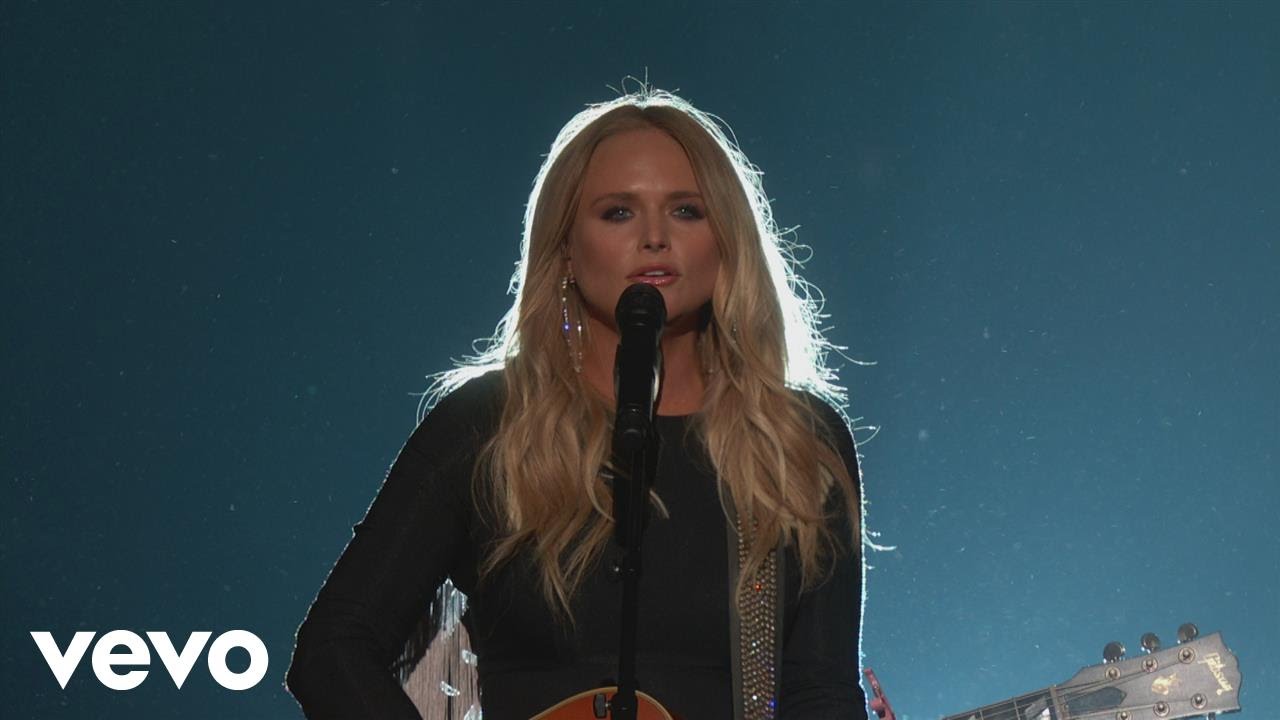
Usually, these award shows are high-octane. Pyrotechnics. Dancers. Massive backing bands. Miranda walked out with just an acoustic guitar. No band. No flashy lights. Just a woman and a story.
The room went silent.
That performance essentially catapulted the song from a deep cut to a career-defining moment. It later won ACM Song of the Year in 2018. It wasn't about the charts—though it did reach the top 15 on the Hot Country Songs chart—it was about the resonance. It proved that you don't need a "trucks and beer" anthem to win over a country audience. You just need the truth.
The Marfa Tapes Connection
A few years later, Lambert revisited the song for The Marfa Tapes, a collaborative album with Ingram and Randall. If the original version was stripped back, this one was skeletal.
You can hear the wind. You can hear the cows in the background.
It’s the song in its purest form. They recorded it around a campfire in Marfa, Texas, using just two microphones. It highlights the fact that the song doesn't need production. The "ooh-ooh" interludes, which some critics initially found a bit long, feel like a sigh of relief in the Texas desert. It’s the sound of someone finally letting go of the weight.
Practical Takeaways for Songwriters and Fans
What can we actually learn from the "Tin Man" phenomenon? It’s not just about being sad. It’s about how to communicate complex emotions without getting cheesy.
- Use familiar archetypes: Everyone knows the Tin Man. By using a character we already understand, she didn't have to spend time explaining the concept of "heartlessness." She jumped straight to the emotion.
- Embrace the "empty" moments: Sometimes the best creative work comes when you feel the least inspired or the most drained. Lambert used her "emptiness" as a canvas.
- Simplicity wins: If a song is good, you don't need a 20-piece orchestra. You need a melody that can stand on its own.
If you’re going through it right now, give "Tin Man" another listen. Don't look at the lyrics as a bummer. Look at them as a validation. It’s okay to want to trade your heart for a suit of armor for a little while. Just remember that even the Tin Man eventually realized he was better off with the ability to feel, even if it meant he might rust from his own tears.
To really appreciate the depth of the track, watch the live 2017 ACM performance and then immediately listen to the Marfa Tapes version. You'll hear the difference between a polished "product" and the raw, desert-born soul of the song. It's the best way to understand why Miranda Lambert is still the reigning queen of the heartbreak ballad.
Next Steps:
- Compare the studio version of "Tin Man" from The Weight of These Wings with the raw acoustic version on The Marfa Tapes to see how production changes the emotional impact.
- Research the "The Heart" vs. "The Nerve" structure of her 2016 album to understand the full context of where this song sits in her discography.
- Look up the songwriting credits for "Whiskey Lullaby" to see the other heavy-hitting work co-writer Jon Randall has contributed to the genre.