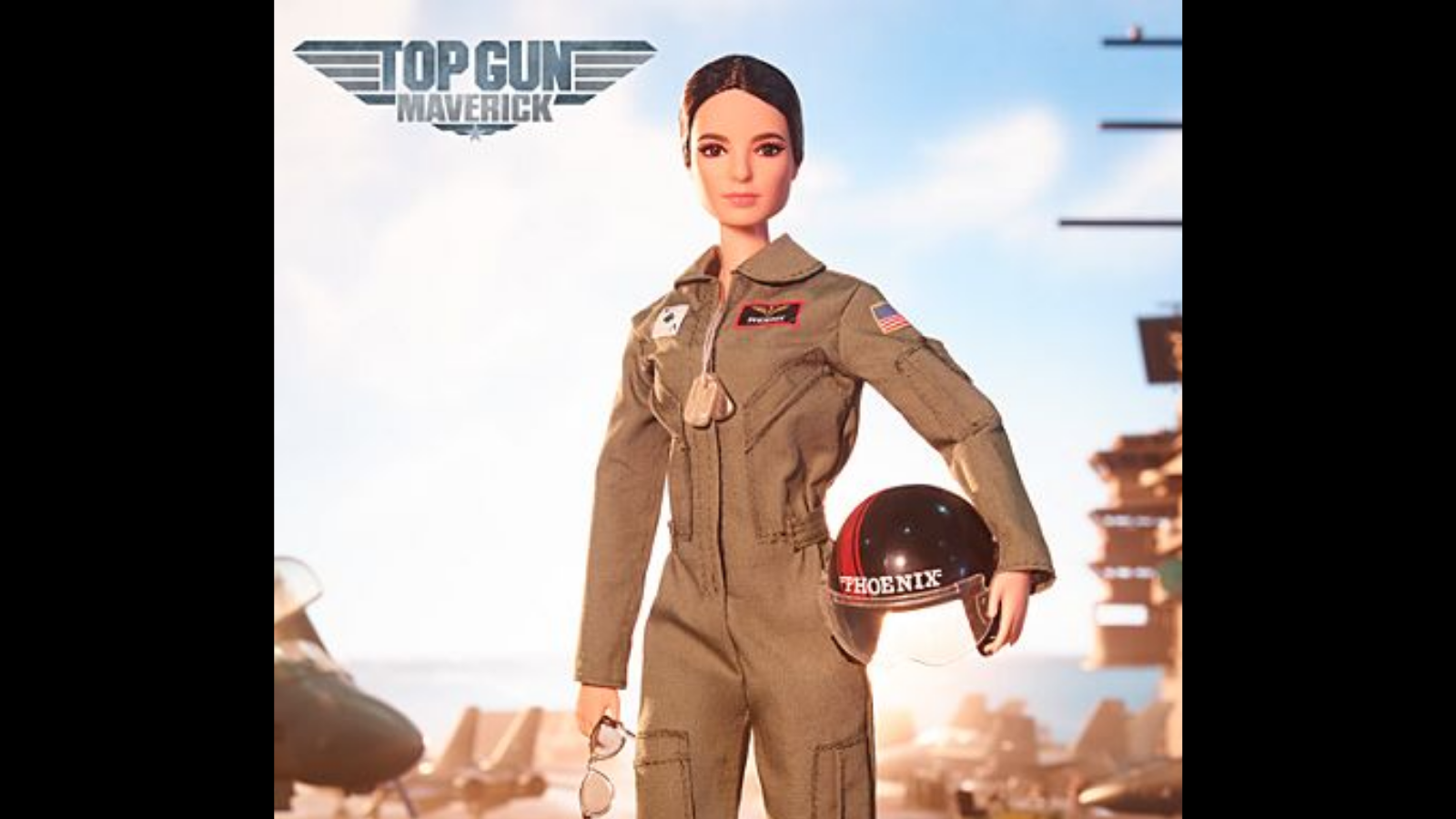
When Top Gun: Maverick roared into theaters, everyone was looking for the next Maverick. Instead, they found Natasha "Phoenix" Trace. She wasn't just a side character or a diversity hire to round out the cockpit. She was the backbone of the mission. But who played Phoenix in Top Gun Maverick? That would be Monica Barbaro, an actress who basically went through a real-life version of flight school just to make sure you didn't see her puke on camera.
She's tough.
If you walked into the theater expecting a carbon copy of the 1986 original, you probably noticed the vibe was different this time. It wasn't just about the guys and their egos. Barbaro's Phoenix brought a level of professional, quiet confidence that actually felt like the modern Navy. Honestly, her performance was so grounded that people started wondering if she was actually a pilot before she ever stepped onto a movie set.
She wasn't. But by the time they finished filming, she kind of was.
The Physical Toll of Being Natasha "Phoenix" Trace
Let's get one thing straight: the G-force is real. When you see Monica Barbaro's face distorting as the F/A-18 Super Hornet pulls a hard bank, that isn't CGI. Tom Cruise, who is famously obsessed with authenticity, insisted that the actors actually fly in the jets. They didn't just sit there. They had to operate the cameras, manage their own lighting, and—most importantly—not pass out while hitting 7G.
Barbaro was famously one of the only cast members who didn't get sick. That’s insane.
Think about that for a second. You’re in a cramped cockpit, the world is spinning, your internal organs feel like they weigh 500 pounds, and you have to remember your lines while making sure the sun is hitting your face at the right angle for the shot. Most people would be reaching for a barf bag within ten minutes. Barbaro didn't. She actually became a bit of a legend on set for her "iron stomach."
The training wasn't a joke, either. Before they ever touched a Super Hornet, the cast had to graduate from a flight program designed by Cruise himself. They started in single-engine Cessnas to get used to spatial awareness. Then they moved up to the Extra 300 for aerobatics, and finally to the L-39 Albatros jet. By the time Barbaro got into the Navy's billion-dollar hardware, she had hundreds of hours of flight prep under her belt.
Who Played Phoenix in Top Gun Maverick? Meet Monica Barbaro
Before she was dogfighting over snowy mountains, Monica Barbaro was carving out a career in television. You might recognize her from UnREAL or Chicago Justice. But Top Gun: Maverick was the catalyst that shifted her from "that actress from that show" to a legitimate movie star.
Born in San Francisco and raised in Mill Valley, California, Barbaro actually started as a ballet dancer. That’s probably where she got the discipline. Anyone who has survived a professional dance conservatory knows how to push through pain. She brought that same "don't quit" energy to the role of Phoenix.
Breaking the "Girl in a Pilot Movie" Trope
Usually, in these big-budget action flicks, the female lead is either a love interest or someone who needs to be rescued. Phoenix was neither. She was Maverick’s peer in terms of skill and Bob’s literal pilot. The relationship between Phoenix and Bob (played by Lewis Pullman) was one of the highlights of the movie because it was built on mutual respect and professional competence.
There was no forced romance. Just two professionals trying not to die.
Barbaro has talked extensively in interviews about how she felt a massive responsibility to get the military aspect right. She spent time with real female naval aviators, like Captain Elizabeth Malecha, to understand the nuances of the job. She didn't want to play a "female pilot." She wanted to play a pilot who happened to be female. There's a subtle but massive difference there. It’s about the posture, the way she handles the flight stick, and the lack of "performing" toughness.
The Technical Reality of the F/A-18 Cockpit
Let’s nerd out for a minute.
In the film, Phoenix flies the F/A-18F, which is the two-seat variant of the Super Hornet. In the real Navy, the person in the front (Phoenix) is the Pilot, and the person in the back (Bob) is the Weapon Systems Officer, or WSO (pronounced "Wizzo").
During the filming, there was a real Navy pilot in the cockpit with them, but the cameras were rigged to look like the actors were flying solo. Because the Navy doesn't just hand over the keys to a fighter jet to a Hollywood actor—no matter how much Tom Cruise asks—the actors had to mimic the movements of the real pilot perfectly. If the pilot banked left, Barbaro had to bank left simultaneously so the footage looked seamless.
It’s essentially high-stakes choreography at 500 knots.
The gear she wore was also authentic. The flight suits, the G-suits (which squeeze your legs to keep blood in your brain), and the helmets were all the real deal. It’s heavy, it’s hot, and it smells like jet fuel. Barbaro often mentioned that once the visor comes down and the engine roars, the acting stops being "pretend" and starts being a survival instinct.
Why the Character of Phoenix Matters for the Franchise
If you look back at the 1986 film, the only woman with a significant role was Charlie (Kelly McGillis), an instructor. While Charlie was brilliant, she was still ultimately there to facilitate Maverick's emotional journey.
Phoenix is different.
She represents the evolution of the Top Gun program. She is competitive without being toxic. When Hangman (Glen Powell) is being a jerk, she doesn't just take it—she fires back with a level of wit that proves she’s his equal. She’s the moral center of the younger group of pilots.
- She’s the first one to realize Maverick might actually know what he’s doing.
- She protects her WSO, Bob, when others mock him.
- She handles the bird strike sequence—one of the most harrowing parts of the film—with a terrifying level of realism.
That bird strike scene, by the way? That was inspired by real naval aviation mishaps. The way Barbaro portrays the transition from "we're fine" to "the engine is on fire and we are spinning out of control" is a masterclass in tension. You can see the oxygen mask sucking against her face as she struggles to breathe under the Gs.
Misconceptions About the Casting
There’s this weird rumor that Phoenix was based on a specific real-life person. While the writers definitely looked at the history of women in the Navy—like Rosemary Mariner, the first woman to command an operational aviation squadron—Phoenix is a composite character.
Some people also thought Barbaro was a "nepo baby" or came out of nowhere. Neither is true. She worked the grind of network TV for years. She did the guest spots on Hawaii Five-0 and Stumptown. She earned her seat in that cockpit through a grueling audition process that involved screen tests and, yes, proving she wouldn't throw up.
Beyond the Cockpit: What’s Next for Monica Barbaro?
Since the massive success of Top Gun: Maverick, Barbaro hasn't slowed down. She moved into the world of Arnold Schwarzenegger in the Netflix series FUBAR, playing his daughter (and another secret agent, because clearly, she fits the "action star" mold).
But it’s her role as Phoenix that will likely define her career for a long time. She’s become a bit of an icon in the aviation community. It’s not uncommon to see real female pilots tagging her on Instagram or thanking her for not making the role a caricature.
Honestly, the "Maverick effect" is real. Applications for naval aviation spiked after the movie came out, much like they did in the 80s. And this time, it wasn't just guys wanting to be like Pete Mitchell. A lot of young women wanted to be like Phoenix.
Practical Insights for Fans and Aspiring Actors
If you're looking to follow in the footsteps of someone like Monica Barbaro, or if you're just a die-hard Top Gun fan, there are a few things you should take away from her experience.
First, physical preparation is everything. Barbaro didn't just learn her lines; she conditioned her body for the environment she was going to be in. Whether you're an actor or a professional in any field, understanding the physical demands of your environment is a game changer.
Second, seek out mentors. Barbaro didn't try to guess what a pilot looked like. She sat down with them. She asked them how they felt when they were scared. She asked how they held their hands when they were resting. Details matter.
Finally, don't be afraid to be the "uncool" one. While everyone else was trying to look like a rockstar, Barbaro focused on being a pilot. She was okay with the sweat, the messy hair, and the intensity. That authenticity is what makes her performance stand out even years after the film's release.
If you want to see more of her work, check out her performance in At Midnight for a completely different, romantic side of her acting, or dive into FUBAR for more stunts. But if you really want to appreciate what she did, go back and watch the "Canyon Run" in Maverick one more time. Look at her eyes. She’s not just acting; she’s flying.
Actionable Next Steps:
- Watch the Behind-the-Scenes Documentaries: Look for the "Casting the Pilots" and "Flight School" features on the Top Gun: Maverick Blu-ray or streaming extras. You’ll see the actual footage of Barbaro training in the L-39 jets.
- Follow Real Aviators: If the character of Phoenix inspired you, follow the Navy's official channels or organizations like Women in Aviation International. They provide the real-world context for the life Barbaro portrayed.
- Study Her Career Path: For aspiring actors, look at Barbaro's transition from commercial work and small TV roles to major blockbusters. It's a classic example of "preparation meeting opportunity."