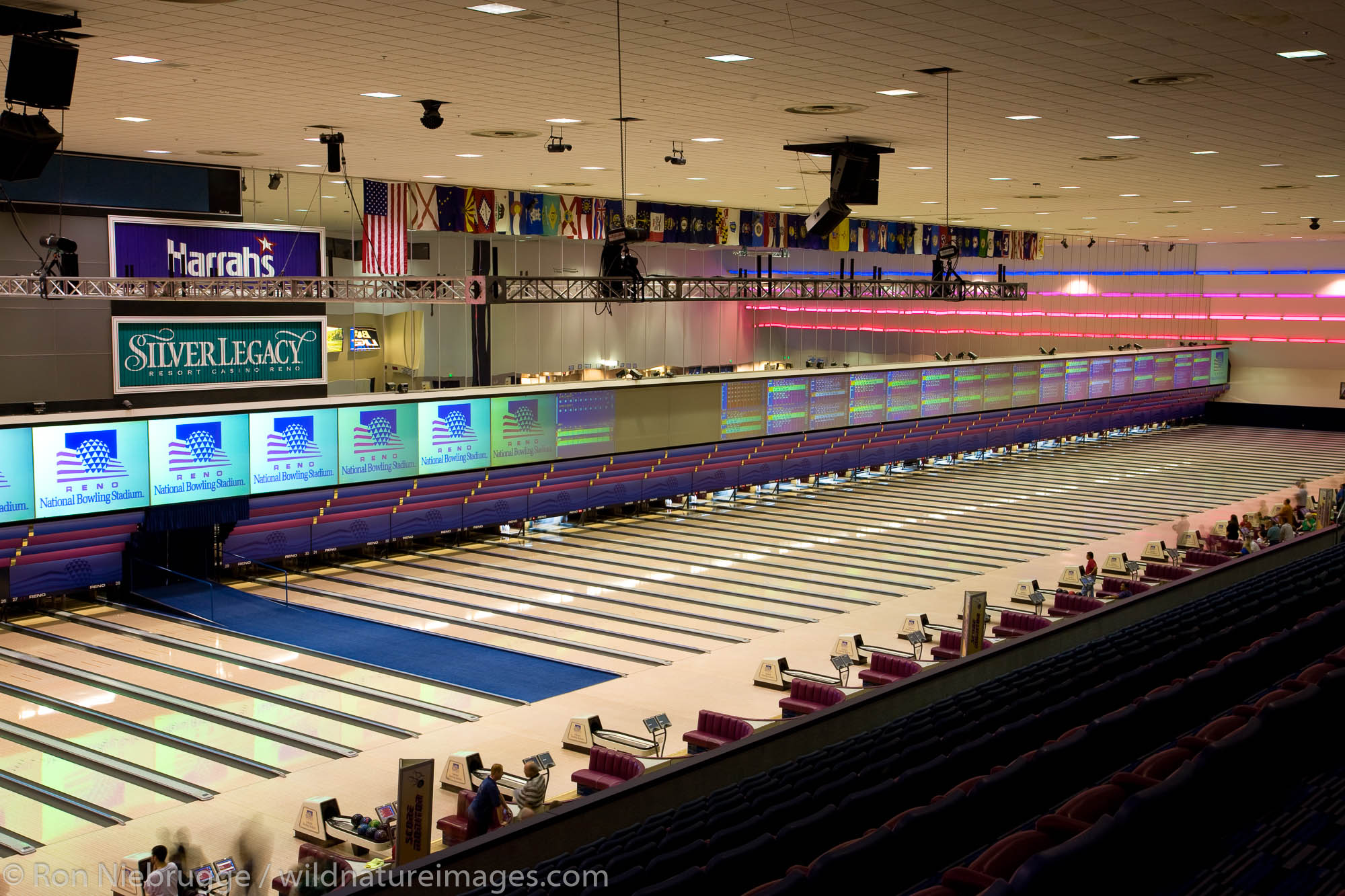
You’re driving through downtown Reno, passing the neon glow of the casinos and the famous "Biggest Little City" arch, and suddenly you see it. This massive, futuristic-looking silver dome that looks like it belongs in a sci-fi movie or maybe a space colony. That’s the National Bowling Stadium University Way Reno NV, and honestly, it is one of the weirdest and most impressive buildings in the high desert.
It’s huge.
Most people just call it the "Taj Mahal of Tenpins," and for once, the nickname isn't just marketing hype. This isn't your local neighborhood alley with sticky floors and a vending machine that eats your quarters. We are talking about a $475 million facility (in today's value adjusted for the original mid-90s investment) dedicated almost entirely to the sport of competitive bowling. It’s located at 300 North University Way, and if you haven't been inside, you’re missing out on a piece of Americana that is surprisingly intense.
The Scale of the Stadium
Walking into the National Bowling Stadium on University Way in Reno, NV, feels more like entering a major league baseball park than a bowling alley. The sheer scale is disorienting. There are 78 championship-grade lanes. To put that in perspective, your average local spot has maybe 24. These lanes are tucked under a massive 15,000-square-foot video screen that stretches across the entire length of the hall. It’s the largest of its kind in the world.
The stadium was built in 1995. The city of Reno basically bet the house on the idea that they could become the permanent home for the United States Bowling Congress (USBC) Open Championships. It worked. For decades, thousands of bowlers have descended on University Way every year, dragging their heavy ball bags through the streets of Reno like a slow-motion invasion of athletes in polyester shirts.
Why University Way is the Center of the Bowling Universe
The location matters. Being situated on University Way puts the stadium right in the heart of the action, a short walk from the Silver Legacy, Eldorado, and Circus Circus. This was a strategic move by Reno city planners. They wanted a "clean" sporting environment that was still connected to the nightlife and revenue of the casino corridor.
When a major tournament is in town, the energy is electric. You’ve got pros, semi-pros, and weekend warriors all vying for a spot on the leaderboard. But here is the thing: for a long time, the public couldn't even bowl there. It was strictly for tournament play. It felt like this gatekept cathedral. Recently, that’s shifted a bit, with more opportunities for the average Joe to get a frame in, but the primary soul of the building remains the high-stakes competition.
That Giant Silver Ball and the Architecture
Let’s talk about the dome. The geodesic dome on the exterior isn't just for show—well, it is mostly for show—but it houses the 440-seat I-MAX theater. It’s a landmark. If you’re giving someone directions in Reno, you basically just say "turn at the giant silver ball."
Inside, the aesthetics are pure 90s grandeur. There’s a lot of brass, glass, and wide-open spaces. The Kingpin Club on the ground floor offers a more "lounge" vibe with 10 lanes, a full bar, and a bit more of a social atmosphere. It’s a contrast to the clinical, focused environment of the main floor upstairs where the real business happens.
The lanes themselves are a marvel of engineering. The oil patterns—the invisible layers of conditioner applied to the wood or synthetic surface—are monitored with scientific precision. In the world of professional bowling, the "pattern" is everything. A fraction of an inch of oil can be the difference between a strike and a gutter ball. At the National Bowling Stadium on University Way, they treat this with more gravity than a chemistry lab.
The Economic Impact Nobody Talks About
People often wonder if a giant bowling stadium is actually a good investment for a city. It’s a fair question. Reno has faced some criticism over the years for how much money goes into the upkeep of the facility. However, the numbers from the Reno-Sparks Convention and Visitors Authority (RSCVA) tell a pretty compelling story.
When the USBC Open Championships are in town, they stay for months. Not days—months. We’re talking about 50,000 to 80,000 bowlers plus their families. They eat in the restaurants, sleep in the hotel rooms, and gamble in the casinos. The "University Way effect" is real. It pumps tens of millions of dollars into the local economy every single cycle. It’s the kind of consistent tourism that most cities would kill for.
The 2020s Refresh
A few years ago, the stadium underwent a massive $9 million renovation. They didn't just paint the walls. They gutted the concourse, updated the technology, and made the whole place feel less like a time capsule and more like a modern arena. The seating was upgraded, and the lighting was moved to LED systems that can change colors to match the branding of different televised events.
If you haven't visited since before 2020, it’s a different beast now. It feels sleeker. The updates were necessary because, let’s be honest, the mid-90s look was starting to feel a bit "bowling alley in a mall" despite the scale. Now, it holds its own against any modern stadium in the country.
Misconceptions About the Stadium
A lot of people think it’s just for old guys in leagues. Not true. The demographic of bowling has been shifting. You see a lot more collegiate athletes and younger power-players who treat the sport like a science. The Stadium has hosted everything from the PBA Tour to the World Bowling Championships.
Another myth is that it’s always open for public play. It’s not. It’s a stadium first, an alley second. You always want to check the schedule on the RSCVA website before you just show up with your shoes. If a tournament is running, you can usually go in and watch for free (or a small fee), which is actually a cool way to spend an afternoon. Watching a pro hit a 7-10 split in person is way more impressive than seeing it on ESPN at 2 AM.
Why You Should Care
Even if you don't bowl, the National Bowling Stadium at University Way in Reno, NV, is a feat of specialized architecture. It represents a time when cities built massive, specific monuments to niche interests. It’s one of the last "monhedric" sports cathedrals left in the US that hasn't been turned into a multi-purpose convention center or a Spirit Halloween.
It’s a monument to the idea that a sport—any sport—deserves a grand stage. When you stand at the end of that 78-lane stretch, the sheer perspective of the lines converging in the distance is enough to make you appreciate the scale of human ambition.
Actionable Tips for Your Visit
- Check the Tournament Calendar: Before you drive down University Way, visit the official Reno-Sparks Convention and Visitors Authority website. If there’s a USBC event, the building will be buzzing, but you won't be able to bowl yourself.
- Visit the Kingpin Club: If the main floor is closed for a private event, the Kingpin Club on the first floor is your best bet for a casual game. It’s got a much more "downtown Reno" social vibe.
- Park at the Nearby Garages: Street parking on University Way can be a nightmare during peak hours. Use the parking garages at the nearby casinos; most are within a two-block walk and offer validated or affordable rates.
- Take the Photo: You have to get the shot of the silver dome from the corner of 4th Street and University Way. It’s the iconic Reno shot that isn't the Arch.
- Walk to the River: After you’re done at the stadium, walk south about five blocks. You’ll hit the Truckee River Walk, which is a great place to decompress after the sensory overload of 78 lanes of crashing pins.
The National Bowling Stadium isn't just a building; it's a cornerstone of Reno's identity. It’s weird, it’s giant, and it’s perfectly Reno. Whether you’re chasing a 300 game or just looking for that giant silver ball, it’s a spot that demands at least one visit.
Final Insights on the Stadium Experience
If you're planning a trip, remember that the high altitude of Reno (about 4,500 feet) can actually affect how your bowling ball moves. The air is thinner and drier than at sea level, which changes the friction on the lanes. Serious bowlers spend days "tuning" their equipment to the University Way conditions. For the rest of us, it’s just a really cool place to watch some of the best in the world do their thing in a setting that feels like the center of the universe.
Next time you find yourself in Northern Nevada, take the turn onto University Way. Look up at that silver dome. Go inside and listen to the thunder of a hundred balls hitting the deck at once. There is truly nothing else like it in the world of sports.
Key Information Summary
- Location: 300 N. University Way, Reno, NV 89501
- Lane Count: 78 (Main Floor) + 10 (Kingpin Club)
- Primary Use: Professional and Amateur Tournament Play
- Notable Feature: The world's largest video screen in a bowling facility
To make the most of your trip to the National Bowling Stadium, verify current spectator hours directly with the stadium management office, as schedules vary wildly between the USBC Open Championships and smaller regional events. If you're looking to compete, ensure your USBC membership is active and your equipment meets the latest specifications for tournament play on synthetic surfaces.