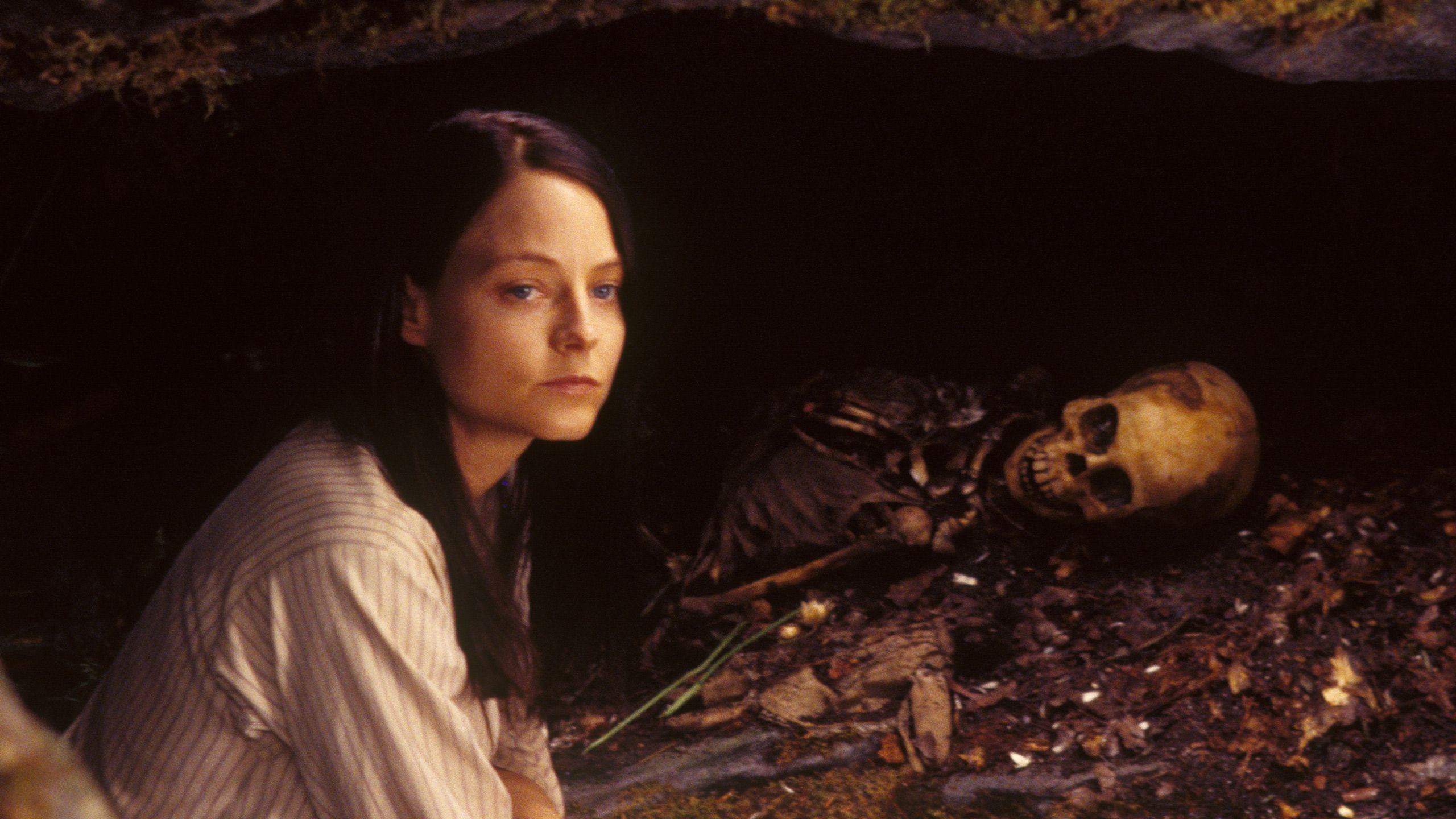
You probably remember the first time you saw it. That grainy, mist-filled footage of the Blue Ridge Mountains. A woman standing in the shadows of a ramshackle cabin, making sounds that didn't quite sound like English but didn't sound like gibberish either. Honestly, looking back at nell the movie trailer from 1994, it’s a masterclass in how to sell a "prestige" Oscar-bait movie without giving away the whole plot.
It was a vibe. A whole mood.
The Mystery in the Woods
If you grew up in the 90s, you couldn't escape this. The trailer basically positioned the film as a high-stakes medical mystery meets a spiritual awakening. We see Liam Neeson—pre-action hero days, when he was still the soulful doctor type—stumbling upon a "wild child" in the North Carolina wilderness.
Then comes the hook.
"Chickabee," she says. Or something like it. The trailer leans heavily into the linguistic puzzle. It presents Nell not as a monster, but as a "miracle" or a "discovery." It’s fascinating how the marketing team used the concept of idioglossia—a private language—to make people feel like they were about to see something truly groundbreaking.
What the Trailer Got Right (and Wrong)
Most movie trailers today are basically three-minute summaries. They tell you the beginning, the middle, and the "surprise" ending. Nell the movie trailer was different. It focused on the sound. It focused on Jodie Foster’s face—which, let's be real, was the biggest selling point. Coming off The Silence of the Lambs, Foster was the queen of the box office. Seeing her go from a calculated FBI agent to a feral woman living in a cabin was the ultimate acting "flex."
But here’s the thing.
The trailer makes it look like a tense courtroom thriller at times. It shows Natasha Richardson and Liam Neeson arguing over "what’s best" for this woman. Science versus soul. That’s a classic trope. In reality, the movie is much slower. It’s a meditative piece about grief and twinhood. The trailer promises a "mystery," but the answer to that mystery is actually quite grounded in trauma and medical history.
- The Language: It wasn't magic. It was a mix of her mother’s aphasic speech (after a stroke) and a "twin language" she shared with her sister.
- The Setting: Filmed in Robbinsville, North Carolina. The trailer makes it look like the edge of the world.
- The Stars: This was the real-life meeting of Liam Neeson and Natasha Richardson, who would later marry. You can actually see the chemistry in those trailer snippets if you look close enough.
Why People Still Search for This Today
Why are we still talking about a trailer from thirty years ago? It's partly nostalgia, sure. But it’s also because "wild child" stories are a recurring obsession in our culture. Think about Where the Crawdads Sing or even the recent Disney+ series Renegade Nell (though that’s a totally different genre, the name alone triggers the algorithm).
People search for nell the movie trailer because they want to see if it’s as "cringe" as they remember. Or if Jodie Foster’s performance actually holds up. Critics at the time were split. Some called it a "Streep-level" performance; others thought the "Nellish" language was a bit much.
I think the trailer works because it taps into a universal fear: being misunderstood.
The Impact of the "Gah'inja"
In the trailer, we hear the word "Gah'inja." It sounds mystical. Later, we find out it just means "Guardian Angel." That’s the core of the film’s marketing. It takes something simple and makes it feel like an ancient secret. It worked. The movie made over $100 million on a $25 million budget. That’s huge for a drama about a woman talking to herself in a cabin.
Practical Takeaways for Movie Buffs
If you’re going back to watch the nell the movie trailer or the film itself, keep a few things in mind to get the most out of the experience:
- Watch for the Cinematography: Dante Spinotti shot this. He also did Heat and L.A. Confidential. The way he uses natural light in the cabin scenes is actually stunning, even if the trailer quality on YouTube is 480p at best.
- Context Matters: 1994 was the year of Forrest Gump. Audiences were hungry for "innocent" characters who could teach cynical society a lesson. Nell fits that mold perfectly.
- Check the Score: Mark Isham’s music is doing a lot of heavy lifting. It uses Appalachian folk influences—dulcimers and pipes—to create that "otherworldly" feel.
Basically, if you haven't seen it in a while, it’s worth a re-watch just to see how Hollywood used to market "human" stories. No explosions. No CGI. Just a woman in a lake and a very confused Liam Neeson.
Next Steps for Your Watchlist
If this trip down memory lane has you craving more 90s prestige drama, you should look up the original play the movie was based on: Idioglossia by Mark Handley. It gives a much grittier look at the source material than the polished Hollywood version. You might also want to compare the 1994 trailer to modern "isolation" films like Room to see how our storytelling about trauma has evolved from "angelic" to "realistic."