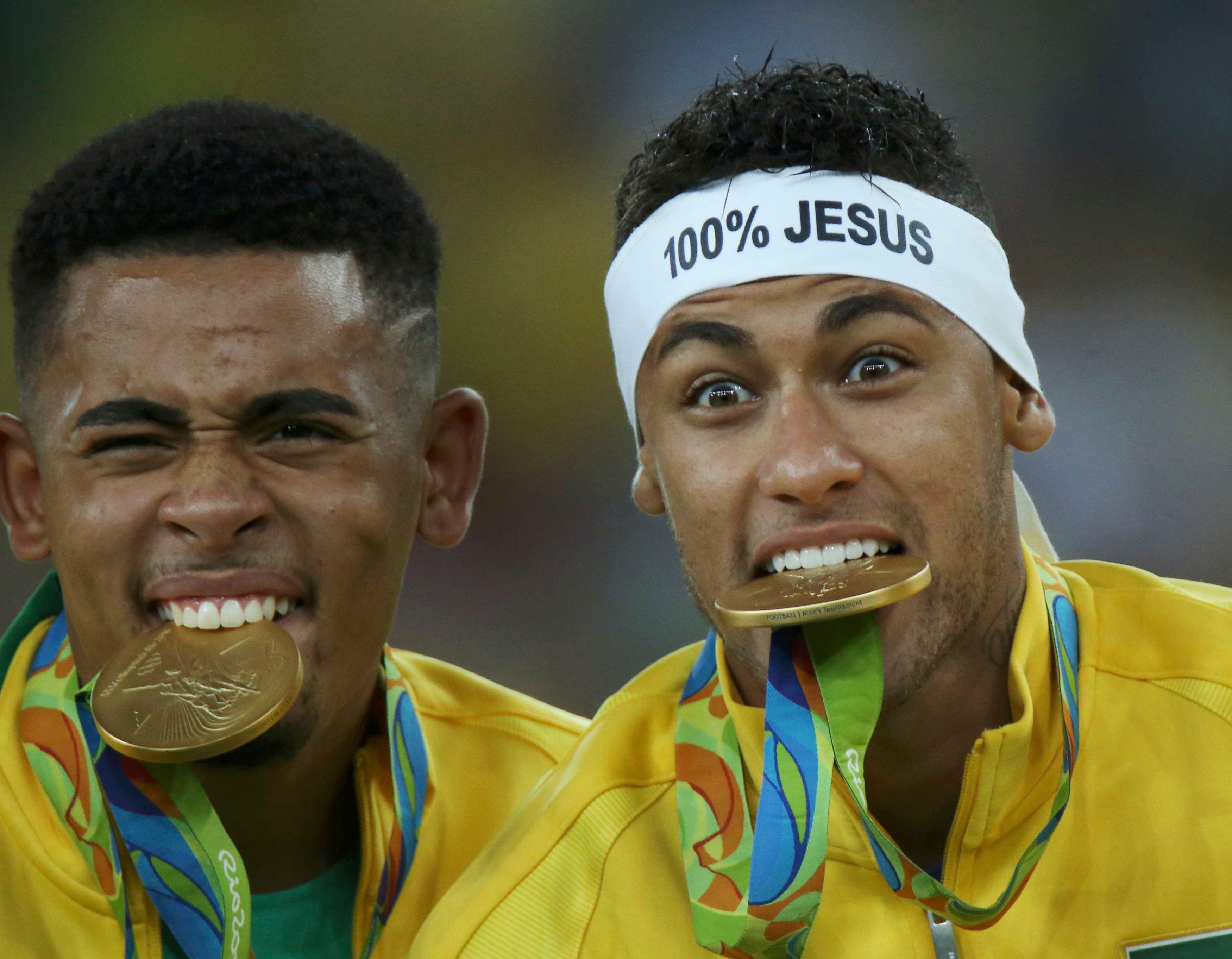
You remember the image. It’s June 6, 2015. Berlin is buzzing. Barcelona has just dismantled Juventus 3-1 to secure the Champions League trophy, and Neymar Jr. is running across the pitch like a madman. But it wasn't just the goal he scored in the 97th minute that people were talking about the next morning. It was that simple, white piece of cloth tied around his forehead with the words 100% Jesus scrawled across it.
Honestly, it looked like something a kid would make in a basement. It was raw. It was unapologetic. And for a few years, it became the most controversial accessory in world football.
Fast forward to early 2026, and the "Neymar 100 Jesus band" still triggers debates about where faith ends and "marketing" begins in professional sports. If you think it was just a piece of fabric, you're missing the bigger story of how FIFA, the IOC, and some of the world’s biggest clubs tried to scrub religion out of the frame.
The Secret Origin of the 100% Jesus Band
People think Neymar started wearing the headband for the cameras once he got famous. Not even close.
That specific headband actually goes back to his childhood in Brazil. It was a gift from his mother when he was just 11 years old. Back then, he wasn't a global icon with a private jet; he was just a skinny kid playing futsal in São Paulo. His mom gave it to him as a reminder of his roots and his Pentecostal faith. He wore it through the youth ranks at Santos.
But here’s the kicker: when he finally made the leap to the Santos senior team, they actually told him to take it off.
Neymar has admitted in interviews that he actually cried when they banned the headband. He didn't understand why his "lucky charm" was a problem. His mother had to sit him down and basically say, "Look, you don't need the cloth to keep Jesus in your heart." That’s why he stopped wearing it every game. He saved it for the big ones. The "trophy" games.
When FIFA Literally Erased the Message
If you want to see how uncomfortable the "100% Jesus" message made the suits at the top, look at the 2016 Ballon d’Or gala.
Neymar was a finalist alongside Lionel Messi and Cristiano Ronaldo. During the ceremony, FIFA played a highlight reel of his 2015 season. They showed the footage of him celebrating that Champions League win. But something was off. In the video FIFA produced, the words on his headband had been digitally scrubbed. It was just a blank white band.
They literally Photoshopped Jesus out of the highlights.
FIFA claimed they were just following their Code of Ethics. Their logic? They have to remain "neutral" on religion and politics to avoid offending anyone. But fans went nuclear. It felt like a bizarre, Orwellian move to edit reality because a player wanted to thank his God after the biggest game of his life.
The IOC and the Olympic Headache
It didn't stop with FIFA. When Neymar led Brazil to their first-ever Olympic gold medal in 2016, he broke out the headband again. The International Olympic Committee (IOC) was not happy.
The Olympic Charter has this thing called Rule 50. It basically says: "No kind of demonstration or political, religious or racial propaganda is permitted in any Olympic sites." Because Neymar wore the band during the medal ceremony, the IOC actually sent a letter of complaint to the Brazilian mission. They didn't fine him, but they gave him a "stern reminder."
It’s kind of wild when you think about it. You can have a giant tattoo of a cross or a religious verse—which Neymar does—and that’s totally fine. But the moment you put it on a headband? It’s suddenly "propaganda."
Why Did It Finally Disappear?
You might have noticed Neymar hasn't worn the band much lately. Some people thought he "lost his way" or moved on. The reality is a lot more corporate.
There’s been a lot of talk—and some evidence in leaked documents—about "neutrality clauses" in massive contracts. When Neymar moved to PSG and later to Al-Hilal in Saudi Arabia, the rules changed. In France, there’s a very strict culture of laïcité (secularism). In Saudi Arabia, promoting a specific Christian message on a global broadcast is a whole different legal and cultural minefield.
Basically, the "100% Jesus" band became too expensive to wear.
Recently, in a move that felt like the end of an era, Neymar actually auctioned off one of his iconic "100% Jesus" headbands. It sold for a staggering $200,000 to a Brazilian millionaire. The good news? He donated every single cent to charity.
What You Should Know About the Controversy
- The Mother Factor: The band was never about a brand; it was a tribute to his mom's influence on his life.
- The "Slogan" Trap: Governing bodies like World Athletics and FIFA categorize religious phrases as "slogans," putting them in the same bucket as political manifestos or Nike ads.
- The Double Standard: Athletes often point out that while headbands are banned, religious gestures (like crossing oneself) are usually ignored.
- Marketability vs. Faith: At Santos, the "look" of the headband was actually seen as a marketing asset until the religious content became a legal liability for the club's sponsors.
What This Means for Sports Today
The saga of Neymar’s headband changed how we view athletes' personal expressions. It forced a conversation about whether a player is just a "performer" or a human being with a soul.
If you’re an aspiring athlete or even a creator, the takeaway is pretty clear: the bigger you get, the more people will try to "sanitize" your identity for a global audience. Neymar managed to keep his message for the biggest stages, even if it meant fighting the most powerful organizations in sports.
To really understand the impact, you should look up the raw footage of the 2015 final versus the FIFA-edited version. It’s a fascinating lesson in how history gets rewritten by corporate interests. You can also follow the work of groups like Athletes in Action who track how religious freedom rules are evolving in modern stadium contracts.