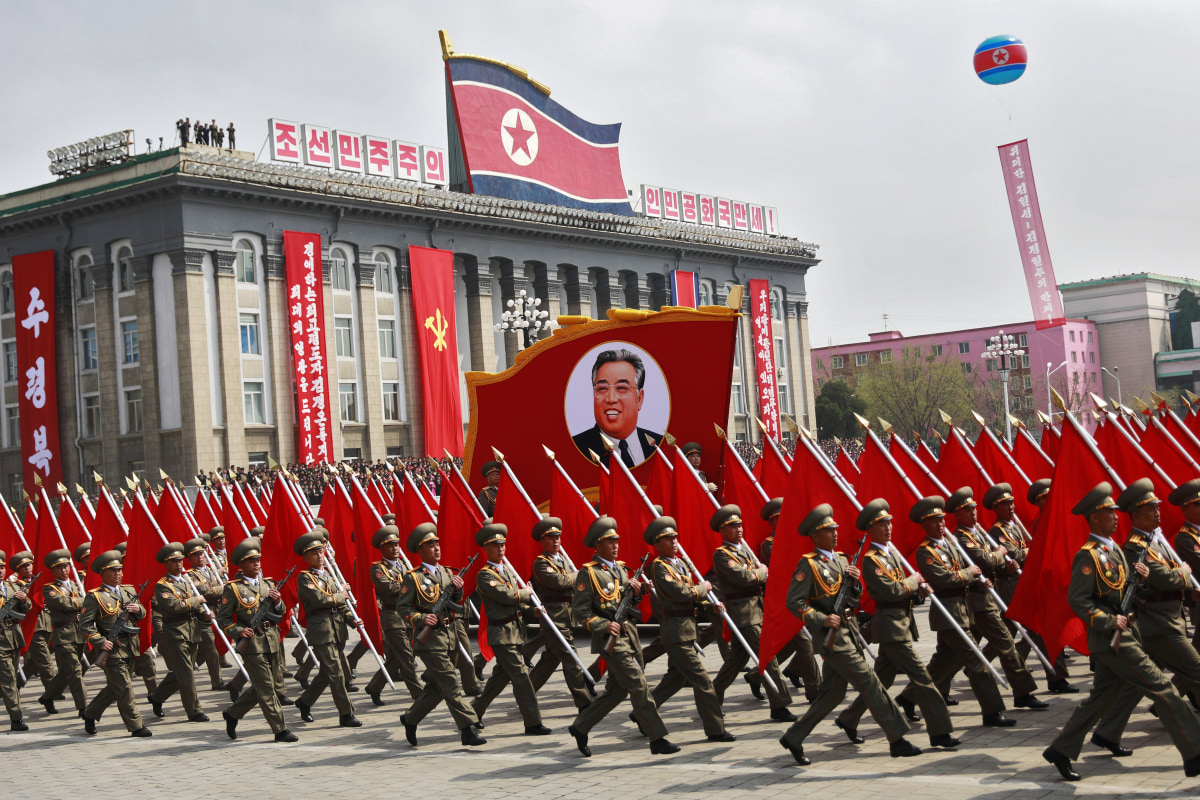
Honestly, if you've been following the peninsula lately, you know the vibe has shifted. It’s not just the usual saber-rattling anymore. We’re two weeks into January 2026, and the "hostile two states" policy from Pyongyang isn't just a slogan—it’s the new legal reality.
Kim Jong Un basically spent his New Year’s message talking about domestic loyalty, but the quiet didn't last. By January 4, we had the first major headline of the year. Hypersonic missiles. They were launched from the Ryokpho district near Pyongyang and splashed down about 900 kilometers away in the East Sea.
This wasn't just a random test. It happened right after U.S. forces captured Venezuelan President Nicolás Maduro in Caracas. Pyongyang called that an "encroachment of sovereignty." They wanted to show they aren't Venezuela. They have the Hwasong-16B, and they aren't afraid to use it as a "strategic reminder."
The Drone Drama in Kaesong
Then things got weird. Or weirder. On January 10, North Korea claimed they found wreckage of a South Korean drone in the Muksan-ri area of Kaesong. They even released photos of the debris. Kim Yo Jong—who’s been as vocal as ever—called the South "hooligans" and demanded an immediate apology.
Seoul is in a tough spot. President Lee Jae-myung, who took office last year after a chaotic period involving the impeachment of Yoon Suk Yeol, is trying to play it cool. He wants dialogue. His administration denied the military sent the drones, but they’ve left the door open to the idea that civilians might have flown them.
National Security Adviser Wi Sung-lac is actually talking about "appropriate punishment" if South Korean civilians are found responsible. Think about that. The South is investigating its own people to keep a lid on a potential war.
It's a delicate dance. You’ve got a liberal government in Seoul trying to restore the 2018 military pact—the one that was supposed to stop all hostile acts—while the North is literally building an 8,700-ton nuclear-powered submarine.
Why 2026 is the Year of Uncertainty
The 9th Party Congress is coming up in February. This is a big deal. Experts think Kim Jong Un will use this to officially codify his "two-state" theory into the constitution. This would mean North Korea no longer sees the South as "brothers" to be reunited with, but as a foreign enemy state.
- The Russia Factor: Since the war in Ukraine started, Pyongyang has found a best friend in Moscow. They’re trading labor and weapons, which means North Korea doesn't need the South's economic help like they used to.
- The China Pivot: President Lee just visited Beijing to meet with Xi Jinping. He's asking China to be the mediator. It's a throwback to older diplomacy, but it’s unclear if Beijing actually wants to get involved in the middle of a nuclear standoff.
- The Trump Variable: Over in Washington, the Trump administration has signaled they might want another summit. But Kim hasn't even replied. He's probably still stung by how things ended in Hanoi years ago.
What Most People Get Wrong About the Escalation
Most people think the North is just "crazy" and doing this for attention. That's a mistake. This is calculated. By testing hypersonic missiles and solid-fuel systems, they are reducing the "kill chain" time—the window the U.S. and South Korea have to strike first.
If a missile is solid-fueled, you can't see them fueling it up on a satellite. It’s ready to go in minutes. That changes the math for everyone in the region.
Also, the drone incursions? Whether they were sent by activists or not, they give Pyongyang a "legal" reason to escalate. They’re using the language of international law—sovereignty, territorial integrity—to justify their own military expansions.
Actionable Insights for the Current Situation
Staying informed on the Korean Peninsula requires looking past the clickbait. If you're tracking this for business, travel, or just general knowledge, here’s how to interpret the coming months:
- Watch the February Party Congress. This will set the tone for the rest of 2026. If they remove the word "unification" from their constitution, the risk of accidental border skirmishes goes up significantly because there's no "brotherly" restraint left.
- Monitor the West Sea (Yellow Sea). While drones are the news now, the maritime border is where actual shooting usually starts. With the South's "joint military-police investigation" into the drones, any movement in these waters will be high-tension.
- Track the Beijing-Seoul Dialogue. If President Lee can convince Xi Jinping to pressure Kim, we might see a freeze in testing. If not, expect the North to double down on their "nuclear state" status.
- Keep an eye on the "Two-State" legal changes. This isn't just semantics. It affects everything from how they treat captured soldiers to how they handle accidental border crossings.
The situation is fluid. One day we’re talking about restoring military pacts to reduce tension, and the next, Kim Yo Jong is calling hopes for peace "wild dreams." It’s a period of extreme volatility where the old rules of engagement don't seem to apply anymore.
Follow the official reports from the Unification Ministry and the KCNA directly to see how the rhetoric evolves. Don't rely on single-source headlines; the truth is usually buried in the gap between what Seoul denies and what Pyongyang exaggerates.