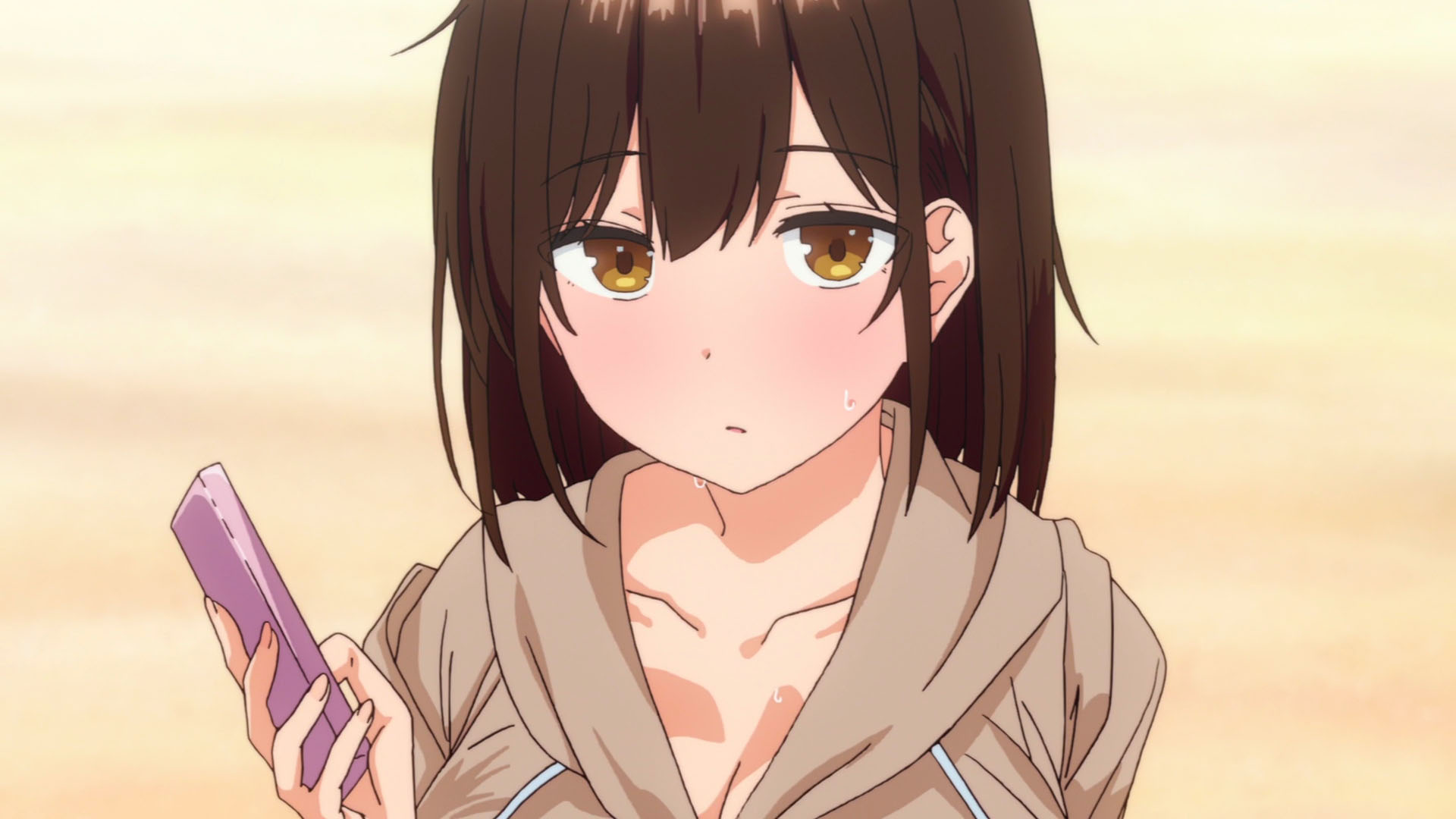
So, you’ve probably seen the clip. Or maybe just a grainy screenshot of a girl with a slightly menacing, slightly teasing grin asking a question that has launched a thousand remixes. Onii san ohitori desu ka translates roughly to "Big brother, are you alone?" and while that sounds innocent enough in a vacuum, the context within anime culture—and specifically the series The Dreaming Boy is a Realist (Yumemiru Danshi wa Genjitsushugishi)—is where things get weirdly complicated.
It’s a meme. It’s a TikTok sound. It’s a point of frustration for some purists and a source of endless "rizz" jokes for others.
The phrase blew up because of its delivery. It’s that specific mix of polite Japanese (keigo) used in a situation that feels anything but formal. When Natsukawa Airi drops this line, she isn't just asking if Wataru Sajou is flying solo at a festival. She's poking at the fourth wall of social dynamics.
Where did this actually come from?
The origin is the 2023 anime adaptation of the light novel series The Dreaming Boy is a Realist. The story follows Wataru, a guy who spent years obsessively chasing his classmate Aika, only to suddenly "wake up" and realize he’s been a total creep. He starts distancing himself, which, naturally, makes everyone around him lose their minds.
During a summer festival arc, a character named Natsukawa Airi—Aika's little sister—spots Wataru. She approaches him with that now-iconic line: onii san ohitori desu ka.
The scene worked because it subverted expectations. Usually, the "little sister" character in anime is either a protected sweetheart or a chaotic gremlin. Airi played it with a level of deadpan sass that felt refreshing. It wasn't just a question; it was a vibe check.
People on the internet did what they do best. They clipped it. They slowed it down. They added bass-boosted phonk music behind it. Suddenly, a throwaway line from a middle-of-the-road rom-com was everywhere.
Why the internet obsessed over a single question
Language is funny like that. The word onii-san is loaded. It literally means "older brother," but in Japan, it’s a standard way for a younger person to address a young man they don't know well. It’s like saying "hey man" or "excuse me, sir," but with a layer of familiar respect.
Then you have ohitori desu ka. This is the polite way to ask "Are you by yourself?" or "Are you alone?"
When you put them together, it sounds like something a hostess at a restaurant or a shopkeeper would say. But coming from a young girl at a festival directed at a teenage boy? It feels like a "hit" or a "pick-up line" parody. That’s the magic of the onii san ohitori desu ka meme. It straddles the line between being incredibly polite and incredibly mocking.
Social media algorithms love short, punchy audio. The syllable structure of the phrase is rhythmic. O-nii-san-o-hi-to-ri-de-su-ka. It fits perfectly into a 5-second loop.
The "Rizz" factor and the brainrot era
Let’s be honest about the timing. This meme peaked right as "Sigma" edits and "Rizz" culture were hitting their stride on TikTok and Instagram Reels.
Creators started using the audio to accompany videos of themselves looking "cool" or as a transition sound for anime edits. It became part of what some call "brainrot" culture—memes that are stripped of their original meaning and used as pure aesthetic markers.
Honestly, most people using the sound probably haven't even watched the anime. They don't know Wataru's internal monologue or the fact that the show is actually a fairly grounded look at self-worth and social boundaries. To the digital masses, it’s just the "onii san" song.
Breaking down the Japanese grammar (The nerd stuff)
If you're trying to learn Japanese, this phrase is actually a great example of sonkeigo (honorific language).
- Onii-san (お兄さん): The "O" is an honorific prefix.
- Hitori (一人): One person.
- O... desu ka: A polite frame for a question.
Usually, if you were just talking to a friend, you’d say "Hitori?" or "Hitori na no?" Adding the "O" and the "desu ka" makes it formal. The humor in the original scene comes from a middle schooler using adult-level politeness to tease a high schooler. It’s ironic.
Most translations of the meme miss this nuance. They just see "Big bro, you alone?" and think it’s a romantic advance. In reality, Airi was mostly just being a brat.
Misconceptions about the series
Because the meme is so popular, The Dreaming Boy is a Realist has a bit of a reputation problem. People go into the show expecting a high-energy comedy or a "sister" romance, but that’s not what it is at all.
The show is actually kind of melancholy. Wataru realizes his unrequited love was borderline harassment. He spends the series trying to be a better person by leaving people alone. It’s a deconstruction of the "persistent protagonist" trope.
When you hear onii san ohitori desu ka in the show, it’s a moment of connection for a character who has intentionally isolated himself. It’s actually kind of sweet, in a biting sort of way.
How to use the meme without cringing
Look, memes have a shelf life. If you’re still posting this in 2026 without any irony, you’re basically a digital dinosaur. But if you want to reference it, context is everything.
- Use it for solo travel content: It’s a perfect caption for a photo of you eating ramen alone in Tokyo.
- Audio transitions: It still works for quick cuts in video editing because the "ka" at the end provides a sharp stopping point.
- Self-deprecating humor: Use it when your friends leave you at the bar to go talk to people.
The key is the "O" sound. You have to nail the pitch accent. It’s not flat. It has a melodic rise and fall that makes it recognizable.
Is it "Onee-san" or "Onii-san"?
This is a common point of confusion for casual fans.
- Onii-san = Older brother / Young man.
- Onee-san = Older sister / Young woman.
The meme specifically uses the masculine version. If you see someone using the audio over a video of a girl being asked if she's alone, it’s technically a "gender-flipped" use of the meme, which is fine, but it changes the linguistic dynamic.
The cultural legacy of the phrase
We see these types of phrases pop up every few anime seasons. Think of "Nico Nico Ni" or "Tuturu." They become "lexical clones"—words that exist outside of their original story.
What makes onii san ohitori desu ka different is its utility. It’s a functional sentence. You could actually use this in Japan (though maybe don't say it to strangers in a creepy way). It represents a bridge between "otaku" culture and general internet slang.
It’s also a testament to how voice acting can carry a show. Akari Kito, the voice actress for Airi (who also voices Nezuko in Demon Slayer), delivered the line with such specific charisma that it stuck. Without that specific voice acting choice, the line would have been buried in the script.
What to do if you want more
If you actually liked the vibe of the meme, you should probably check out the source material. The light novels by Okemaru offer a much deeper look into Wataru’s head. The anime is good, but it cuts a lot of the internal struggle that makes the "realist" part of the title make sense.
If you're just here for the memes, keep an eye on seasonal anime trends. Usually, these phrases catch fire because of a specific "spark" in the animation or a trending sound on social media platforms in Southeast Asia before migrating to the West.
Next Steps for the curious:
- Watch Episode 8: This is generally where the heavy lifting for the festival arc happens.
- Listen to the Original Audio: Compare the TV version to the "phonk" remixes to see how the pitch was altered for social media.
- Practice the Polite Form: Use the "O... desu ka" structure in your Japanese studies to understand how to turn simple nouns into polite inquiries.
The meme might fade, but the awkwardness of being "ohitori" (alone) at a crowded event is a universal feeling that will always be relatable. Just maybe don't wait for a middle schooler to come along and point it out to you.